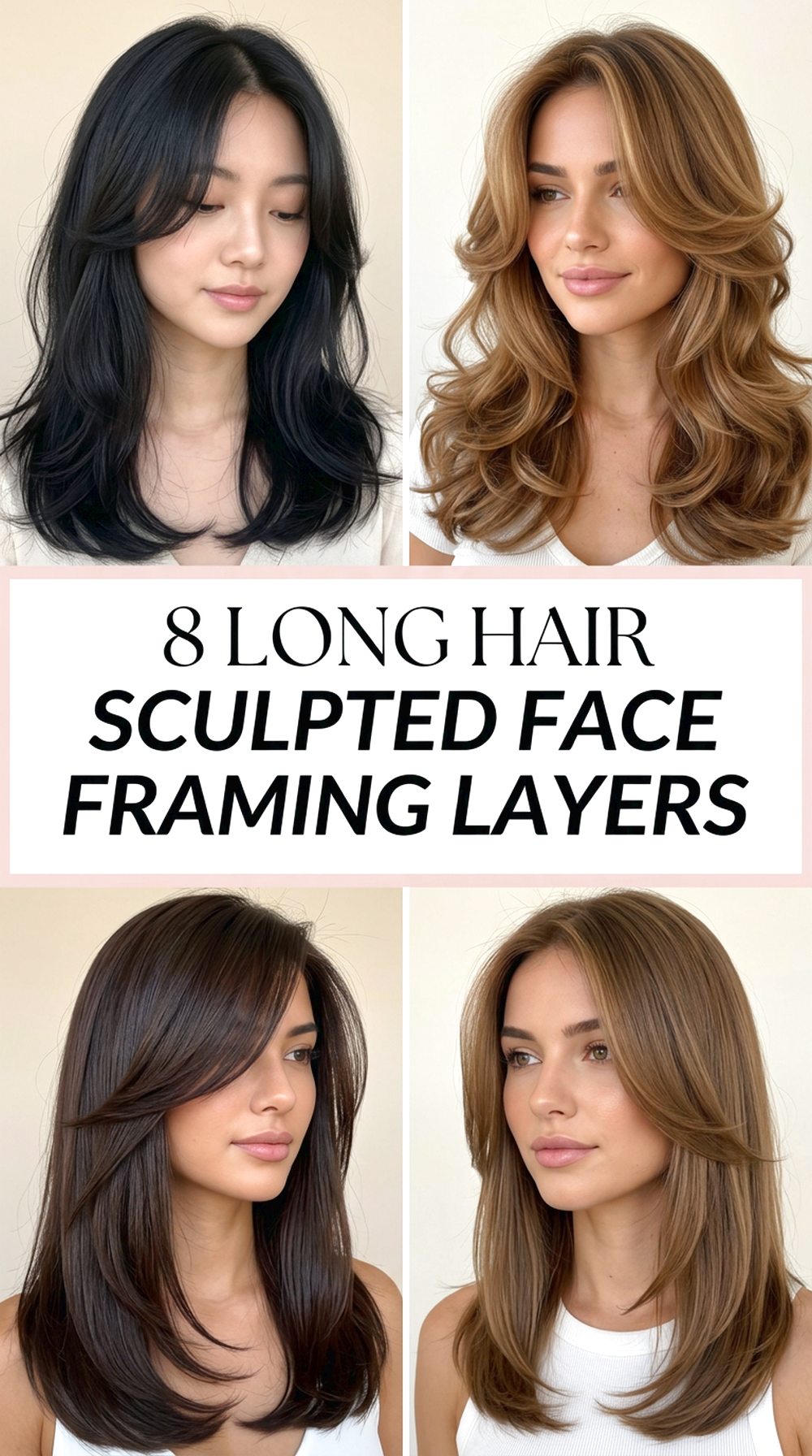
Long hair sculpted face-framing layers are carefully shaped sections that sit around the cheeks, jawline, and neck. They give long hair more movement while creating a flattering outline around the face. The layers can look soft and natural, bold and feathered, or smooth and polished.
This hairstyle works well for straight, wavy, and loosely curly hair. It can flatter oval, round, square, heart, and long face shapes when the shortest layer is placed correctly. The cut is generally low-maintenance, although a round-brush blowout or quick heat styling can make the sculpted shape more noticeable.
Quick List
- Soft Curtain Face-Framing Layers
- Chin-Grazing Sculpted Layers
- Cheekbone-Highlighting Layers
- Butterfly Face-Framing Layers
- Side-Swept Sculpted Layers
- Centre-Parted Feathered Layers
- Wavy Face-Framing Layers
- Sleek Blowout Sculpted Layers
Soft Curtain Face-Framing Layers
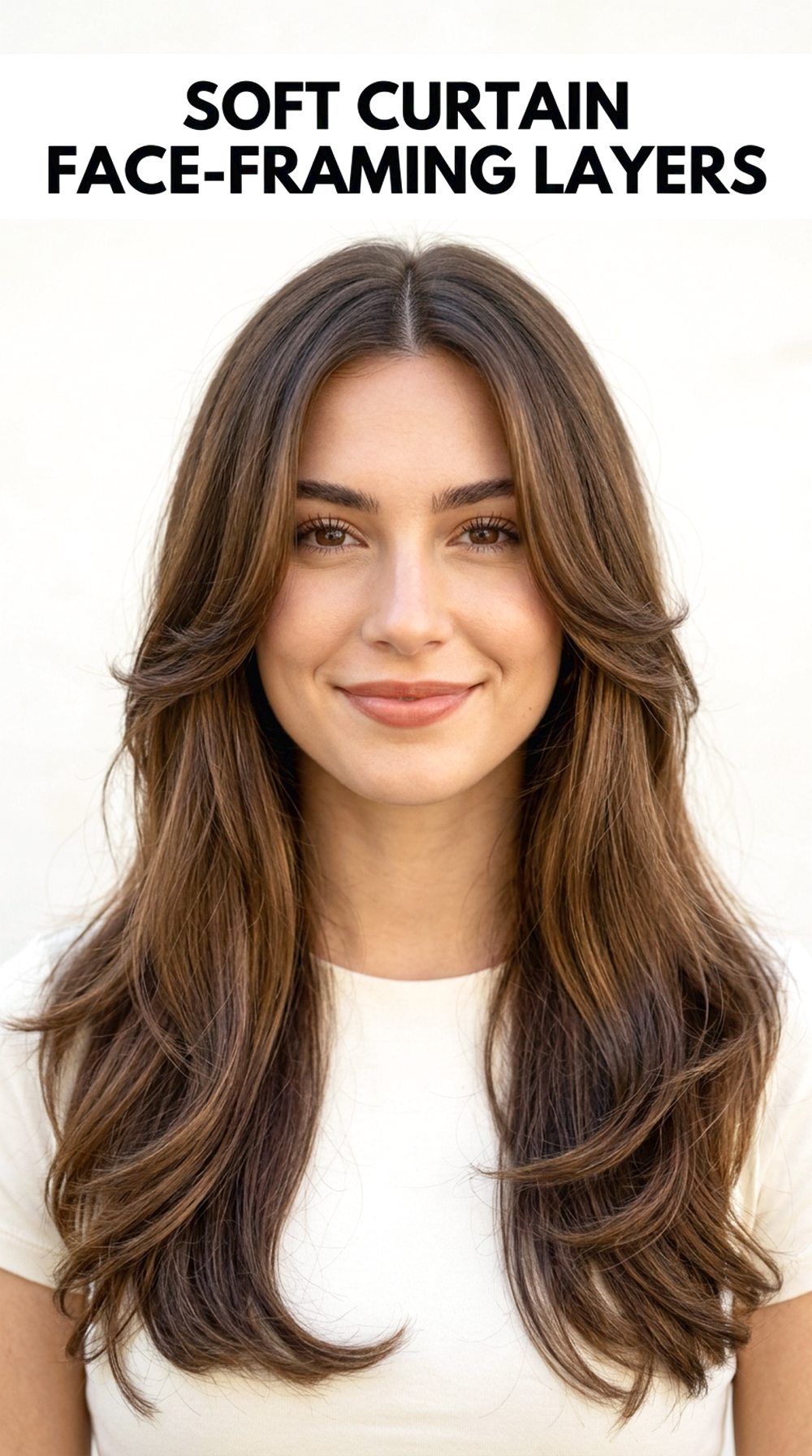
Soft curtain face-framing layers create a balanced shape on both sides of the face. The shortest pieces usually begin near the cheekbones before blending gradually into the long hair. This style has a relaxed, feminine appearance and works especially well with a centre part. It is a flattering choice for everyday wear, work, school, or casual events. The gentle curves add movement without removing too much length or making the ends appear thin.
Pro tip: Ask your stylist to cut the front layers while your hair is dry so the shortest pieces sit exactly at your cheekbones.
Chin-Grazing Sculpted Layers
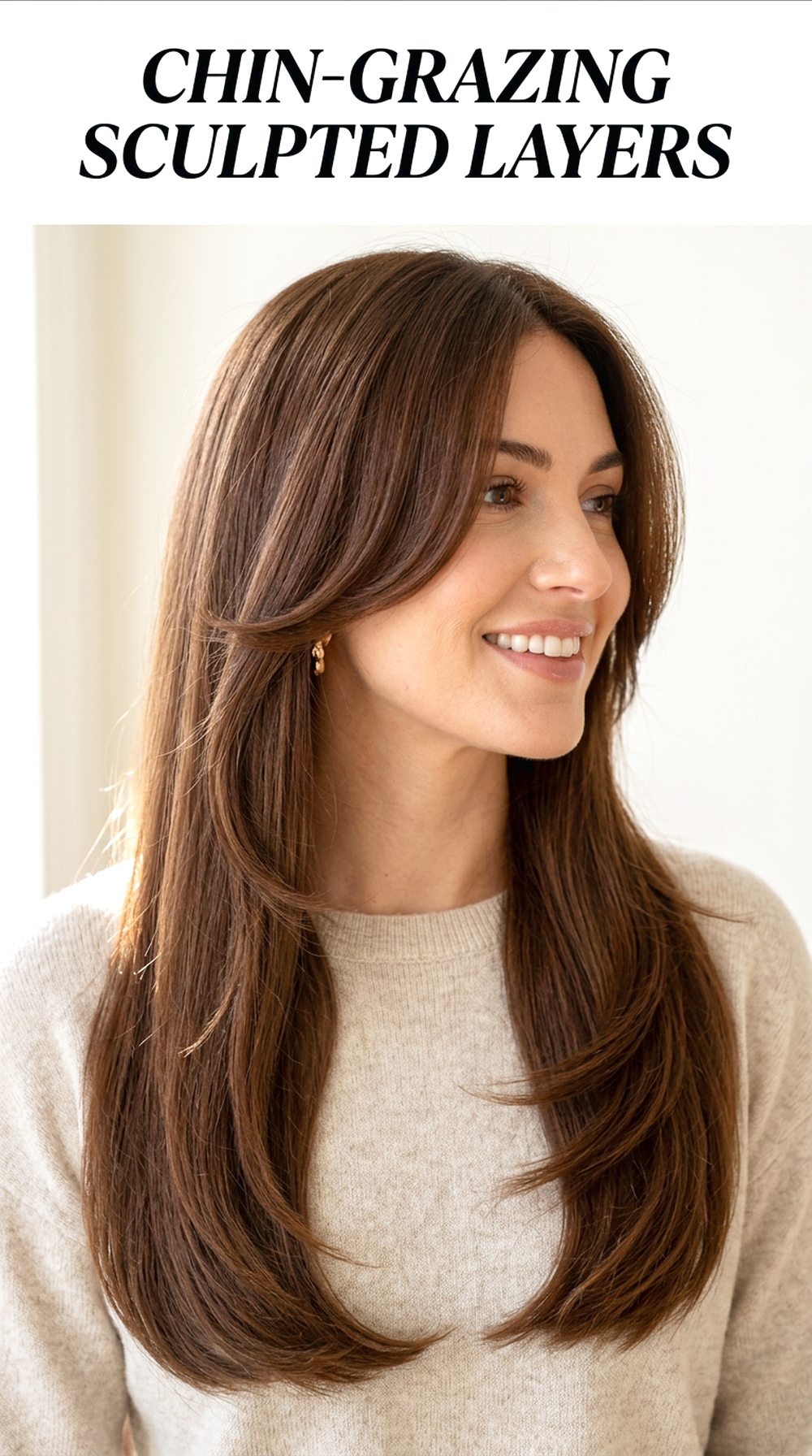
Chin-grazing sculpted layers draw attention to the jawline while giving long hair a clean and defined outline. The front pieces begin around the chin and curve inward before blending into the longer sections. This placement works particularly well for round, oval, and heart-shaped faces. It creates visible movement without adding short layers near the forehead. The style looks polished for work, dinners, special occasions, or daily wear and is easy to refresh with a round brush.
Pro tip: Request soft point-cutting through the ends to prevent the chin-length sections from looking heavy or sharply disconnected.
Cheekbone-Highlighting Layers
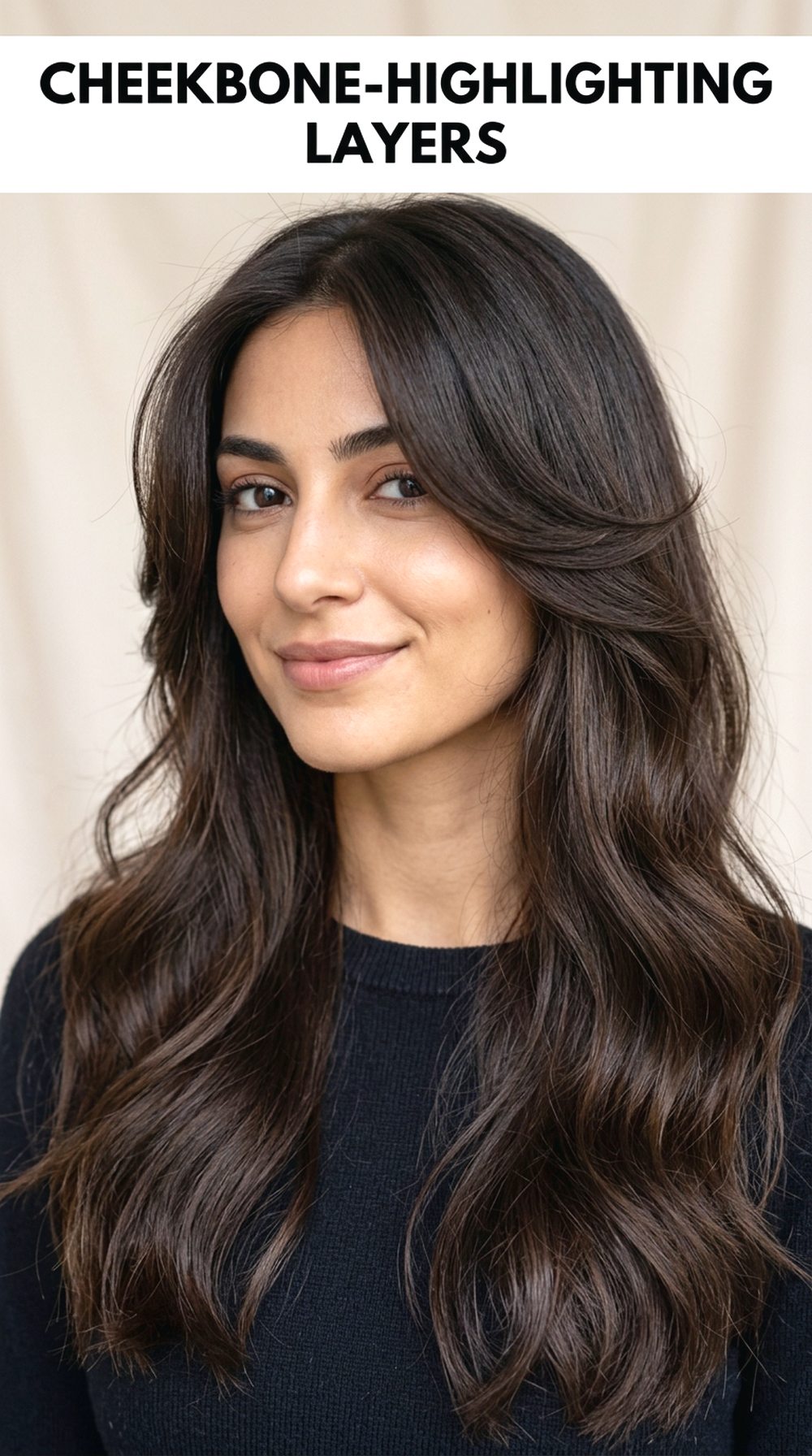
Cheekbone-highlighting layers begin higher around the face and sweep outward to create a lifted appearance. They open the area around the eyes while adding softness to long, heavy hair. This sculpted shape is especially flattering on oval, square, and long faces because it adds width and movement near the cheeks. The style works beautifully for social events, photographs, date nights, and polished everyday looks. A smooth blowout makes the raised shape and feathered edges more visible.
Pro tip: Ask for the shortest layer to finish slightly below your cheekbone if you prefer a softer and more manageable result.
Butterfly Face-Framing Layers
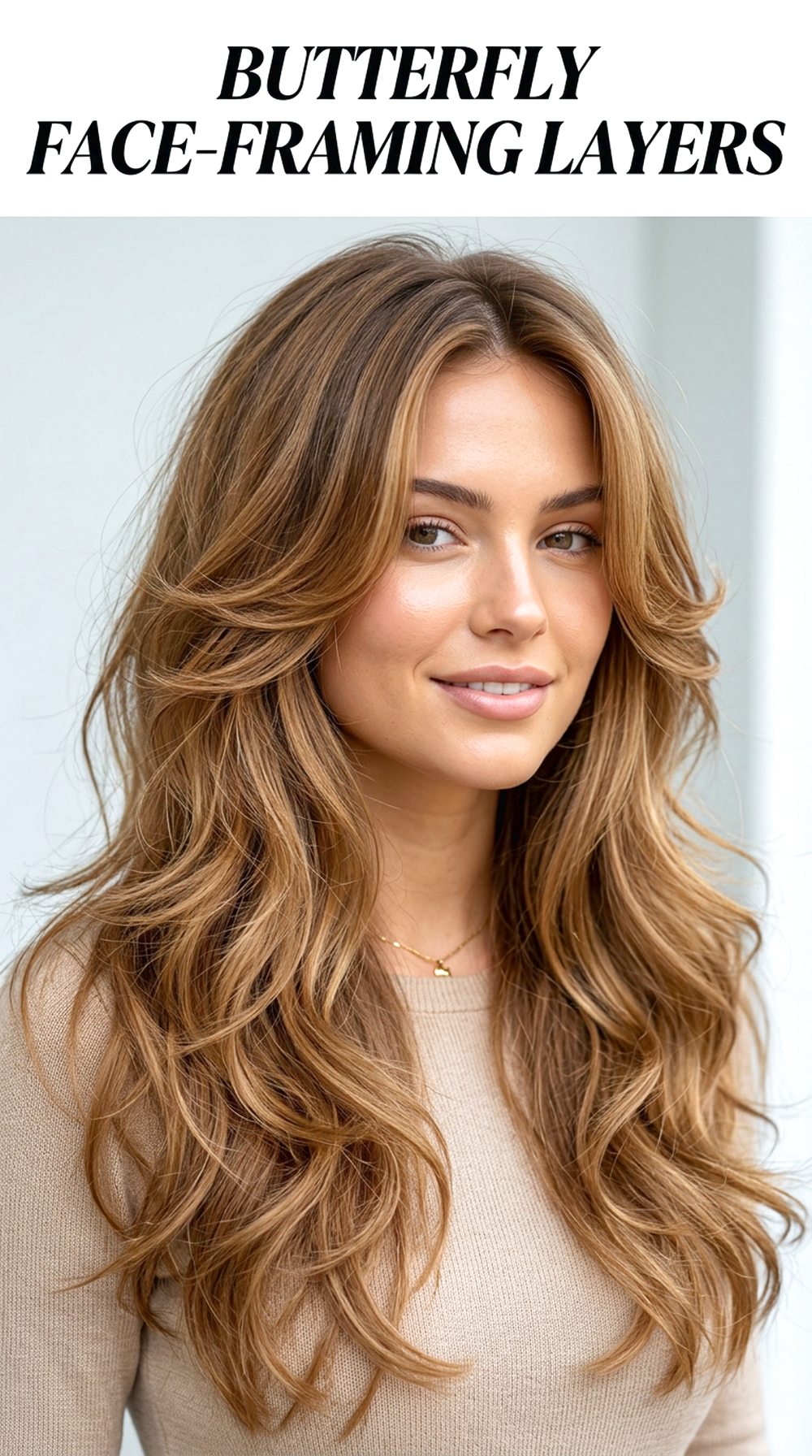
Butterfly face-framing layers combine short, airy pieces around the face with longer cascading layers through the rest of the hair. The finished shape looks full, bouncy, and light while preserving most of the overall length. This option is ideal for thick or medium-density hair that needs more movement. It works well for parties, weddings, work, and everyday styling. The dramatic separation between the shorter and longer layers gives the haircut its recognizable butterfly-inspired appearance.
Pro tip: Ask your stylist to keep the back layers long and focus most of the shaping around the crown and face.
Side-Swept Sculpted Layers
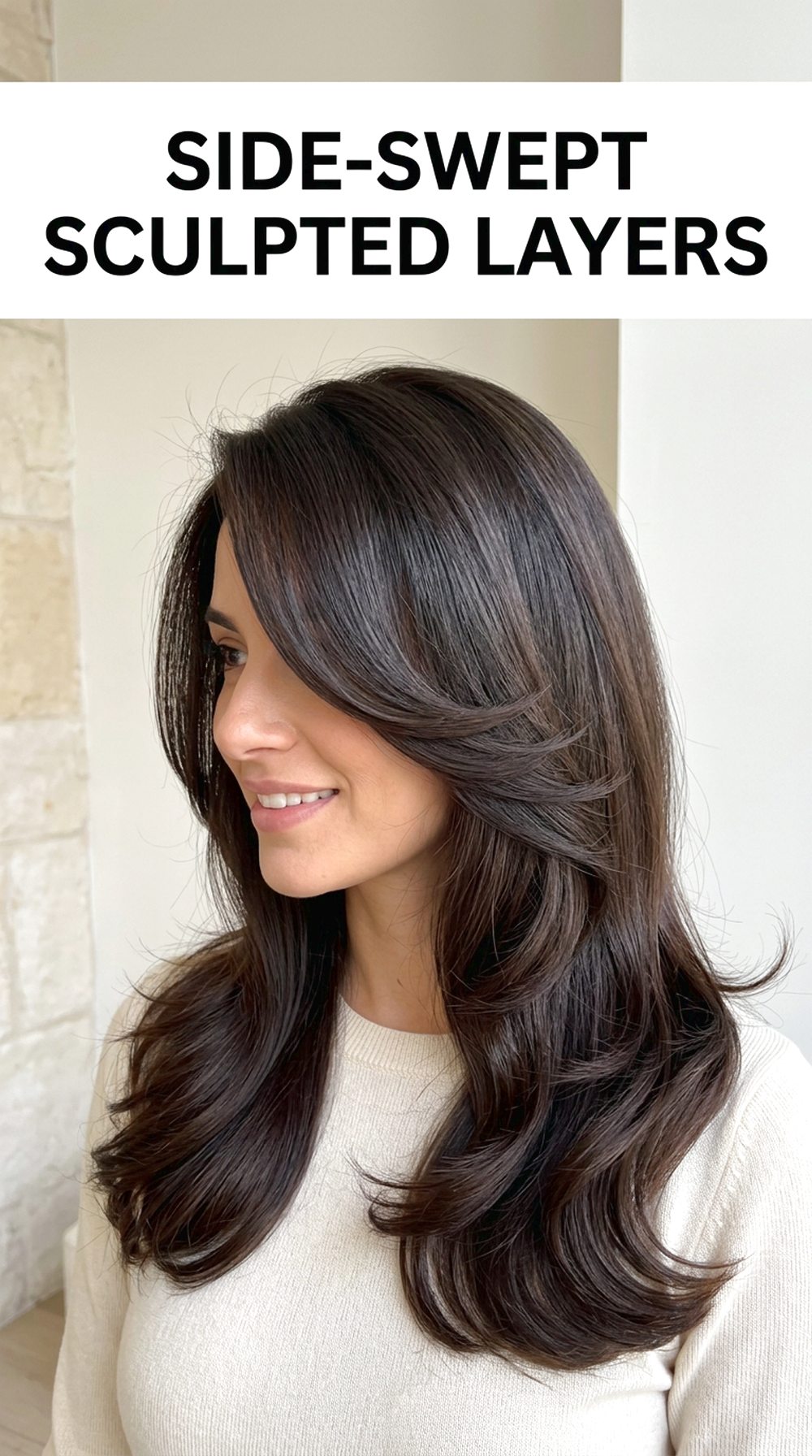
Side-swept sculpted layers create an elegant, slightly asymmetrical shape that can soften strong facial angles. A deep side part allows the front section to move across the forehead and curve around one cheek before joining the longer hair. This style is flattering for square, round, and heart-shaped faces. It works beautifully for professional settings, formal events, dinners, and photographs. The sweeping shape also adds volume near the roots without requiring short bangs or a major change in length.
Pro tip: Ask for longer face-framing pieces on the heavier side of your part so they remain easy to tuck or sweep back.
Centre-Parted Feathered Layers
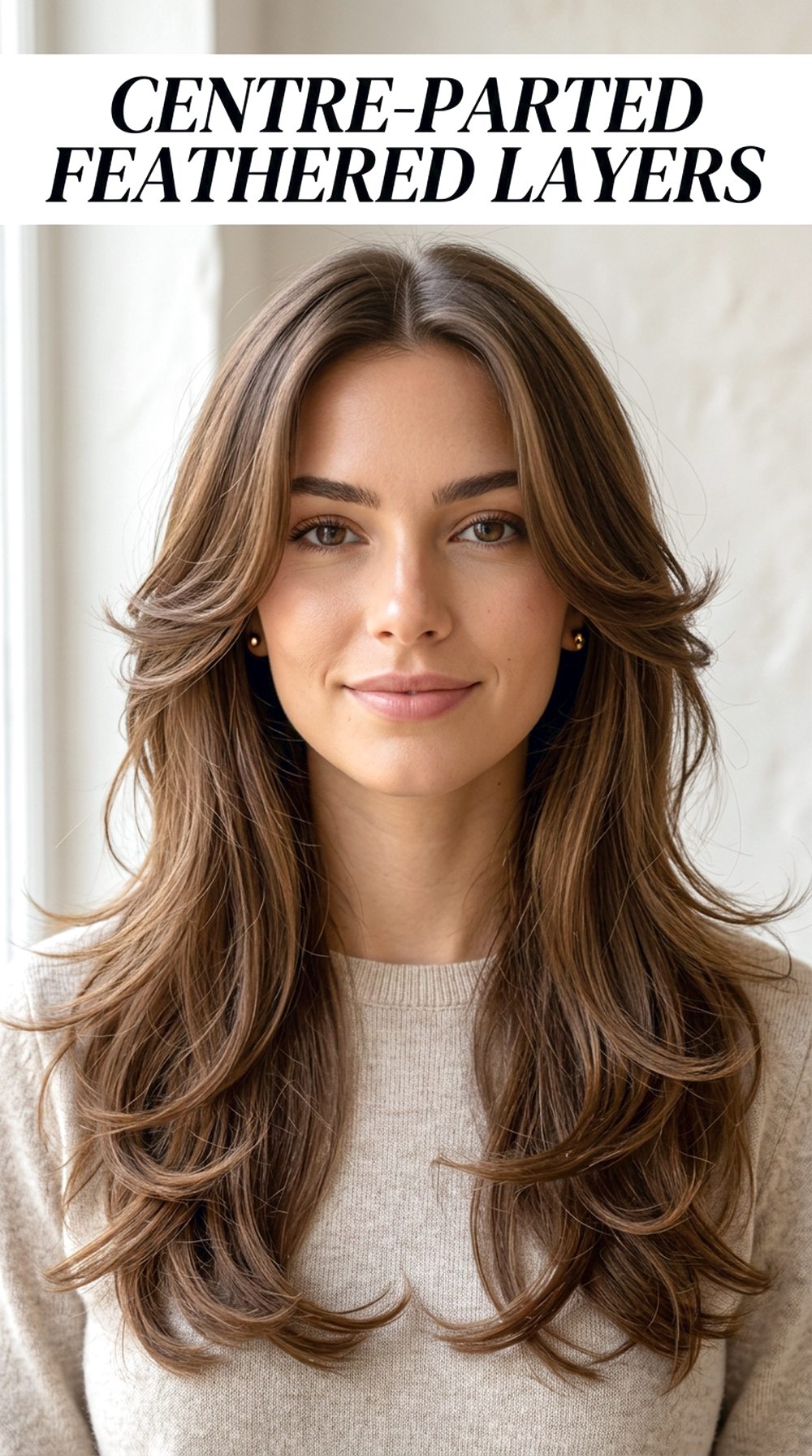
Centre-parted feathered layers create an even, flowing frame around both sides of the face. The layers are cut with light edges and styled away from the cheeks, producing soft movement without a blunt or heavy finish. This hairstyle suits straight and wavy hair and looks especially balanced on oval, round, and heart-shaped faces. It is a versatile option for school, work, summer outings, and special occasions. Feathered ends also help dense long hair appear lighter and more flexible.
Pro tip: Ask for blended feathering rather than heavily thinned ends so the hair keeps its fullness and healthy appearance.
Wavy Face-Framing Layers
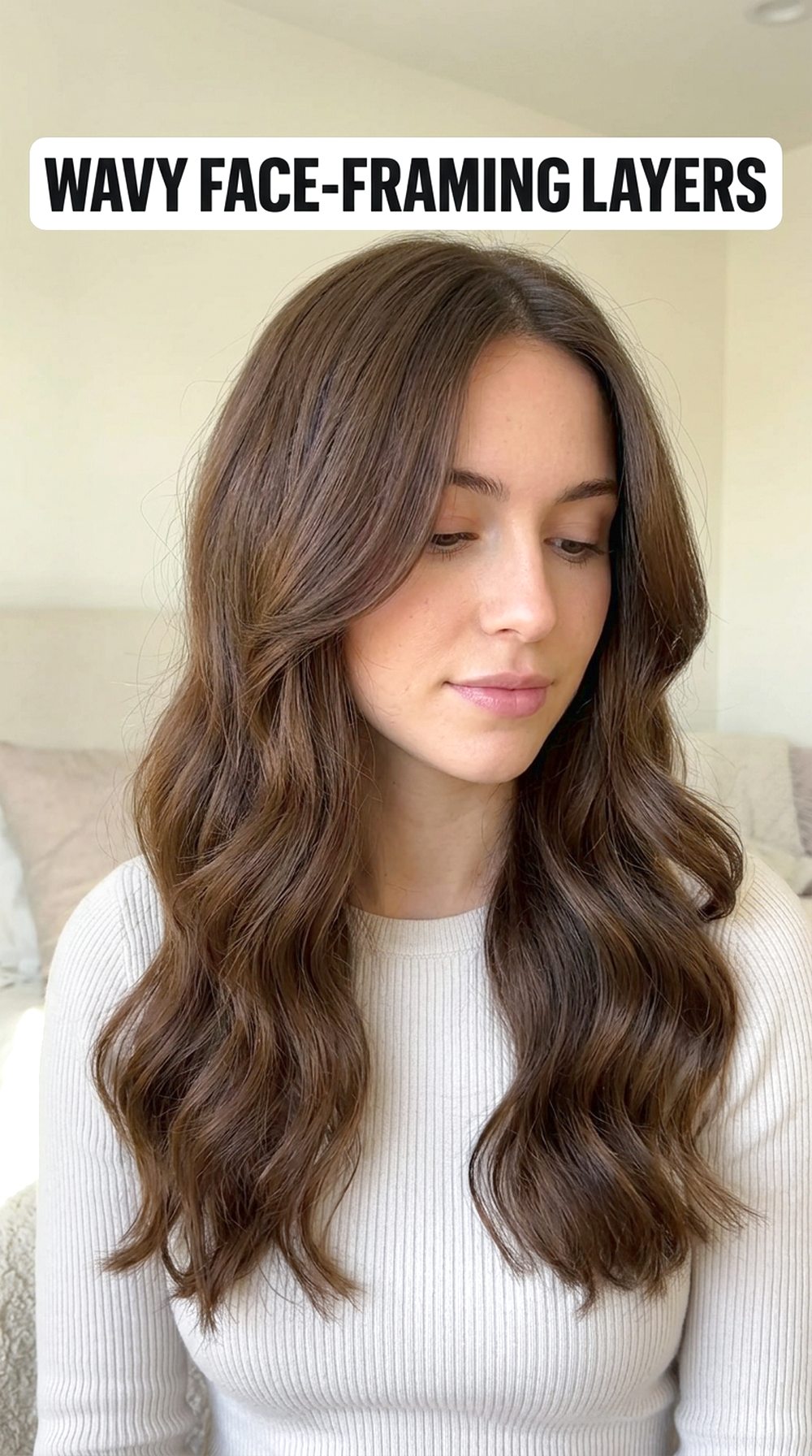
Wavy face-framing layers use natural bends to create a soft, relaxed outline around the face. The shorter sections usually begin near the lips or jaw and blend into longer waves through the lower lengths. This shape gives textured hair more definition while preventing the front from appearing flat. It is a practical option for holidays, summer, casual weekends, school, and everyday wear. The combination of sculpted layers and loose waves creates movement without needing a perfectly smooth salon finish.
Pro tip: Ask your stylist to cut the layers according to your natural wave pattern, especially if your hair becomes shorter when dry.
Sleek Blowout Sculpted Layers
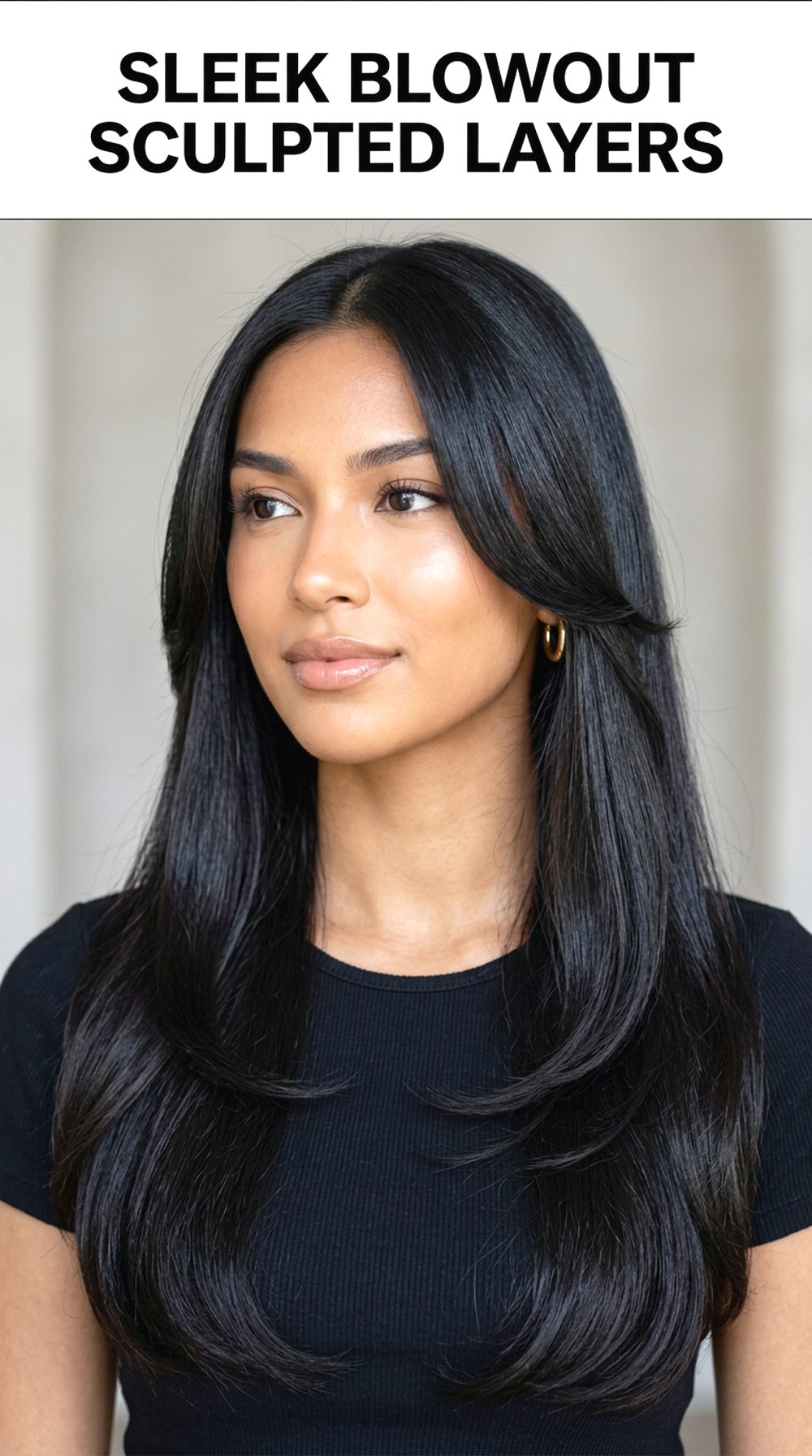
Sleek blowout sculpted layers create a smooth, glossy shape with carefully curved pieces around the cheeks and jawline. The layers remain blended and controlled, giving long hair movement without creating a messy or heavily feathered effect. This polished option works well for straight or lightly wavy hair and suits work, formal occasions, celebrations, and professional photographs. The softly rounded ends make the haircut look full and healthy while the face-framing sections add definition and balance.
Pro tip: Ask for long, seamless layers and use a medium round brush to curve the front pieces away from your face.
Conclusion
Long hair sculpted face-framing layers are flexible because the shape can be subtle, dramatic, smooth, or full of movement. They can soften facial angles, highlight the cheekbones, define the jawline, and make long hair feel lighter without removing too much length. The haircut can also be adjusted by changing the length of the front pieces, the density of the layers, the amount of feathering, or the addition of curtain bangs. Choose the details according to your face shape, natural hair texture, preferred parting, and daily styling routine for a result that feels flattering and manageable.
CTA
Choose one or two favorite layer ideas and save clear photo references from the front and side. Take them to your stylist and discuss where the shortest layer should begin, how much density you want to keep, and how the cut will work with your face shape, hair texture, parting, and usual styling routine.
FAQs
Are sculpted face-framing layers suitable for thin hair?
Yes. Long, softly blended layers can add movement without making thin ends look sparse. Avoid removing too much density.
Where should face-framing layers begin?
They can begin near the cheekbones, lips, chin, or jaw. The best starting point depends on the feature you want to highlight.
Do face-framing layers require daily styling?
Not always. They can air-dry naturally, but a round brush or curling tool will make the sculpted shape more visible.
Can curly hair have sculpted face-framing layers?
Yes. The layers should be cut with curl shrinkage and the natural curl pattern in mind to prevent them from becoming too short.