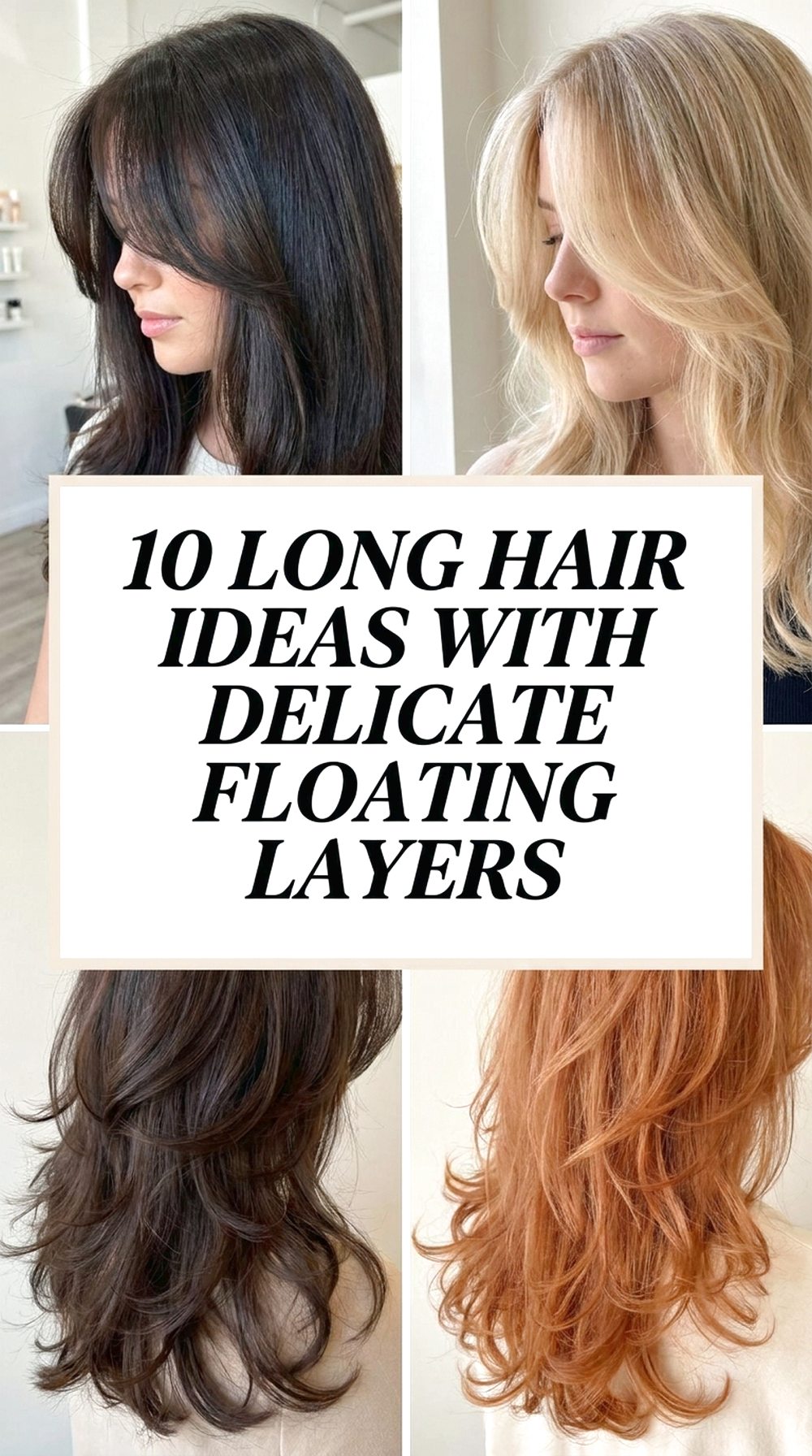
Long hair with delicate floating layers combines full, flowing length with soft pieces that appear to move effortlessly through the hair. Unlike heavy, sharply defined layers, floating layers blend gently into the overall shape, creating an airy finish without making the ends look thin.
This style suits straight, wavy, and softly curly hair, especially when the hair has medium or thick density. It can flatter oval, round, square, heart, and long face shapes because the starting point of the layers can be adjusted. The cut is generally low-maintenance, although a blow-dryer, round brush, or curling iron can make the movement more visible.
Quick List
- Long Floating Layers With Curtain Bangs
- Face-Framing Floating Layers
- Butterfly Floating Layers
- Soft U-Shaped Floating Layers
- Floating Layers With Wispy Bangs
- Long Floating Layers With Flipped Ends
- Wavy Floating Layers
- Sleek Long Floating Layers
- Floating Layers With Side-Swept Bangs
- Barely-There Floating Layers
Long Floating Layers With Curtain Bangs
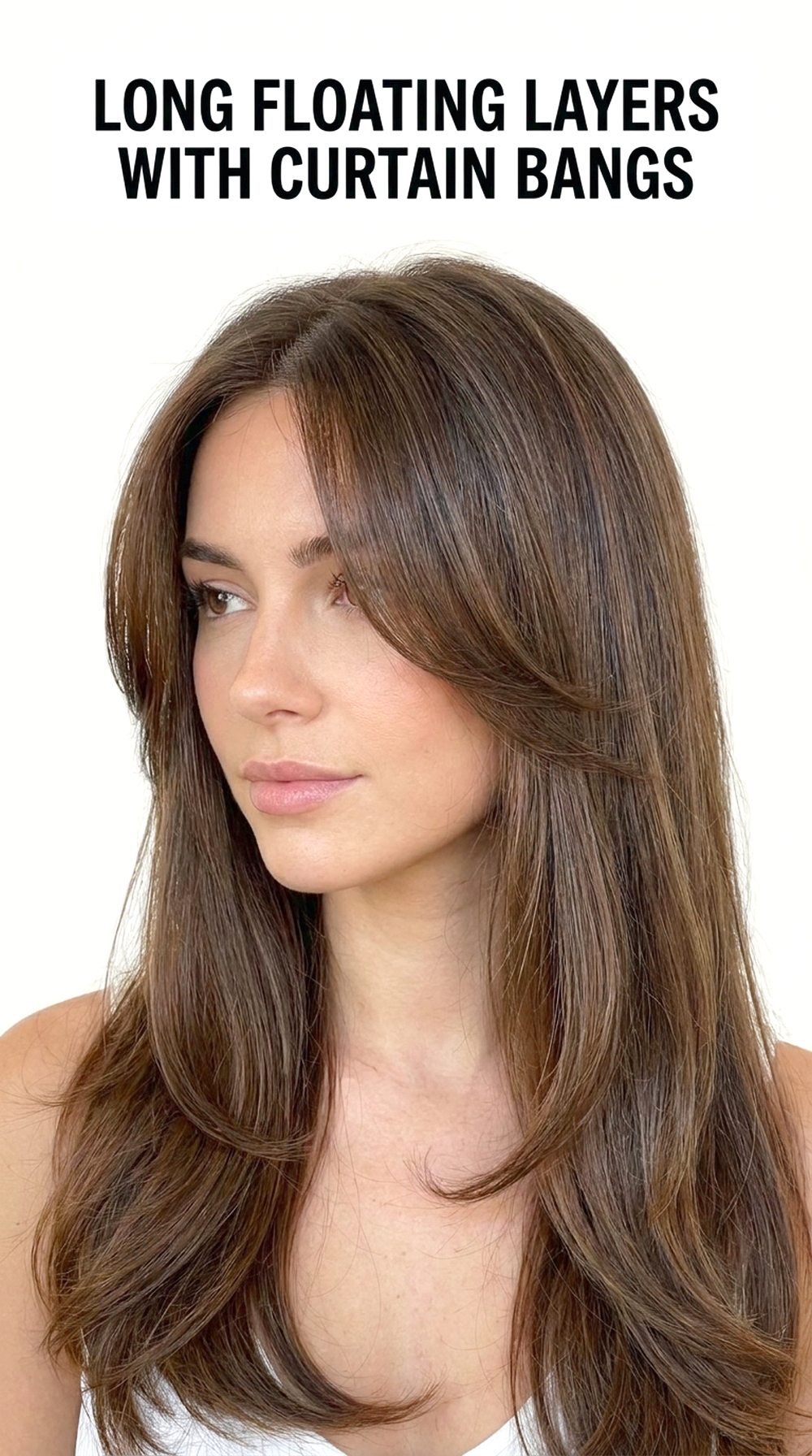
Long floating layers with curtain bangs create a soft, balanced shape that frames the face without hiding the length. The bangs split gently in the centre and blend into cheekbone or jaw-length pieces, while the remaining layers move lightly through the shoulders and ends. This look feels polished but relaxed, making it suitable for work, weekends, dates, school, and special occasions. It works especially well with a smooth blowout or loose waves.
Pro tip: Ask your stylist for long curtain bangs that connect directly to the first face-framing layer, with no heavy or disconnected sections.
Face-Framing Floating Layers
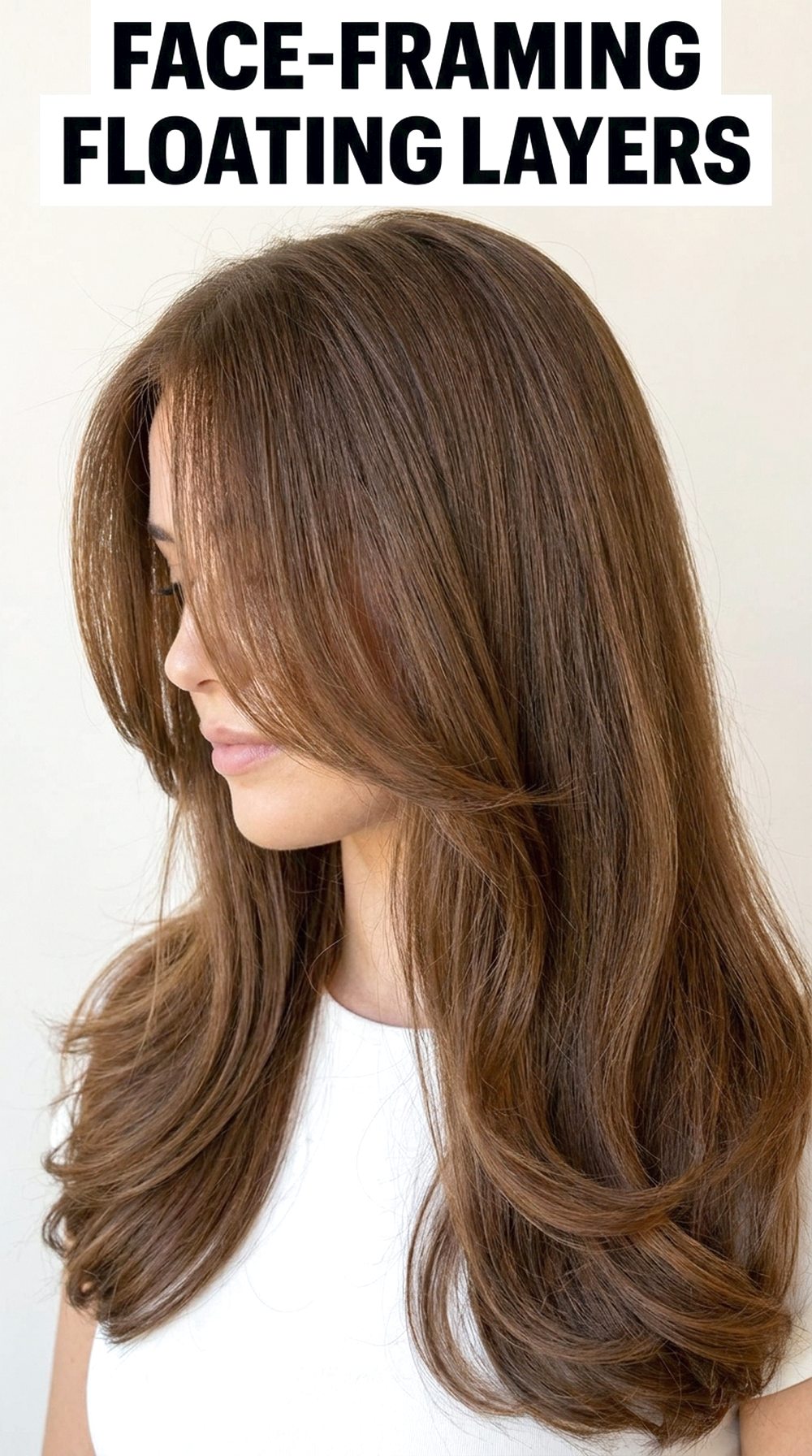
Face-framing floating layers bring attention to the cheekbones, jawline, and lips while leaving most of the hair long and full. The shortest pieces can begin at the chin, then gradually blend into the mid-lengths. This creates movement around the face without adding too many layers through the back. It is a flattering everyday option for long hair and works well for professional settings, casual plans, photographs, and events where you want a soft, naturally styled finish.
Pro tip: Ask the stylist to choose the first layer according to your face shape rather than cutting every front section to the same standard length.
Butterfly Floating Layers
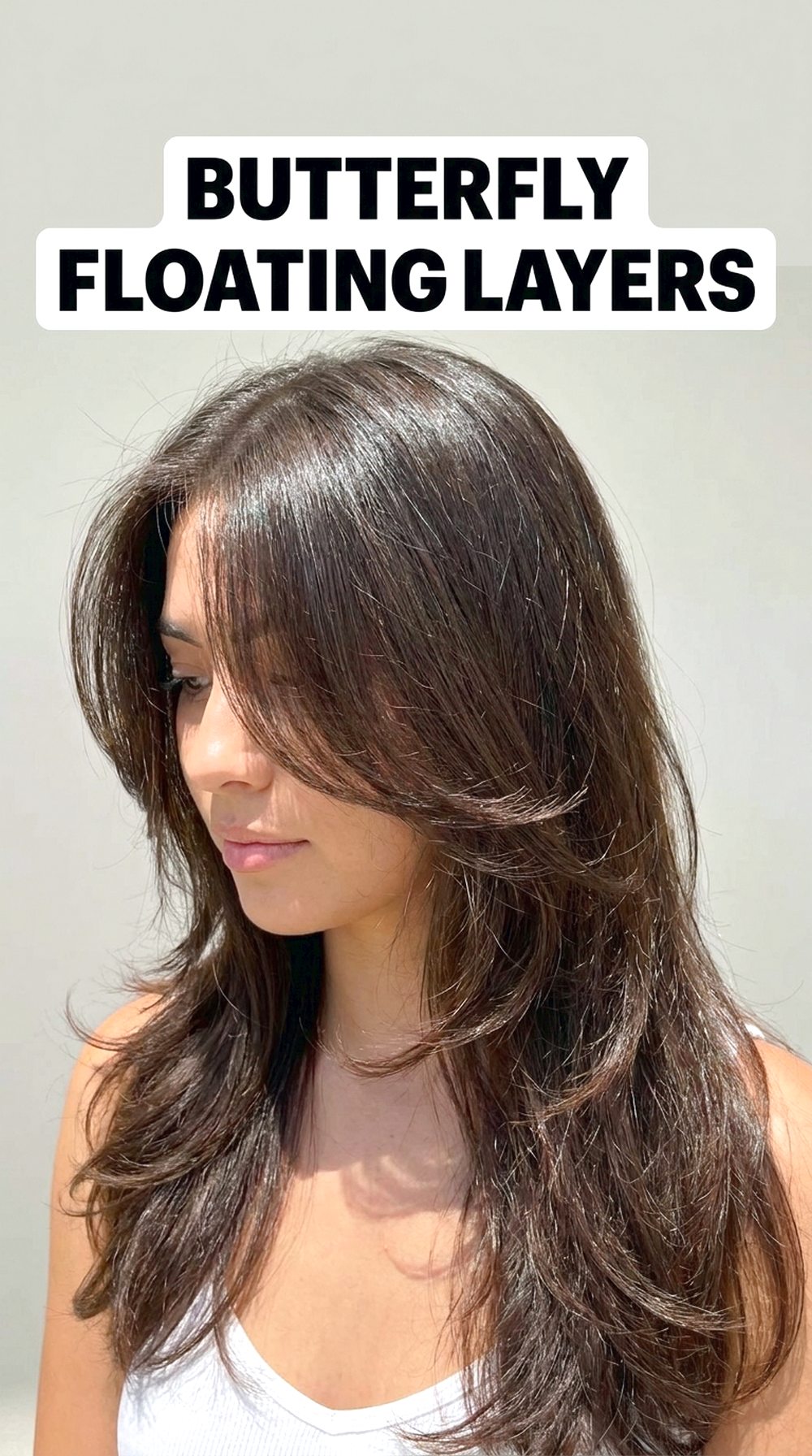
Butterfly floating layers combine shorter, lifted sections near the face with longer, flowing layers through the back. The finished shape resembles butterfly wings because the upper pieces curve away from the face while the lower lengths remain soft and full. This glamorous style creates noticeable movement without requiring a dramatic loss of length. It is ideal for parties, dinners, weddings, formal events, or anyone who enjoys a bouncy salon blowout with plenty of shape.
Pro tip: Request rounded, blended layers around the cheekbones and collarbone, but ask the stylist to keep the bottom perimeter dense and healthy.
Soft U-Shaped Floating Layers
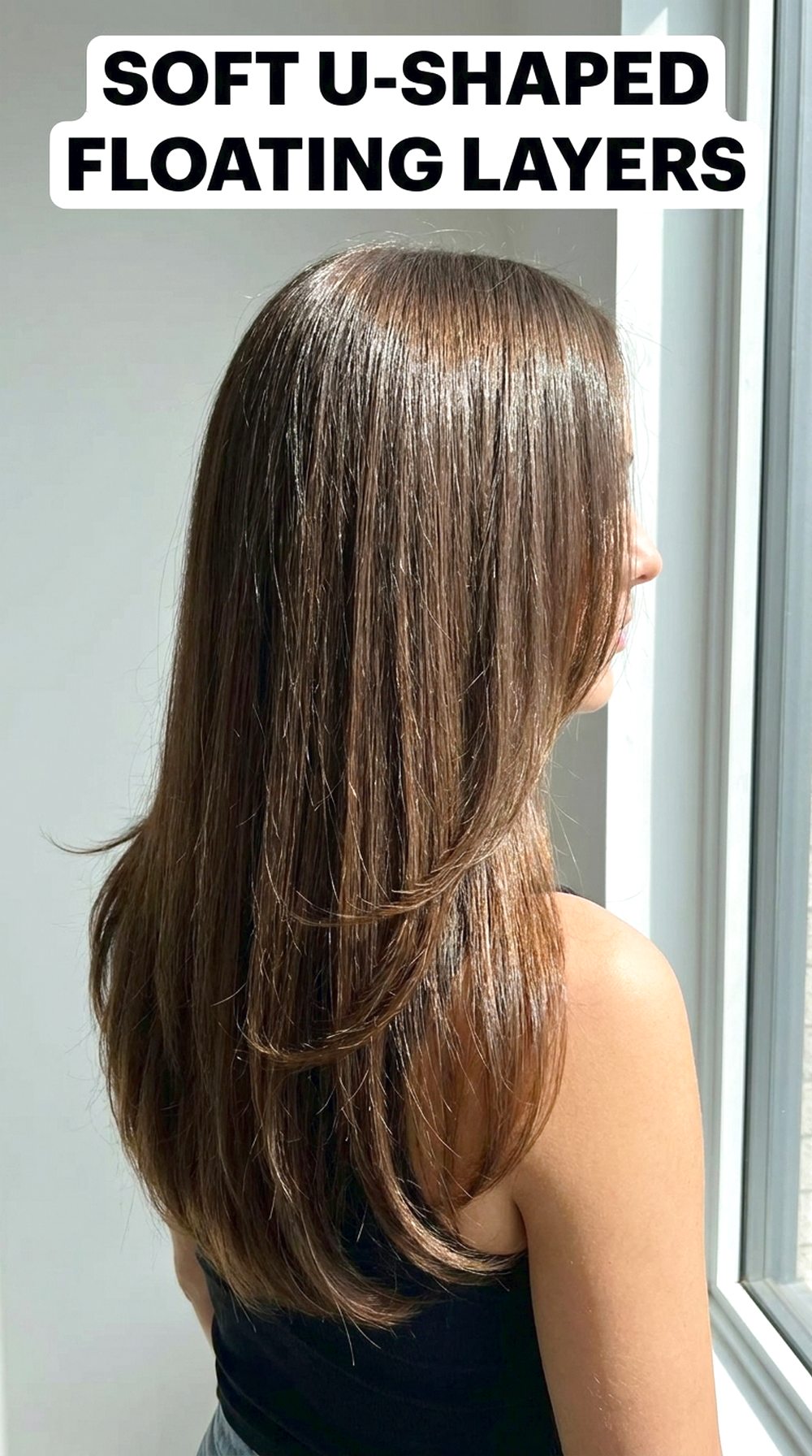
A soft U-shaped cut gives long hair a graceful curved outline, while delicate floating layers add movement inside the shape. The centre-back section remains the longest, and the sides become gradually shorter without creating a sharp angle. This makes the hair look thick, healthy, and naturally flowing from every direction. The style is practical for daily wear, work, school, and low-key events because it still looks polished when worn straight, wavy, braided, or tied back.
Pro tip: Ask for internal floating layers and a soft U-shaped perimeter rather than heavily layered ends, especially when maintaining thickness is your main goal.
Floating Layers With Wispy Bangs
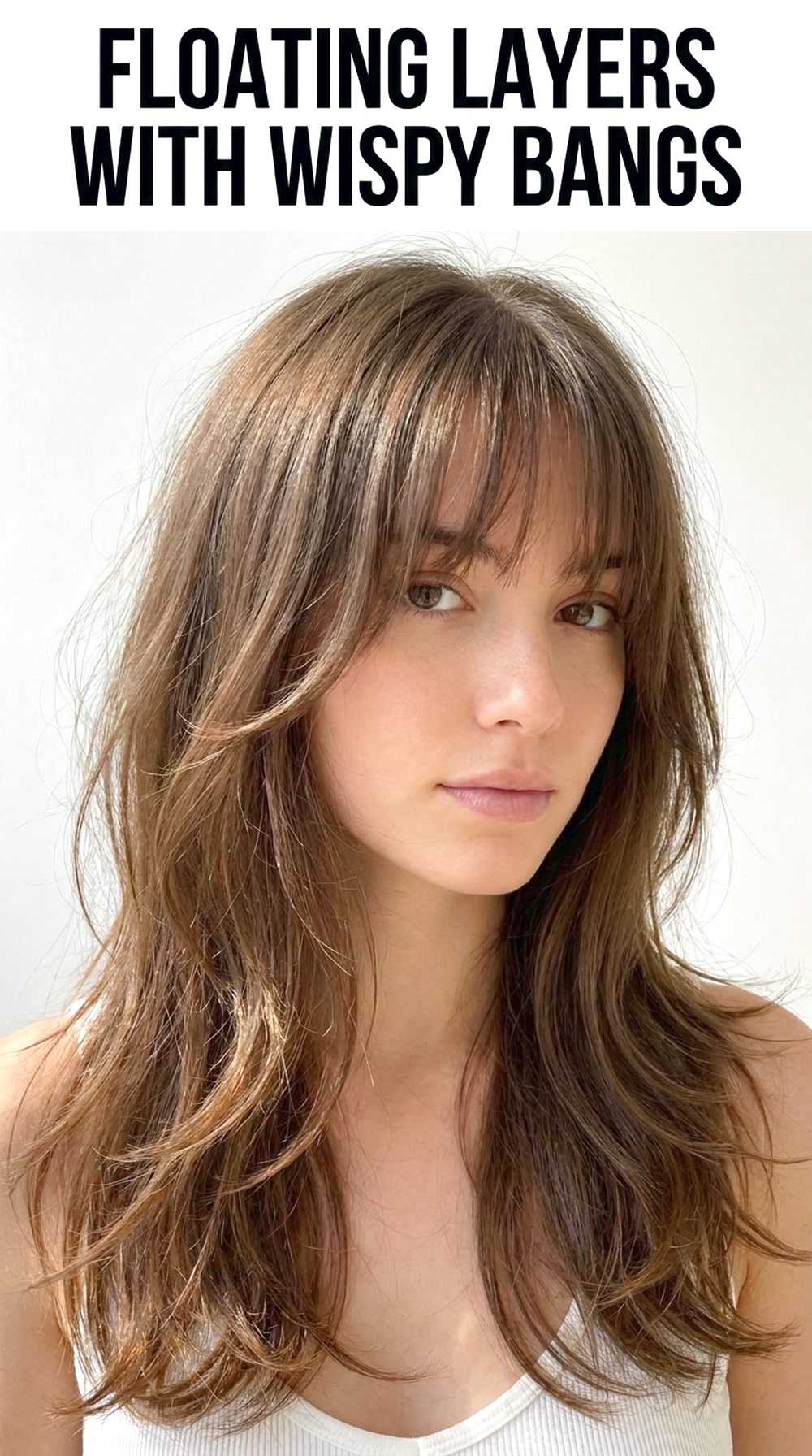
Floating layers with wispy bangs create a light, youthful look that softens the forehead and adds gentle movement around the face. The fringe should remain airy enough to separate naturally, while longer pieces blend into the temples, cheeks, and lengths. This style feels delicate rather than heavy, making it a lovely choice for everyday outfits, creative workplaces, dates, school, and relaxed celebrations. It looks especially flattering with soft waves, subtle volume, or a slightly undone finish.
Pro tip: Ask for a fine, piecey fringe with longer side sections so the bangs grow out smoothly and can be blended into the floating layers.
Long Floating Layers With Flipped Ends
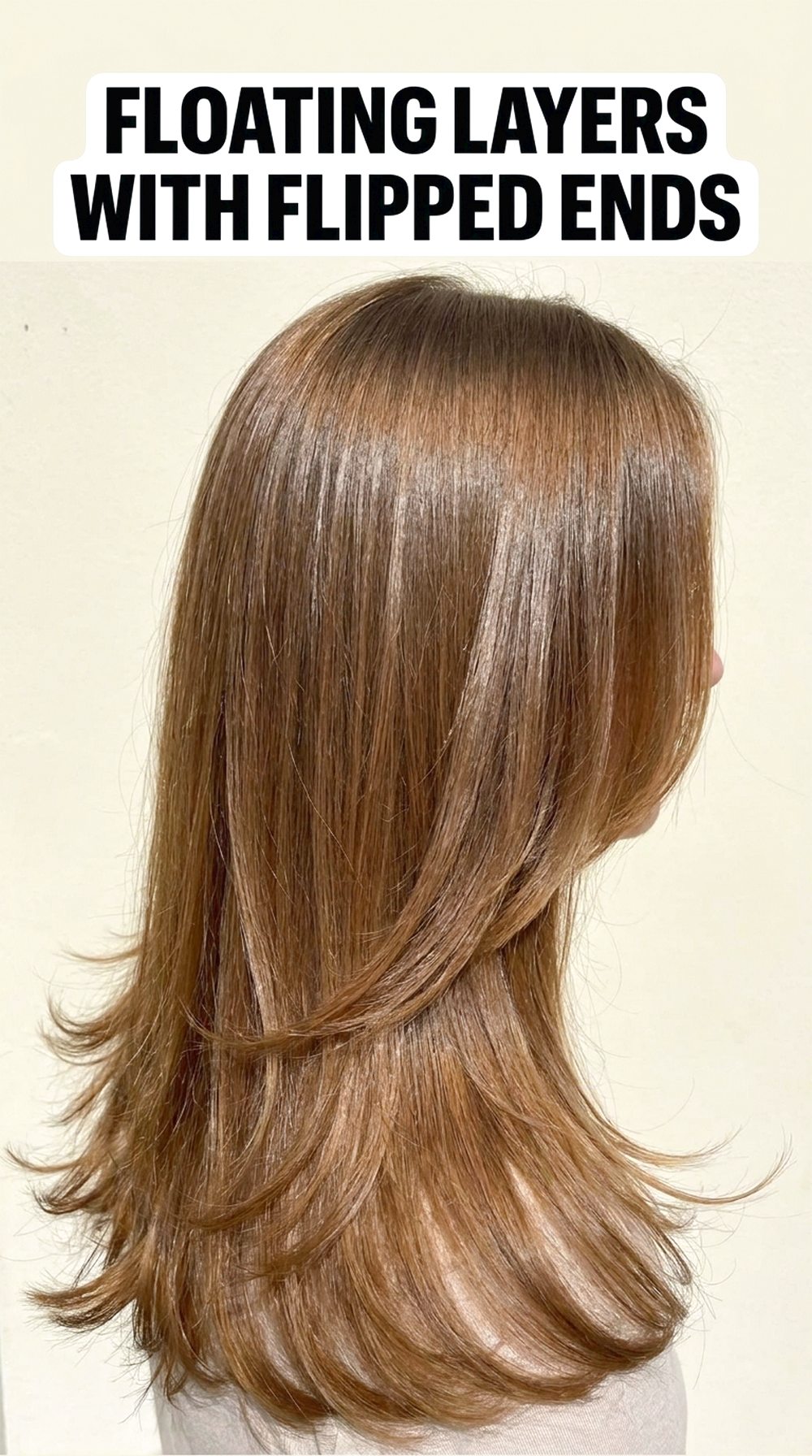
Long floating layers with flipped ends give the hair a playful, bouncy shape inspired by polished salon blowouts. The layers remain smooth through the roots and mid-lengths before curving outward near the ends. This styling makes each delicate layer easier to see while keeping the overall silhouette full and controlled. It is a stylish option for parties, dinners, office events, weddings, and special photographs. The look works best when the ends are healthy, smooth, and lightly rounded.
Pro tip: Use a large round brush or wide hot rollers, directing each section away from the face to create a soft flip instead of a tight curl.
Wavy Floating Layers
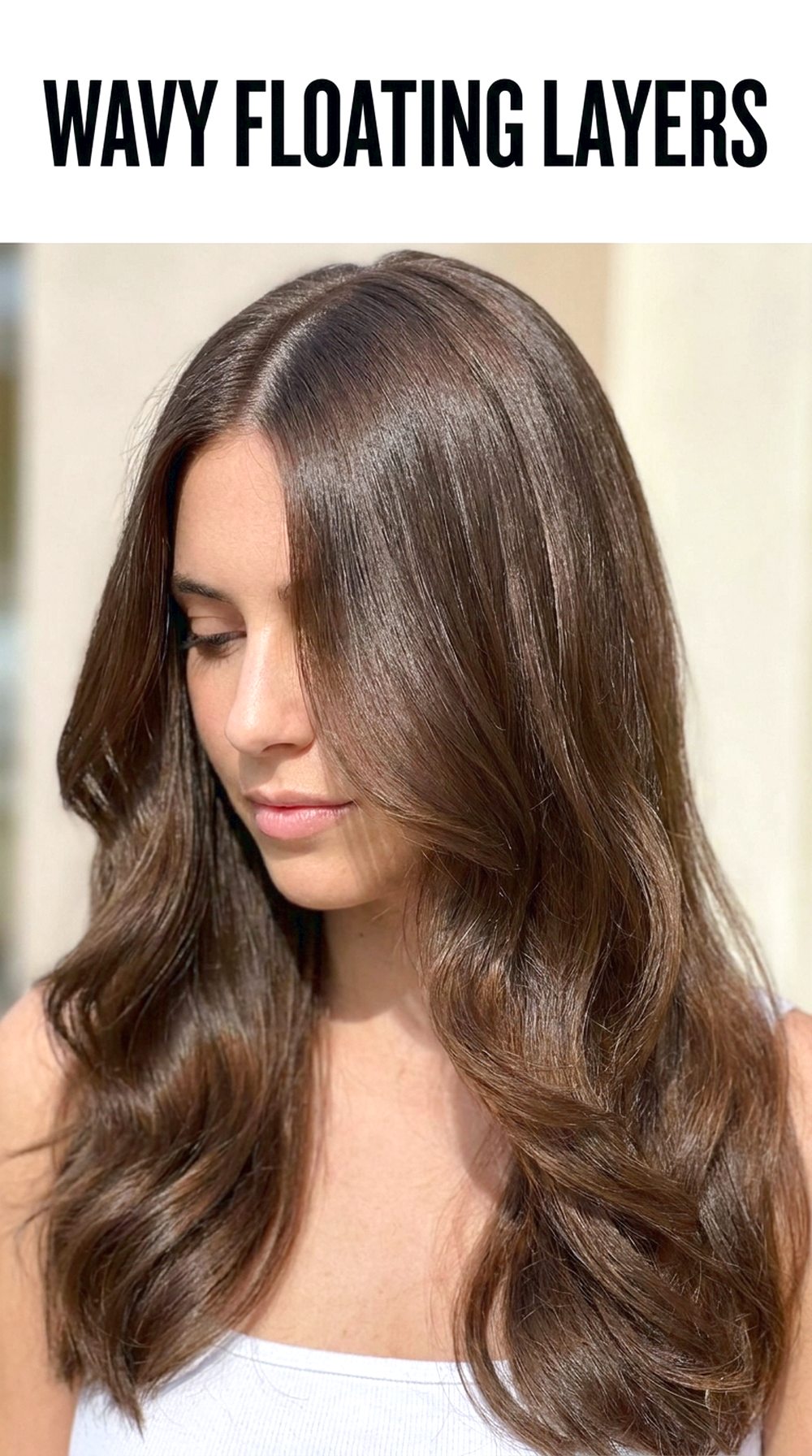
Wavy floating layers create a soft, romantic shape with movement throughout the lengths. The waves help separate the delicate layers, making the haircut appear fuller, lighter, and more textured. Loose bends beginning below the cheekbones are especially flattering because they keep the roots smooth while adding volume through the middle and ends. This versatile look works beautifully for daily wear, summer plans, holidays, parties, weddings, and date nights without looking overly styled or formal.
Pro tip: Curl medium-sized sections in alternating directions, then brush through them gently so the result looks like flowing waves instead of separate ringlets.
Sleek Long Floating Layers
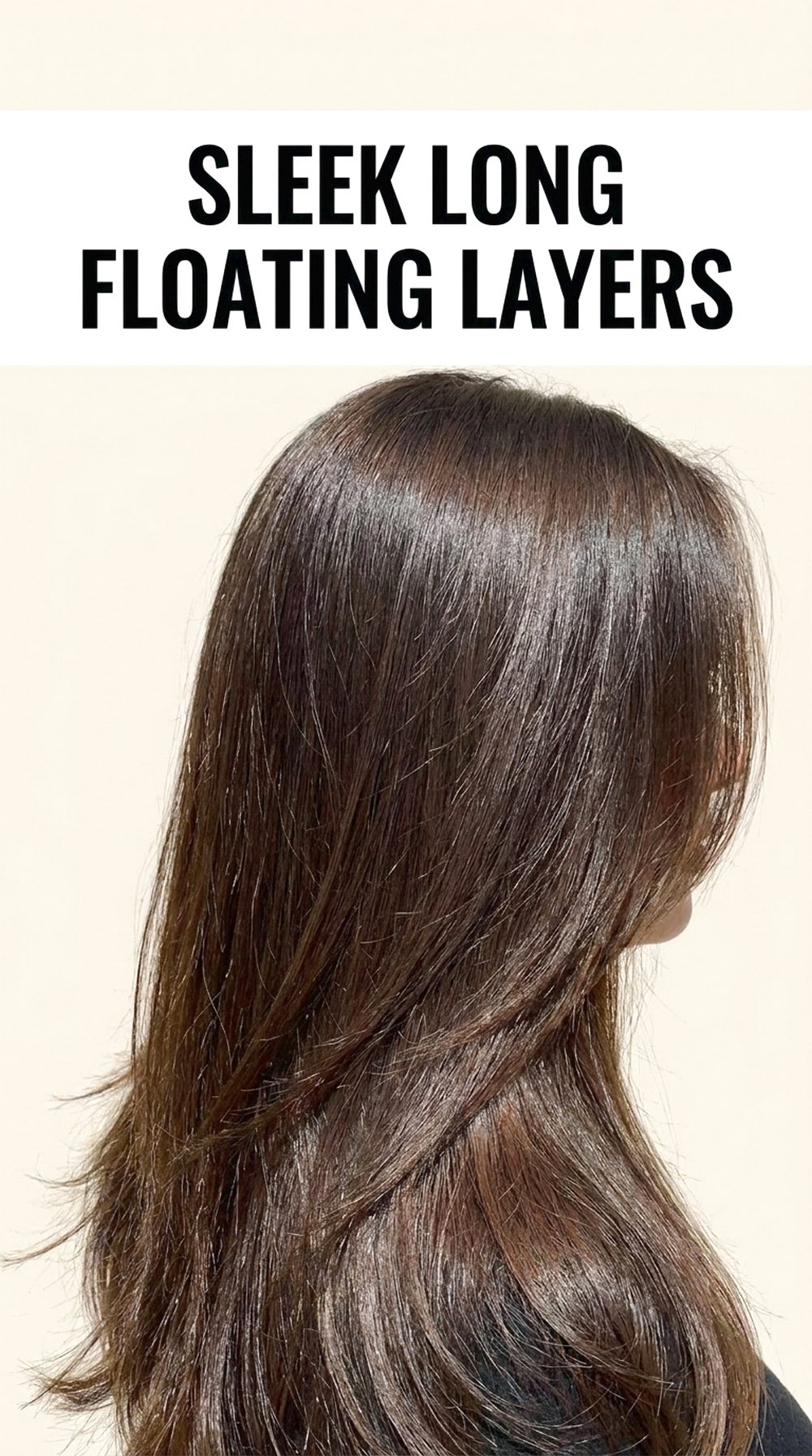
Sleek long floating layers offer a smooth, refined way to wear layered hair without adding visible curls or extra volume. The cut looks almost one-length near the roots, while fine layers appear gradually through the lower sections and tapered ends. This creates movement while preserving a clean, glossy outline. The style is ideal for work, formal occasions, minimalist outfits, dinners, and professional photographs. It also helps thick hair feel lighter without making the overall haircut look choppy.
Pro tip: Ask for subtle internal layers and soft point-cut ends, then use a heat protectant and flat iron in slow, controlled passes for a polished finish.
Floating Layers With Side-Swept Bangs
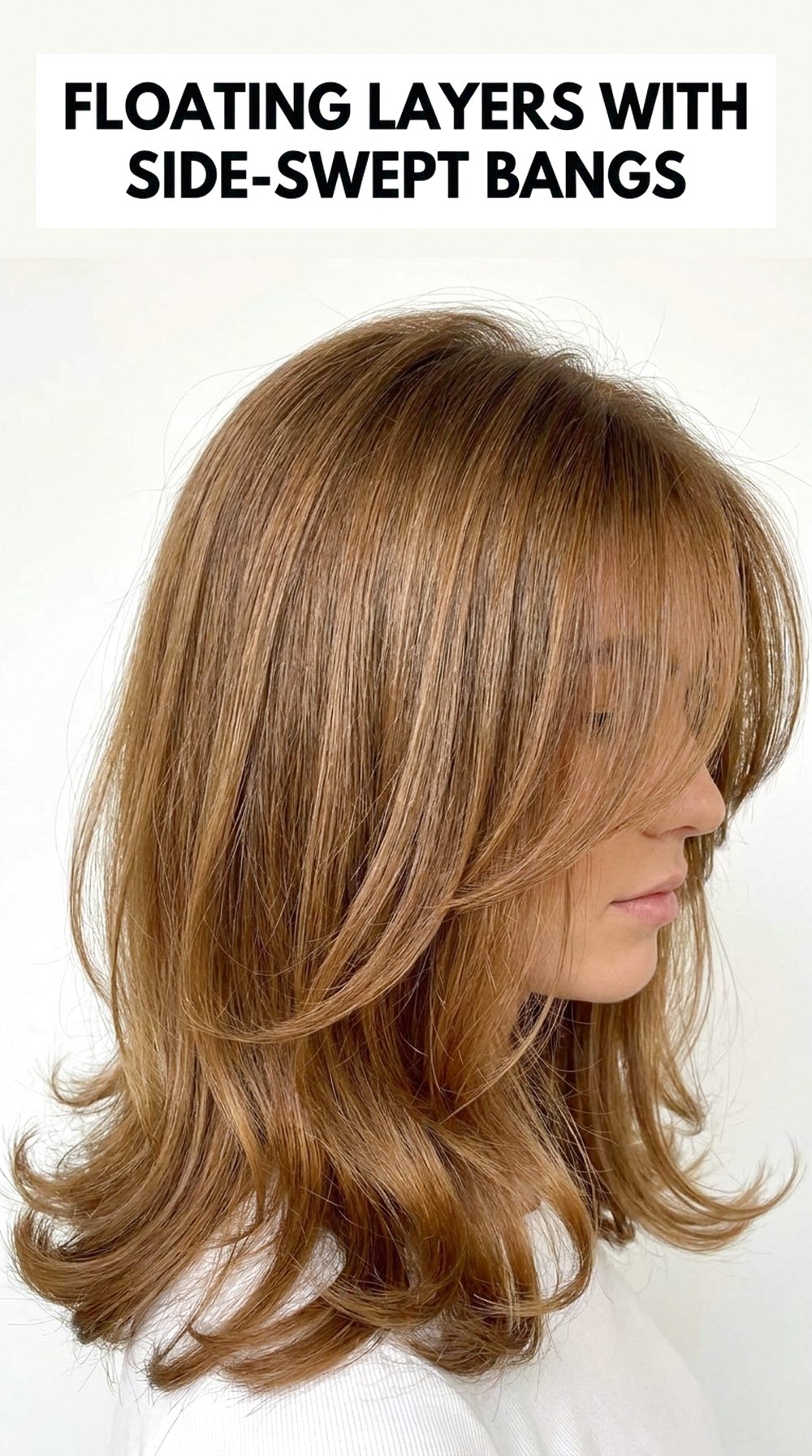
Floating layers with side-swept bangs create an elegant, asymmetrical frame that draws attention to the eyes and cheekbones. The fringe moves across the forehead and blends into longer sections near the jaw, while delicate layers continue through the remaining length. This style can soften square or round face shapes and add balance to a wider forehead. It works well for office wear, formal events, weddings, dinners, and everyday styling, especially when finished with smooth volume and gently curved ends.
Pro tip: Ask your stylist to cut the bangs according to your preferred parting so they fall naturally without requiring constant repositioning throughout the day.
Barely-There Floating Layers
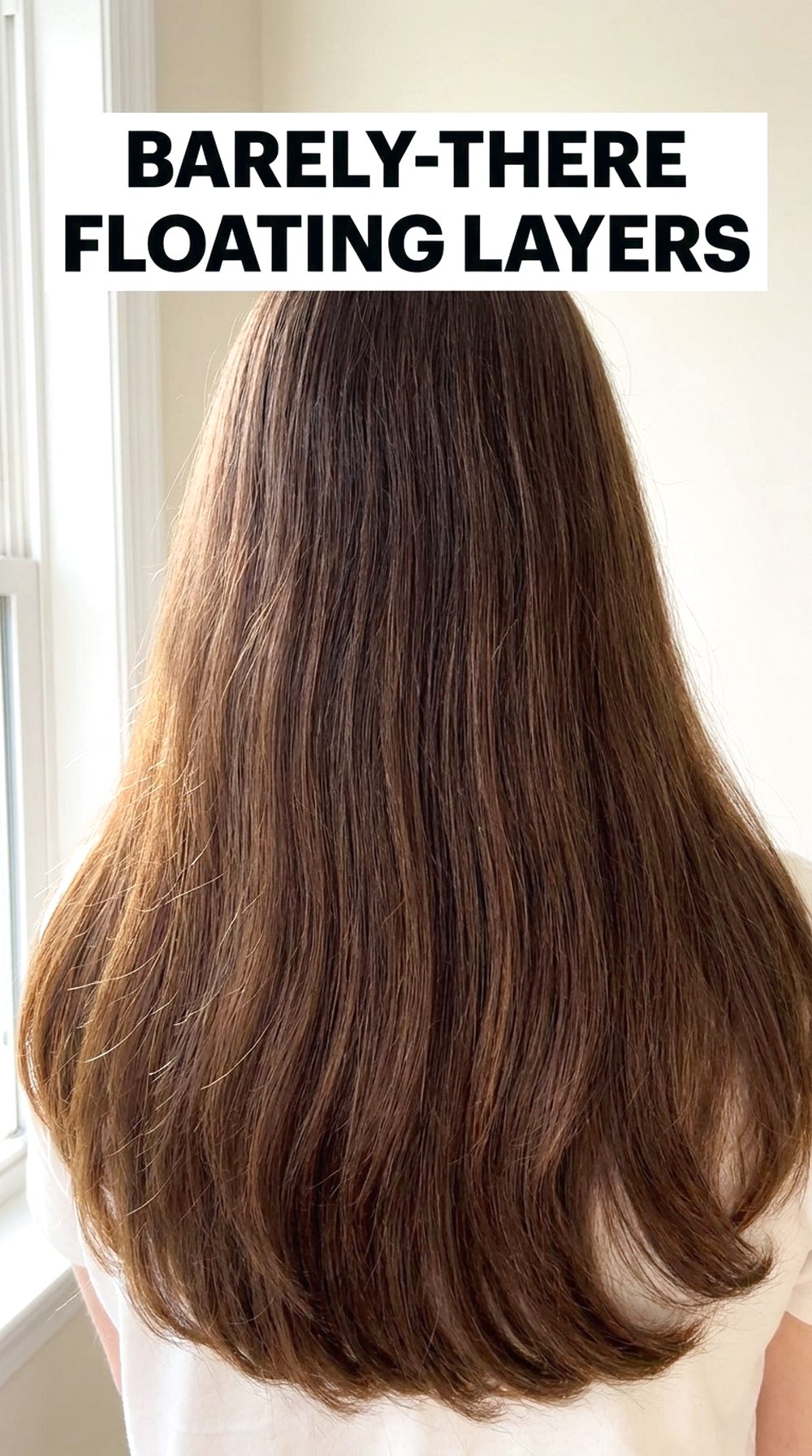
Barely-there floating layers are perfect for anyone who wants movement without an obviously layered haircut. Most of the hair remains one length, while subtle sections are removed from the lower third to prevent the shape from feeling heavy or flat. The result is full, healthy-looking hair with a soft natural swing. This low-maintenance option works for school, work, busy routines, formal events, and anyone who often wears ponytails, braids, buns, or smooth straight styles.
Pro tip: Tell your stylist you want invisible movement through the lower lengths while keeping the baseline thick, blunt-looking, and easy to tie back.
Conclusion
Long hair with delicate floating layers is flexible because the layers can be adjusted to create anything from barely visible movement to a full butterfly-style shape. The haircut can look sleek, wavy, bouncy, romantic, or naturally undone depending on how it is styled. It can also be personalized by changing the overall length, layer density, starting point, bangs, and amount of face framing. Fine hair may benefit from fewer layers, while thick hair can handle more internal shaping. Choosing the right version for your face shape, natural texture, and daily styling routine will help the haircut remain flattering and manageable.
CTA
Choose one or two favorite ideas from this list and save clear photo references that show the front, sides, and back. Bring them to your salon appointment and discuss your face shape, natural hair texture, current density, and usual styling routine with your stylist. Together, you can adjust the layers, bangs, length, and finish to create a version that looks beautiful and still feels practical for everyday life.
FAQs
Do floating layers make long hair look thinner?
Delicate floating layers should not make the hair look thin when the perimeter is kept full. However, too many layers can reduce density at the ends.
Are floating layers suitable for fine hair?
Yes. Fine hair can benefit from a few subtle layers placed around the face or lower lengths, but heavy layering should usually be avoided.
How often should floating layers be trimmed?
A trim every eight to twelve weeks can maintain the shape and remove dry ends. Longer intervals may work when the layers are very subtle.
Can floating layers be worn without heat styling?
Yes. Floating layers can air-dry naturally, especially on wavy hair. A lightweight styling cream or mousse can help define their movement.