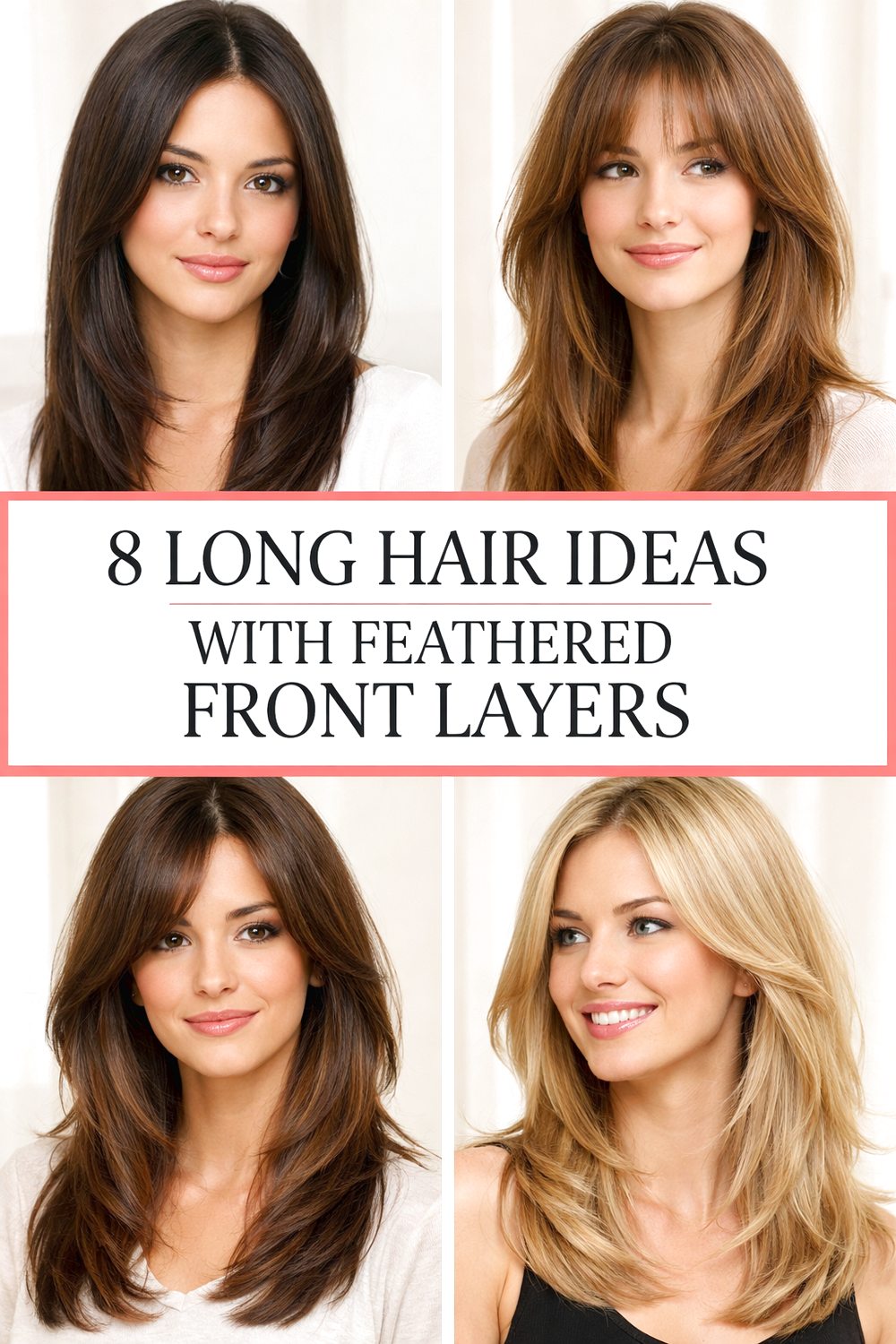
Feathered front layers are soft, angled sections cut around the face to create movement without removing too much length. They usually begin near the cheekbones, chin, or jawline and blend smoothly into long hair.
This style suits straight, wavy, and lightly curly hair, and it can be adjusted for round, oval, square, or heart-shaped faces. The cut is fairly low-maintenance, although a round-brush blowout or quick styling session helps the feathered shape look more defined.
Quick List
- Classic Feathered Front Layers
- Feathered Layers With Curtain Bangs
- Feathered Layers With Flipped Ends
- Soft Feathered Layers for Straight Hair
- Voluminous Feathered Blowout
- Feathered Front Layers With Waves
- Chin-Length Feathered Face Frame
- Side-Parted Feathered Front Layers
Classic Feathered Front Layers
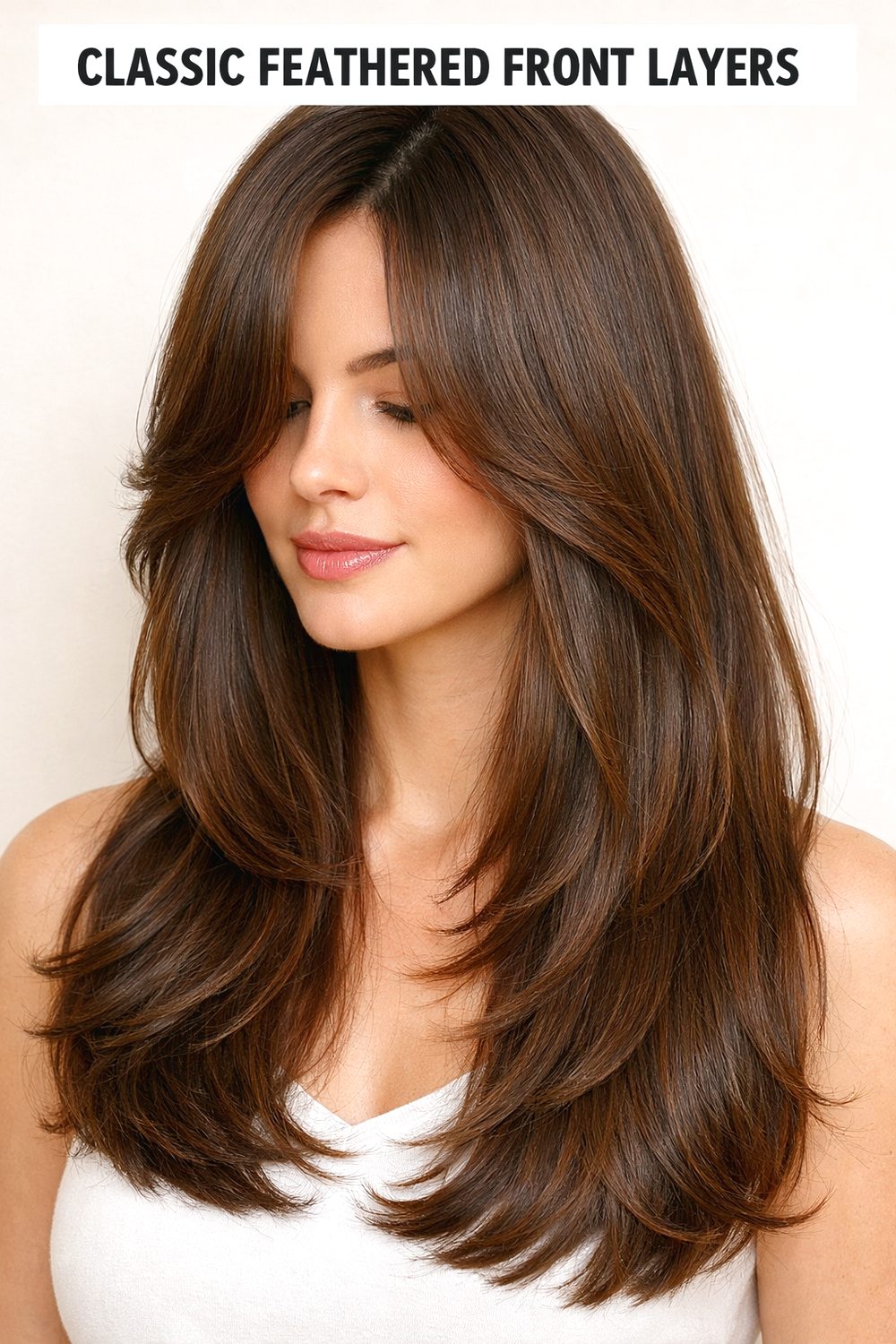
Classic feathered front layers give long hair a soft, flowing shape while keeping most of the length full. The shorter pieces usually begin near the cheekbones and gradually blend past the shoulders. This creates movement around the face without making the ends look thin. The style feels polished, feminine, and easy to wear. It works especially well for daily routines, office looks, casual outings, and anyone wanting a noticeable change without choosing a major haircut.
Pro tip: Ask your stylist for softly angled face-framing sections that blend into the main length without creating visible steps.
Feathered Layers With Curtain Bangs
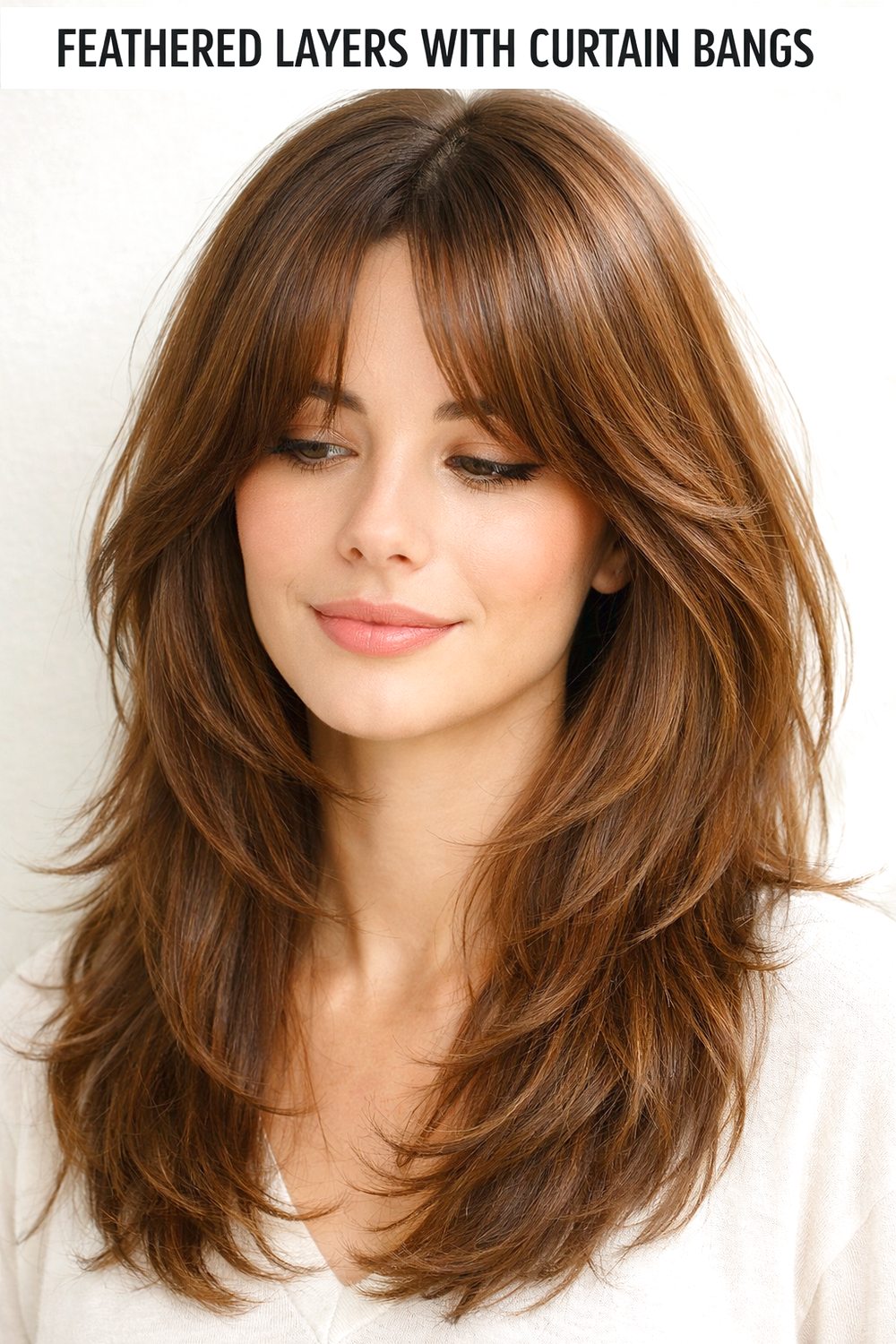
Curtain bangs make feathered front layers look airy and balanced. The bangs separate through the center and sweep toward the sides, while longer pieces frame the cheekbones and jawline. This combination can soften a wide forehead and highlight the eyes without covering the whole face. It suits long straight or wavy hair and works well for school, work, dates, or special events. The style needs light blow-drying, but it grows out more smoothly than short blunt bangs.
Pro tip: Ask for curtain bangs that are long enough to tuck behind the ears and blend into cheekbone-length layers.
Feathered Layers With Flipped Ends
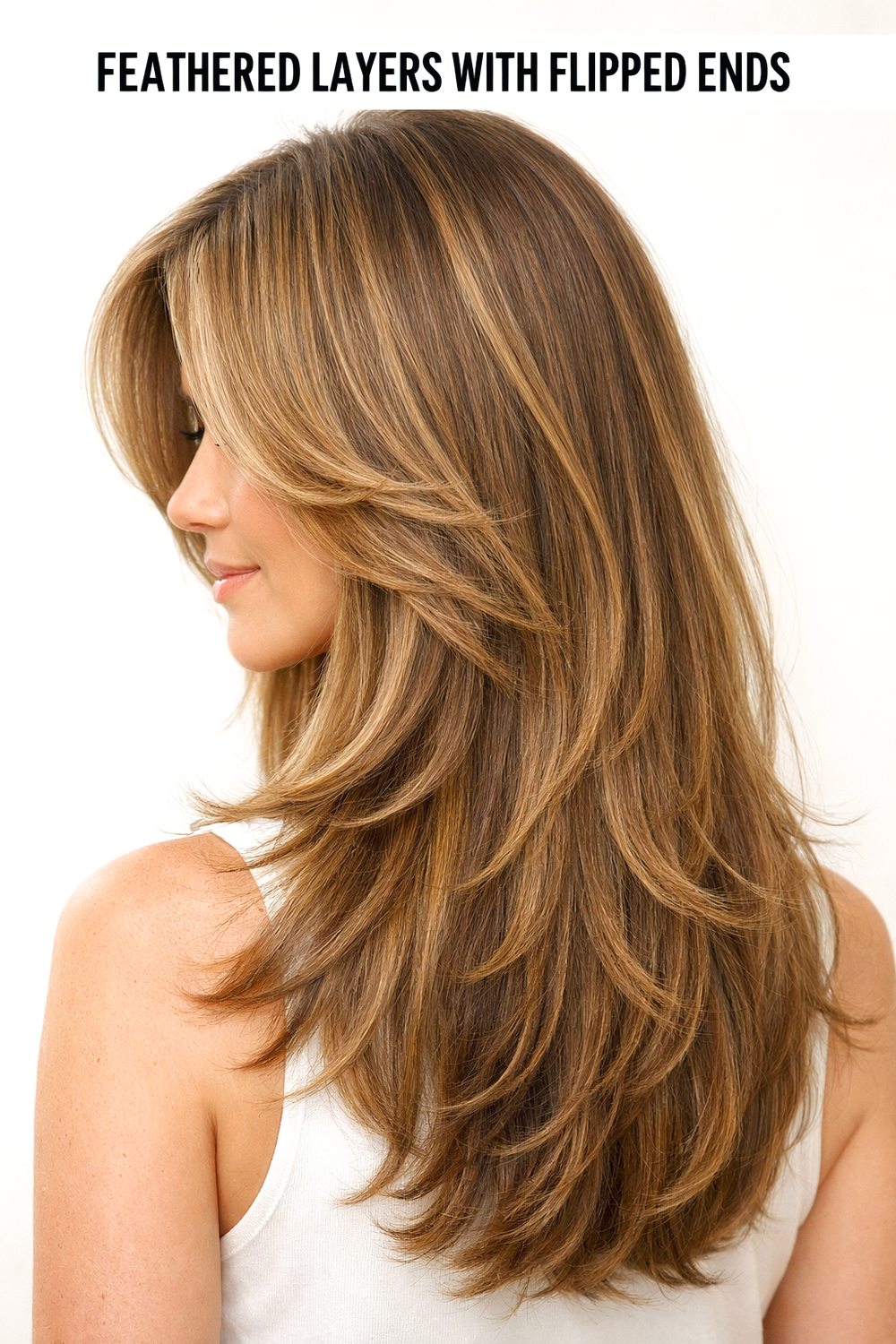
Feathered layers with flipped ends bring a light retro feeling to long hair. The front pieces curve away from the cheeks, while the ends turn outward to create bounce and visible movement. This shape makes straight or slightly wavy hair look fuller without relying on tight curls. It is a playful option for parties, dinners, summer outings, and polished everyday looks. The flipped finish also helps show the different layer lengths clearly, especially on smooth or highlighted hair.
Pro tip: Use a medium round brush to turn the ends outward, then finish with flexible hairspray instead of a stiff holding spray.
Soft Feathered Layers for Straight Hair
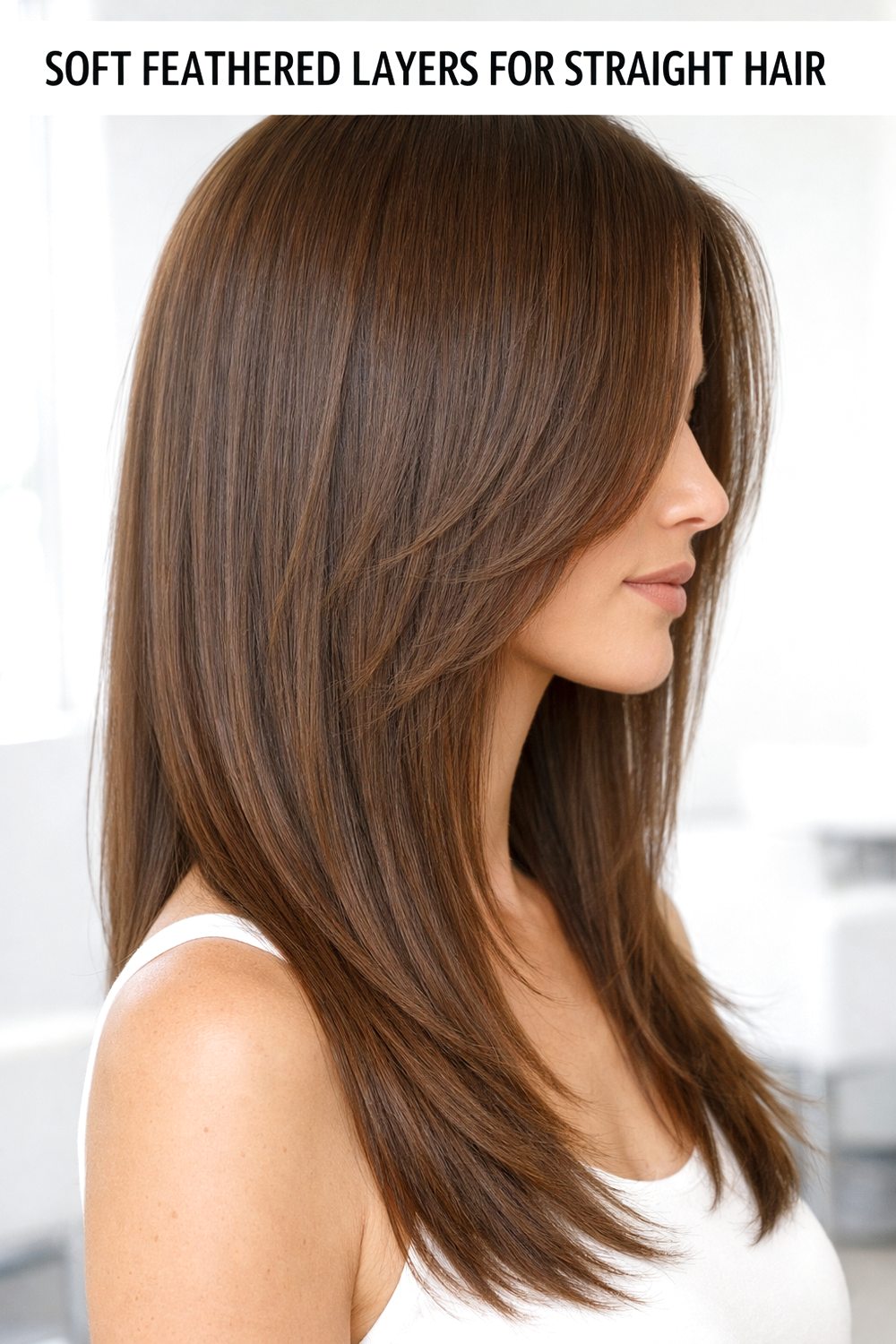
Soft feathered layers can stop long straight hair from looking flat or heavy. Delicate sections around the chin and collarbone create shape while the back remains sleek, smooth, and full. The layering is subtle, so the haircut still feels simple and easy to manage. It works well for fine, medium, or thick straight hair and suits professional settings, school, travel, and daily wear. The soft front movement also makes ponytails and half-up styles look more flattering.
Pro tip: Ask your stylist to keep the interior layers minimal so the ends stay dense and the front sections remain easy to style.
Voluminous Feathered Blowout
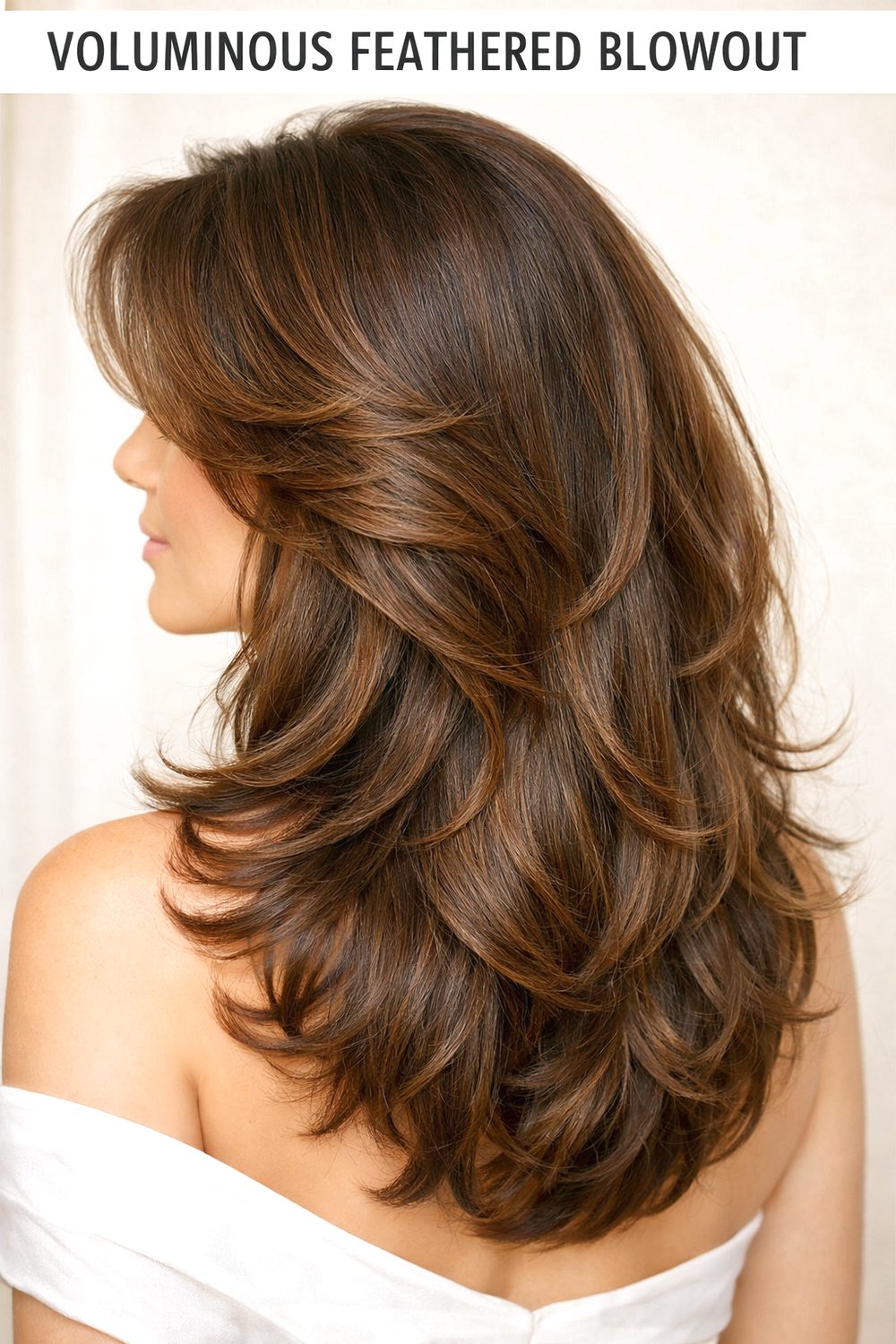
A voluminous feathered blowout gives long layers a lifted, glamorous finish. The roots have gentle height, the front pieces sweep away from the face, and the ends fall into smooth curves. This creates a full shape without making the hair look stiff or overly curled. It is an attractive choice for weddings, parties, dinners, photography, or any occasion that calls for a polished style. Thick hair holds this look well, but fine hair can achieve it with lightweight volume products.
Pro tip: Blow-dry the front layers over a large round brush and roll each section away from the face for a smooth feathered bend.
Feathered Front Layers With Waves
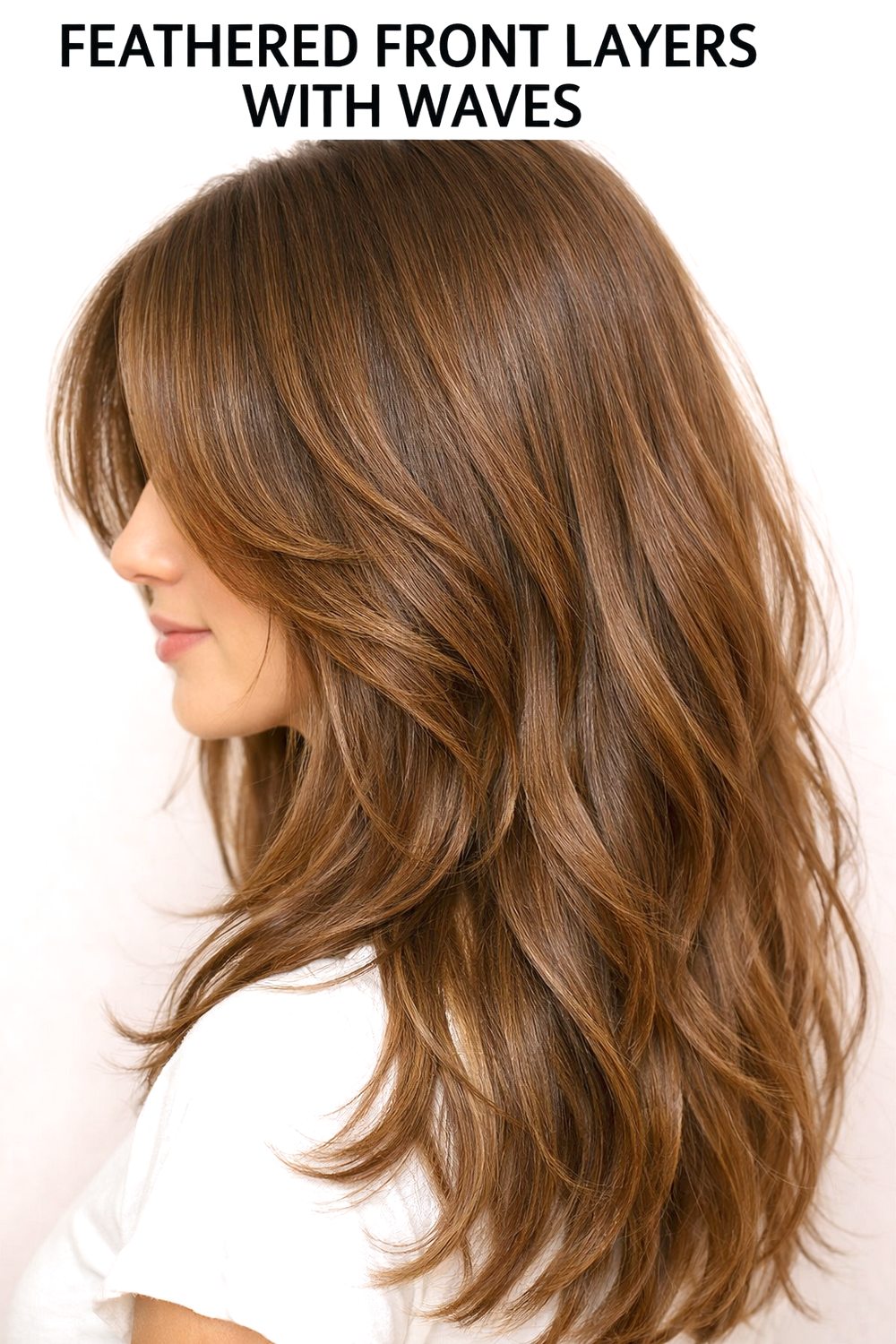
Loose waves give feathered front layers a relaxed and romantic appearance. The shorter pieces curve gently around the cheeks, while soft bends continue through the longer sections. This helps the layers blend naturally and gives the hair more texture without creating a formal curled style. It suits medium to thick hair and works beautifully for weekends, summer events, dates, holidays, and casual celebrations. The waves can also make highlighted or dimensional color appear brighter by reflecting light from different angles.
Pro tip: Curl each front section away from the face, then loosen the waves with your fingers instead of brushing them heavily.
Chin-Length Feathered Face Frame
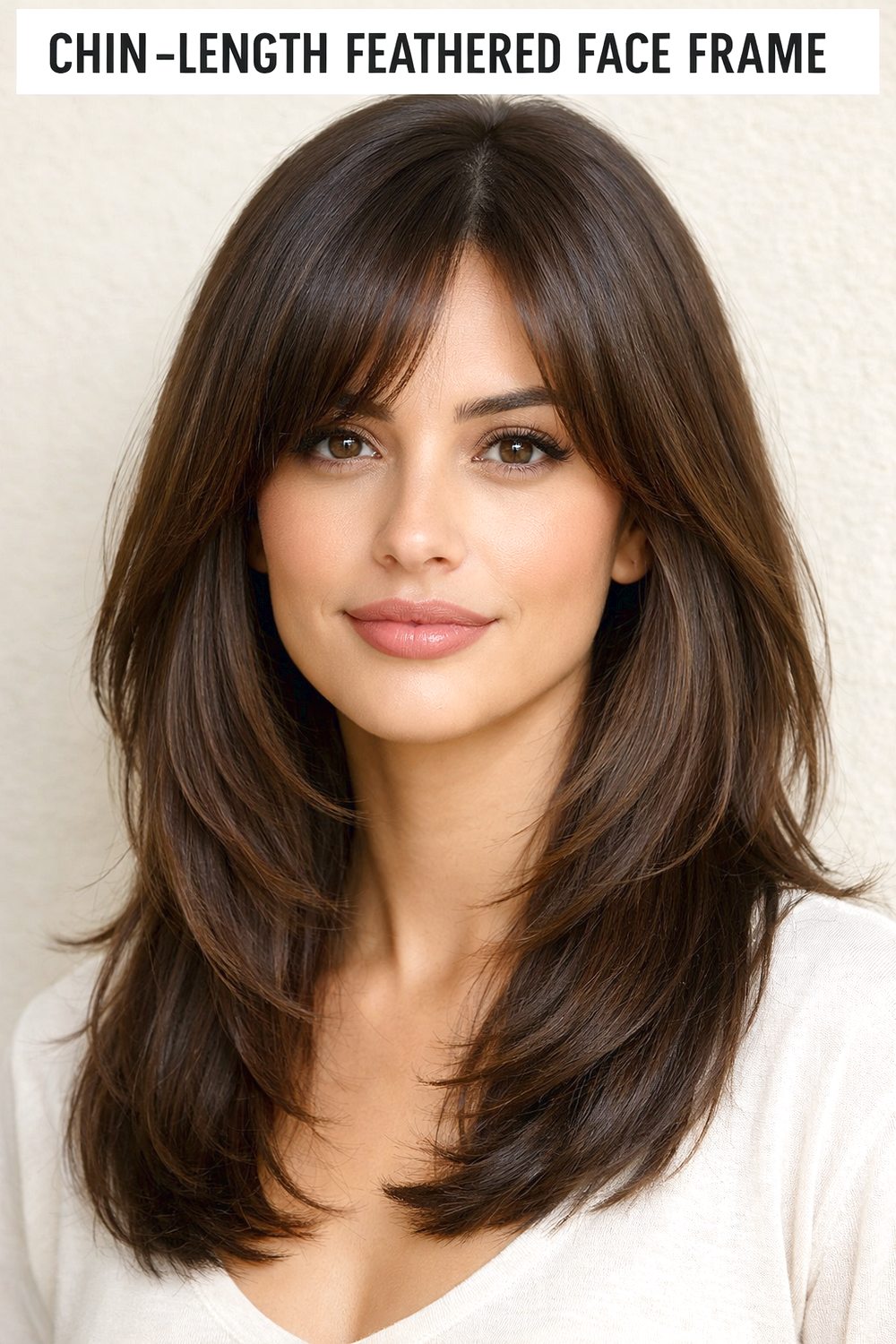
A chin-length feathered face frame gives long hair stronger definition around the jawline. The shortest sections sit near the chin before blending into longer shoulder-length pieces. This shape can make the cheekbones look more noticeable and soften a round, square, or full face. It feels modern while keeping the overall haircut long and versatile. The style works well for daily wear, office settings, formal events, and ponytails because the shorter layers create softness around the face.
Pro tip: Ask your stylist to cut the chin-length pieces according to your jawline rather than using the same starting point on both sides.
Side-Parted Feathered Front Layers
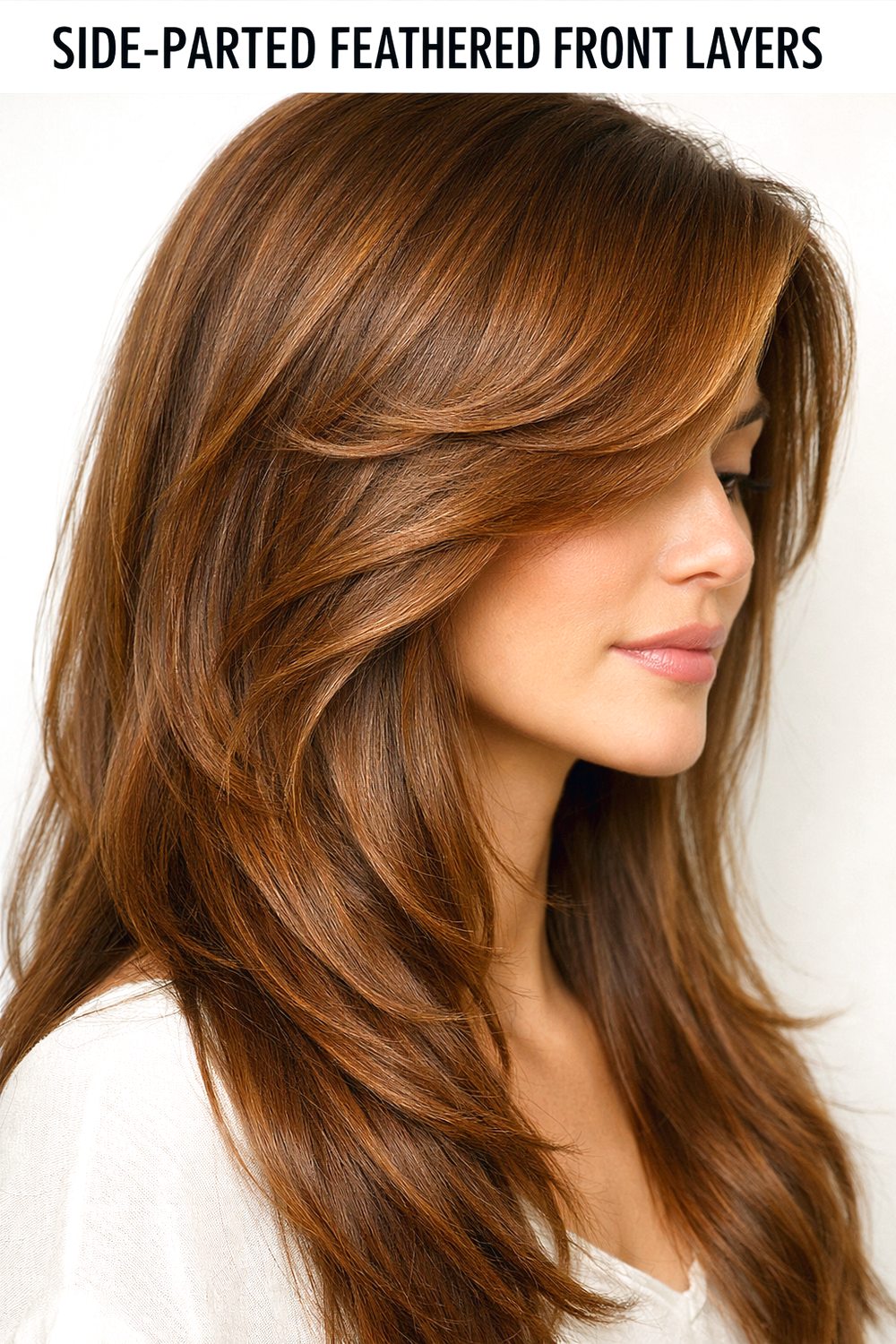
A side part adds lift and gentle asymmetry to feathered front layers. One side falls softly across the forehead, while the other opens the face and shows the cheekbone. The angled layers then blend into the longer hair for a smooth, sweeping shape. This style can add balance to round or square faces and gives fine hair the appearance of extra volume. It works well for professional looks, evening events, formal occasions, and anyone who prefers more movement around the crown.
Pro tip: Ask for a flexible side part and longer front layers so you can switch the parting without creating uneven gaps.
Conclusion
Long hair with feathered front layers is flexible because the shape can be soft, dramatic, sleek, wavy, or full of volume. The layers refresh long hair without forcing you to lose the length you enjoy. They can also make heavy hair feel lighter and give fine hair more movement. You can adjust the overall length, density, layer placement, bangs, and styling method to match your face shape and natural hair texture. Some versions need a round-brush blowout, while others air-dry easily. Choosing the right starting point for the shortest layer will help the haircut fit your daily routine.
CTA
Choose one or two feathered layer ideas that match your favorite look and save clear photo references from the front and side. Take them to your stylist and discuss your face shape, natural hair texture, current length, and normal styling routine. This will help your stylist create a feathered shape that looks attractive and remains practical between salon visits.
FAQs
Are feathered front layers good for long hair?
Yes. They add movement and shape while allowing you to keep most of your length.
Do feathered layers work on fine hair?
Yes, but the layers should remain soft and limited so the ends do not look thin.
How do you style feathered front layers?
Use a round brush or large roller to curve the front sections away from the face.
How often should feathered layers be trimmed?
A trim every eight to twelve weeks usually keeps the face-framing shape fresh.