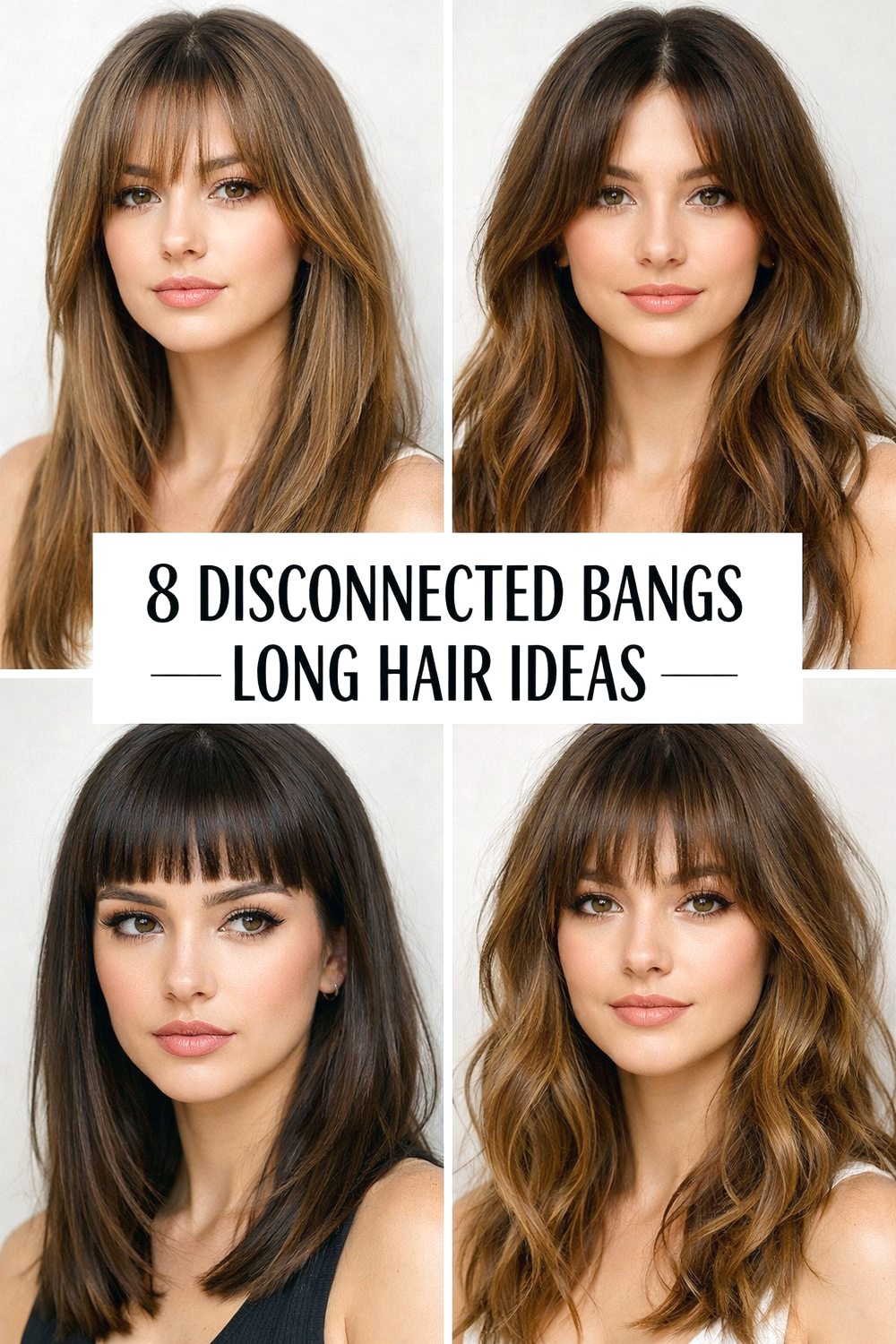
Disconnected bangs are cut as a separate feature rather than blending smoothly into the longer hair. This creates a noticeable contrast between the short fringe and the flowing lengths, giving the hairstyle a modern, expressive shape.
These bangs can suit straight, wavy, fine, or thick hair, depending on the chosen texture. They are especially flattering for oval, heart, round, and longer face shapes. Most versions need light daily styling, while blunt and micro bangs require more frequent trims.
Quick List
- Wispy Disconnected Bangs
- Disconnected Curtain Bangs
- Blunt Disconnected Bangs
- Side-Swept Disconnected Bangs
- Choppy Disconnected Bangs
- Bottleneck Disconnected Bangs
- Disconnected Micro Bangs
- Feathered Disconnected Bangs
Wispy Disconnected Bangs
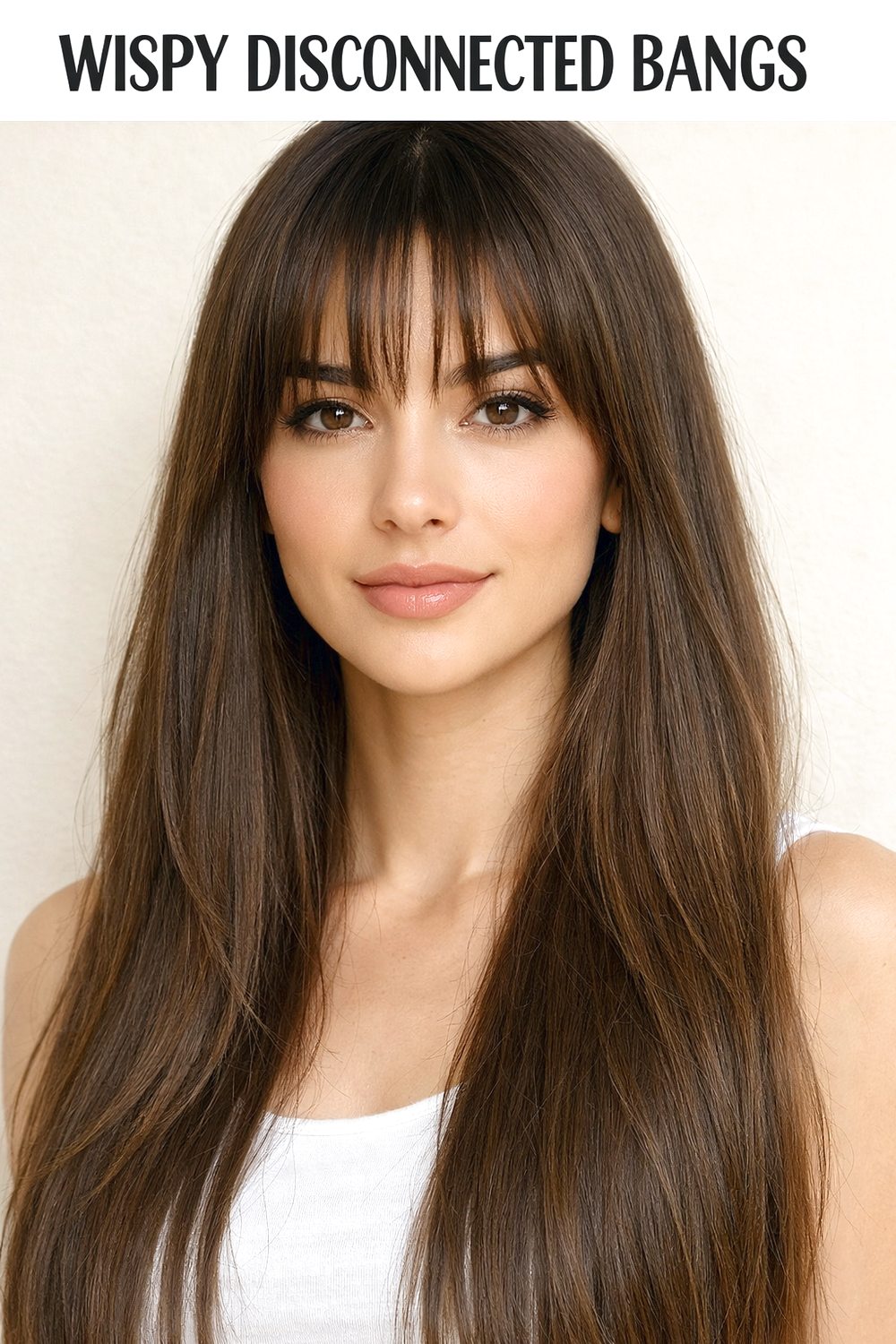
Wispy disconnected bangs create a light, airy fringe that sits separately from the long lengths. The thin pieces soften the forehead without blending heavily into the sides, giving the haircut a modern, slightly undone feel. This look works beautifully on straight or softly wavy hair and is especially flattering for oval, heart, and longer face shapes. It is easy for daily wear, work, school, or casual weekends because the fringe needs only quick smoothing.
Pro tip: Ask your stylist for a low-density fringe with lightly point-cut ends. Use a small round brush or flat iron on low heat to keep the pieces soft and separated.
Disconnected Curtain Bangs
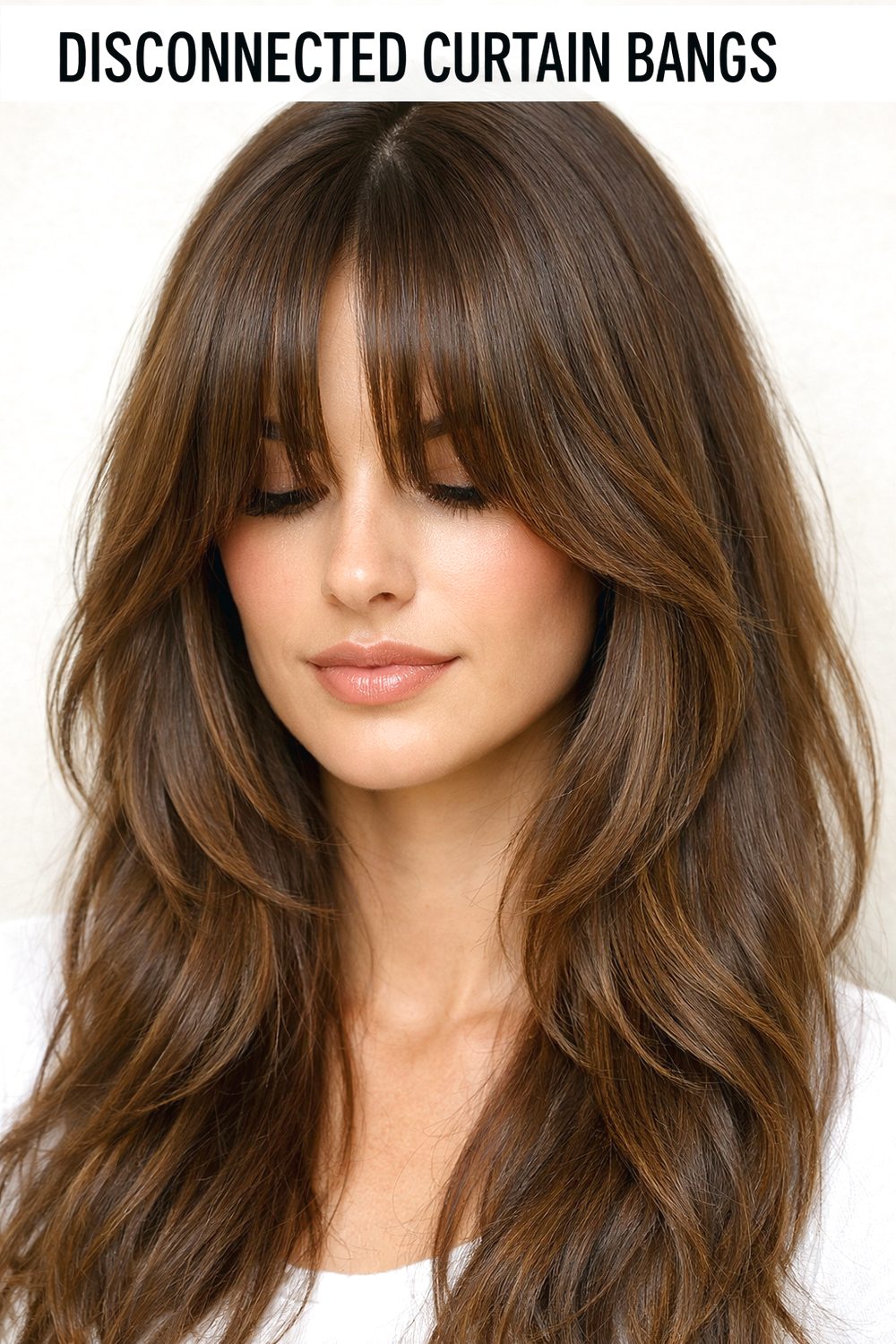
Disconnected curtain bangs open through the centre while staying visibly separate from the long hair behind them. The shorter front pieces frame the brows and cheekbones, while the remaining length keeps the style soft and flowing. This version suits medium to thick hair and flatters round, square, and oval faces by adding vertical shape. It feels polished enough for work or events, yet relaxed for everyday wear, especially when styled with loose bends or a smooth blowout.
Pro tip: Ask for brow-length centre pieces with longer outer edges, but request a clear break before the main layers. Blow-dry each side away from the face.
Blunt Disconnected Bangs
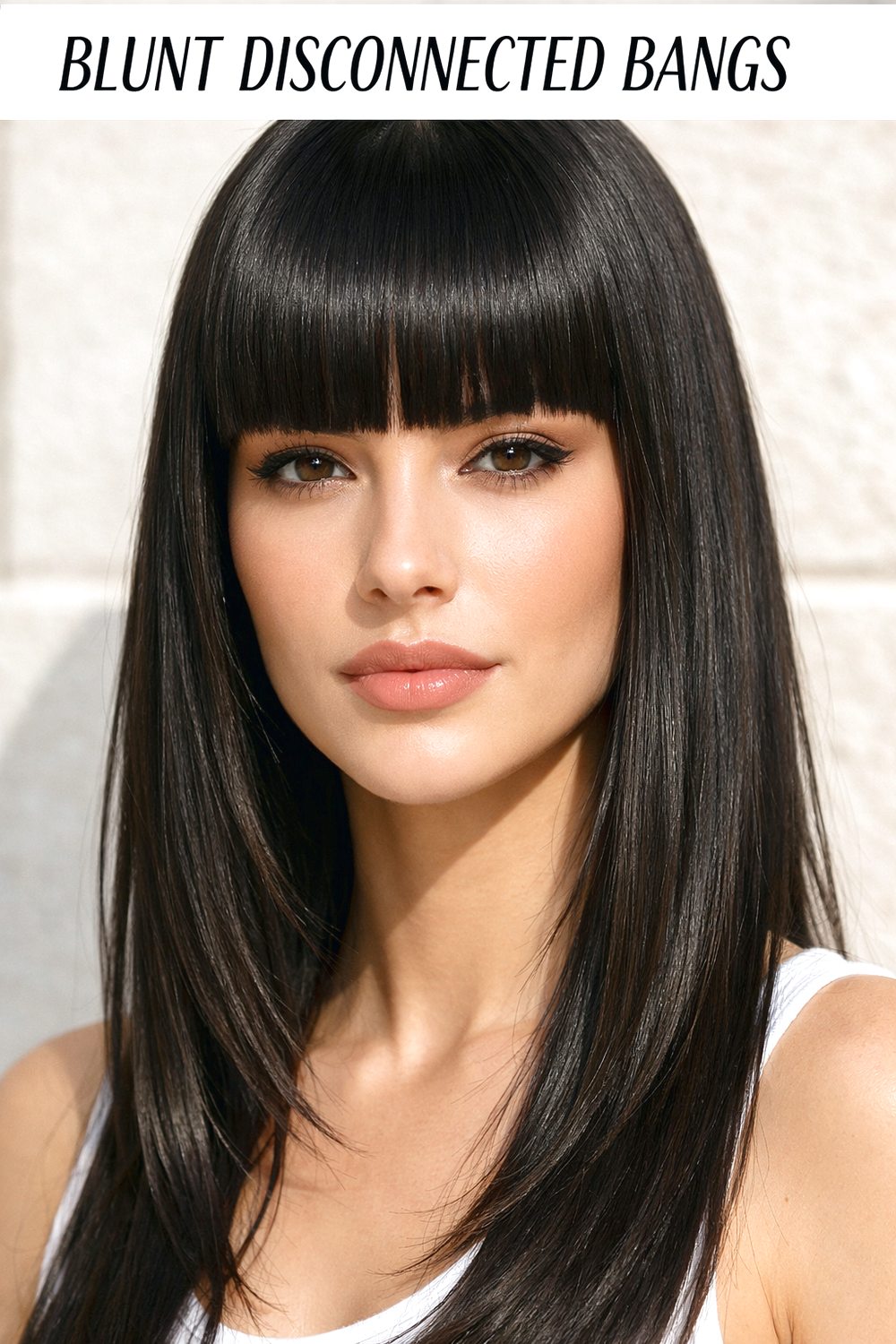
Blunt disconnected bangs make a bold line across the forehead while the rest of the hair remains long and clean. The sharp contrast gives the style a fashion-forward, graphic look that stands out from softer layered fringes. It works best on straight or lightly textured hair and suits oval, heart, and longer face shapes. Choose it for creative work, nights out, or statement everyday style. The fringe needs regular trims and quick daily styling to stay crisp.
Pro tip: Ask your stylist to cut the fringe dry so the final length is easier to judge. Schedule trims every three to five weeks to maintain the clean edge.
Side-Swept Disconnected Bangs
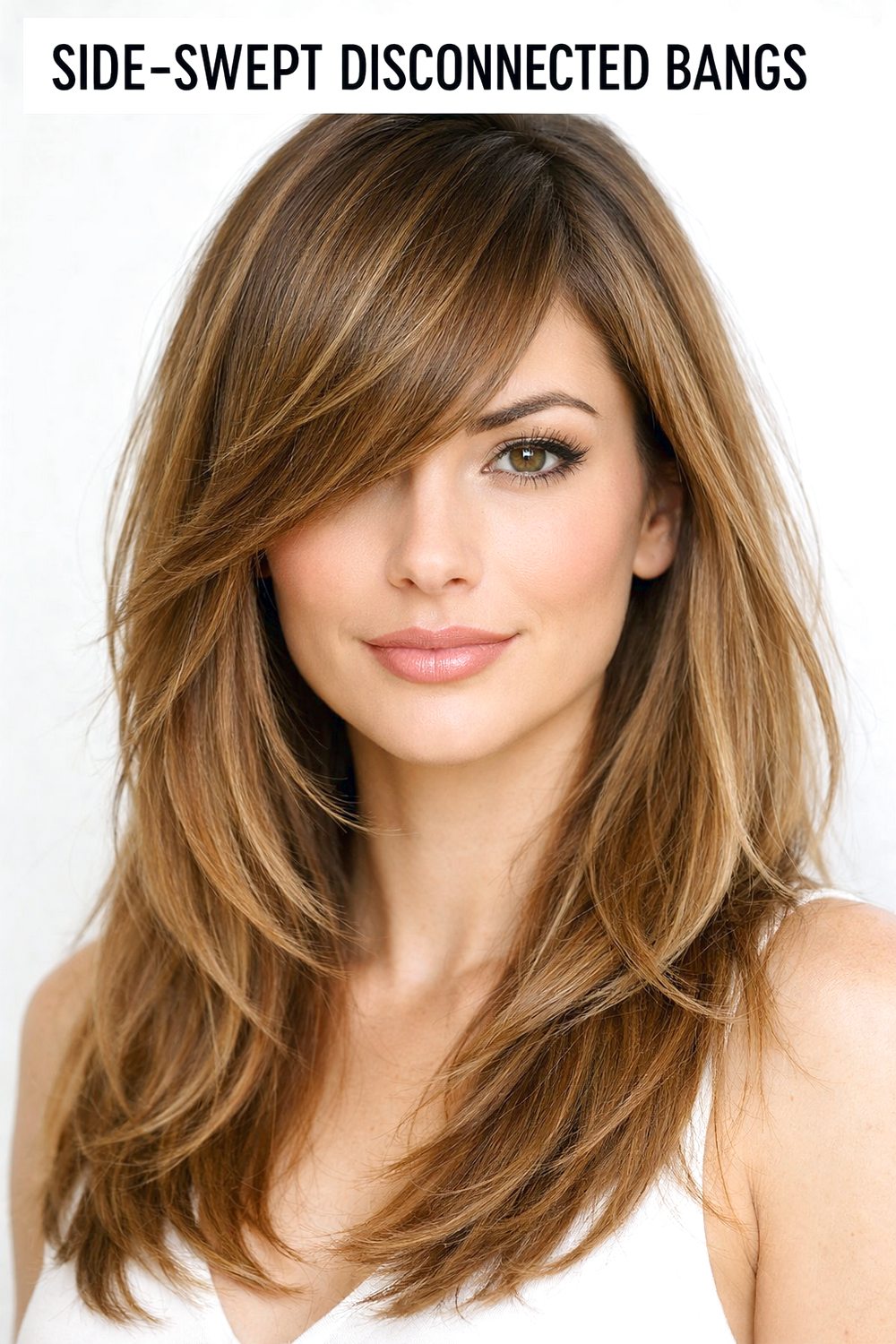
Side-swept disconnected bangs angle across the forehead without fully blending into the long layers. The result is soft, flattering, and easy to move from one side to the other. This style is ideal for straight, wavy, or fine hair and can help soften square jaws or balance round and heart-shaped faces. It works well for office days, dinners, weddings, and daily wear because the diagonal shape looks polished without feeling severe or overly structured.
Pro tip: Ask for a fringe that begins near the eyebrow and becomes longer toward the temple. Use a light styling spray rather than heavy wax to preserve movement.
Choppy Disconnected Bangs
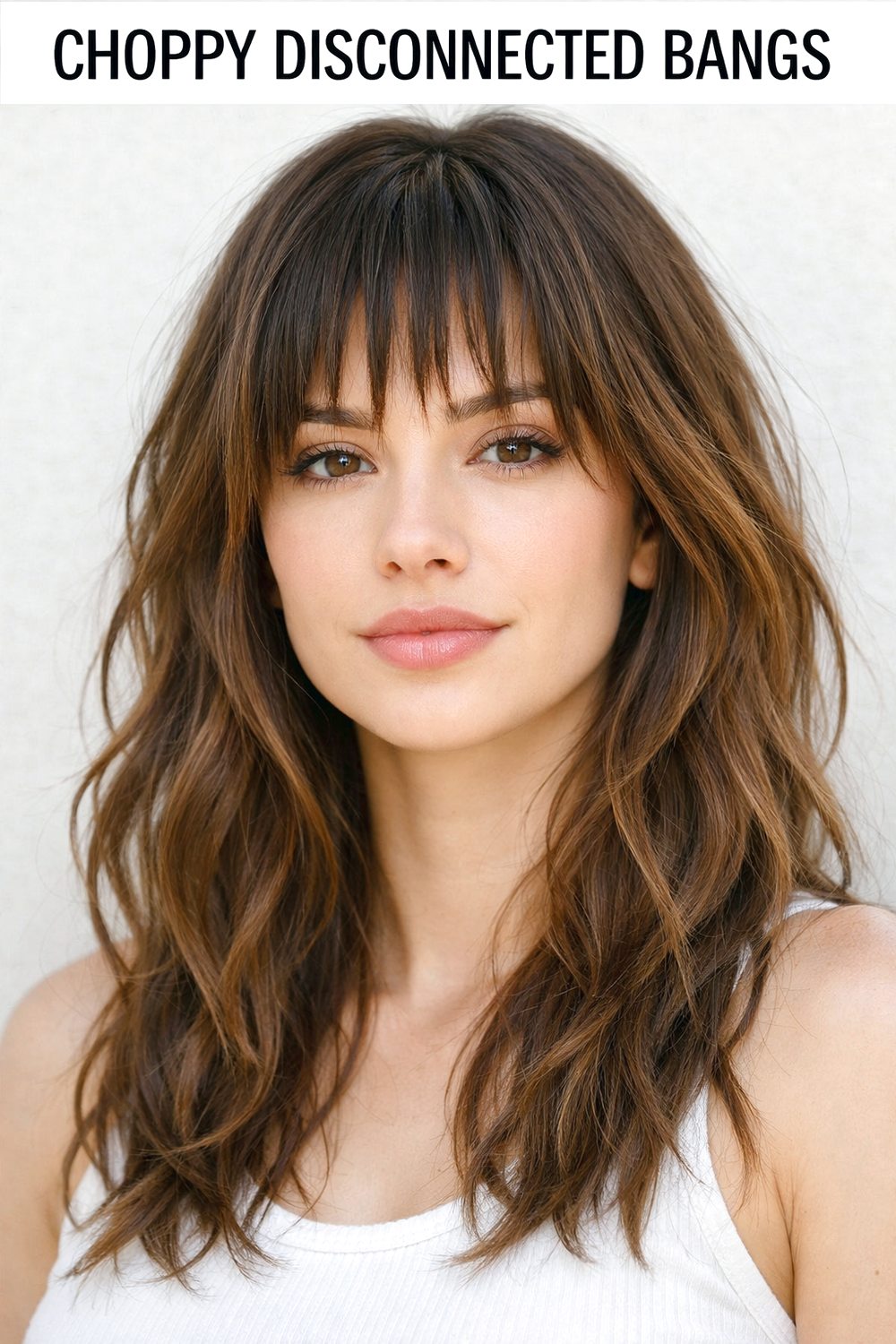
Choppy disconnected bangs use uneven, piecey ends to create texture and movement above long hair. The fringe looks intentionally separated, giving the cut an edgy but wearable finish. This idea suits straight, wavy, or slightly coarse hair and works well on oval, round, and heart-shaped faces. It is a strong choice for concerts, weekends, creative workplaces, or casual summer styling. A little texture paste keeps the pieces defined without making the bangs stiff or heavy.
Pro tip: Ask your stylist to use point cutting rather than a straight cutting line. Warm a tiny amount of texture paste between your fingers and apply only to the ends.
Bottleneck Disconnected Bangs
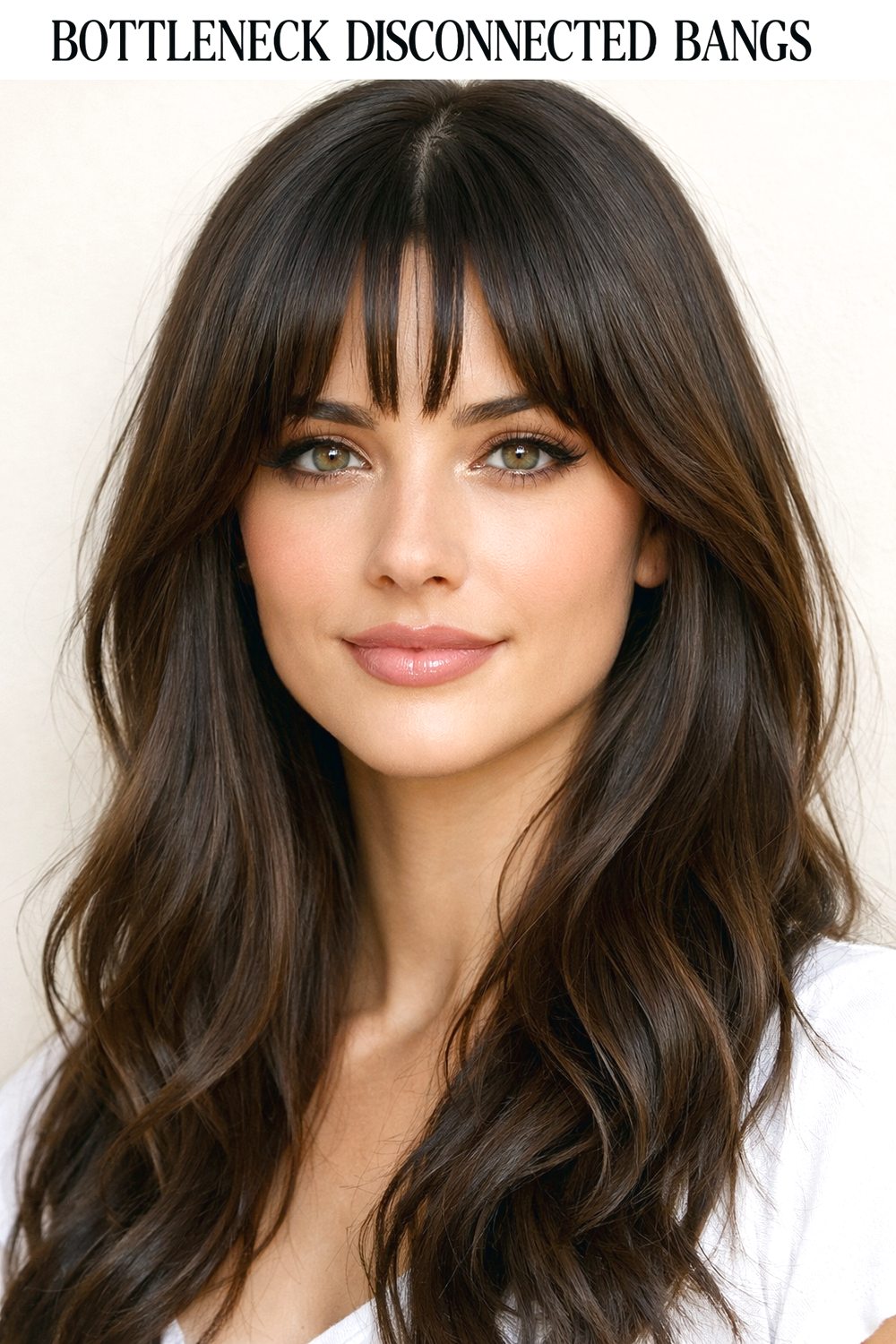
Bottleneck disconnected bangs are narrow and shorter near the centre, then curve longer toward the outer brows. Unlike fully blended bottleneck bangs, this version keeps a visible break before the long hair begins. The shape highlights the eyes and cheekbones while adding gentle width around the face. It suits wavy or straight hair and flatters oval, diamond, and heart-shaped faces. Wear it with a blowout, ponytail, or loose waves for work, dates, and special occasions.
Pro tip: Ask your stylist to create a narrow centre section before gradually extending the outer corners. Style the fringe with a small round brush for a soft curved shape.
Disconnected Micro Bangs
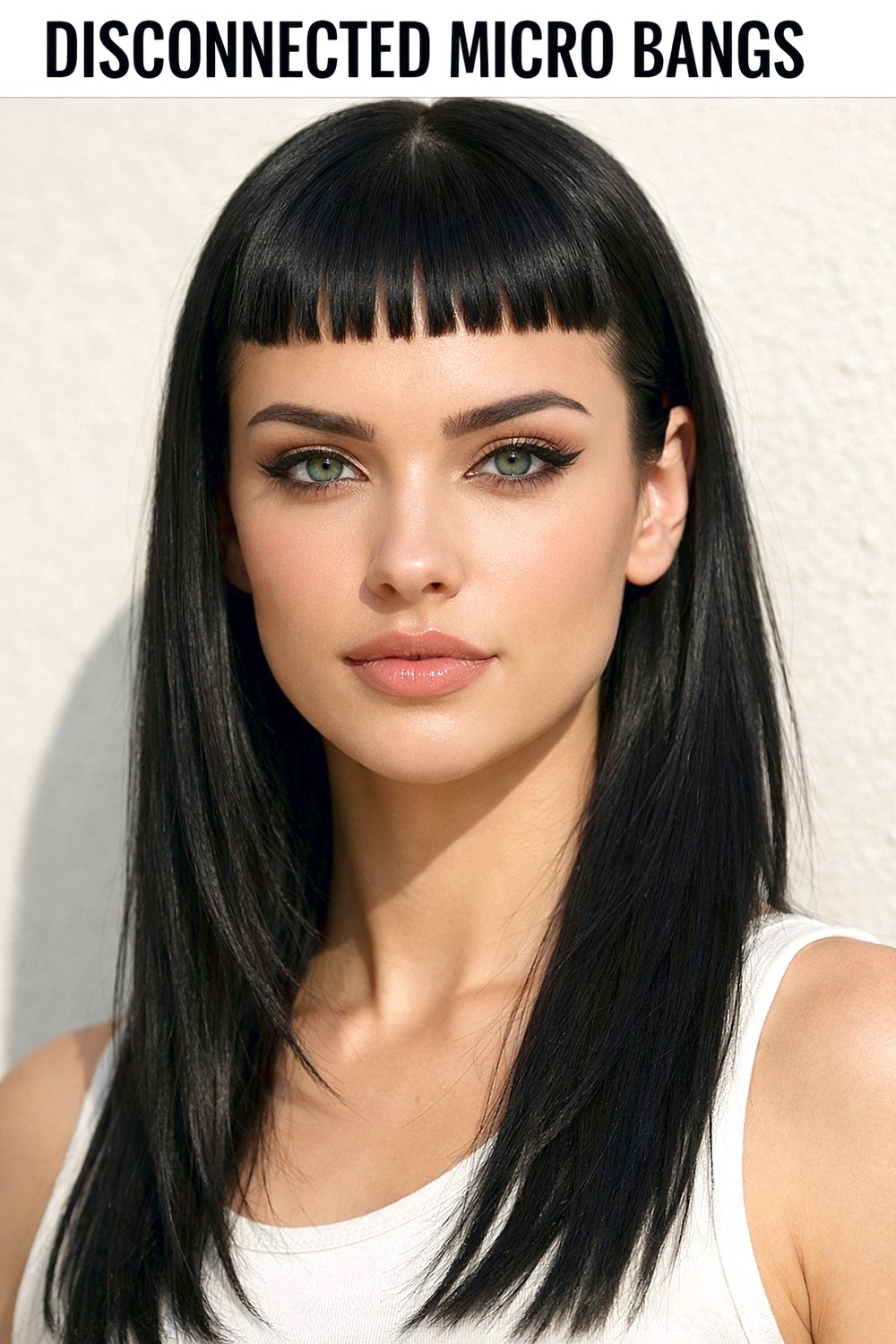
Disconnected micro bangs sit high above the eyebrows, leaving a clear gap between the short fringe and the long hair. The contrast feels artistic, confident, and slightly retro, especially with sleek lengths or soft natural waves. This cut works best on straight to gently wavy hair and often flatters oval, heart, and petite face shapes. It is perfect for fashion-forward events, creative settings, or a dramatic refresh, but it does require frequent trims to keep the line intentional.
Pro tip: Ask your stylist to begin slightly longer than your preferred result because short bangs can spring upward. Avoid cutting them at home unless you have professional experience.
Feathered Disconnected Bangs
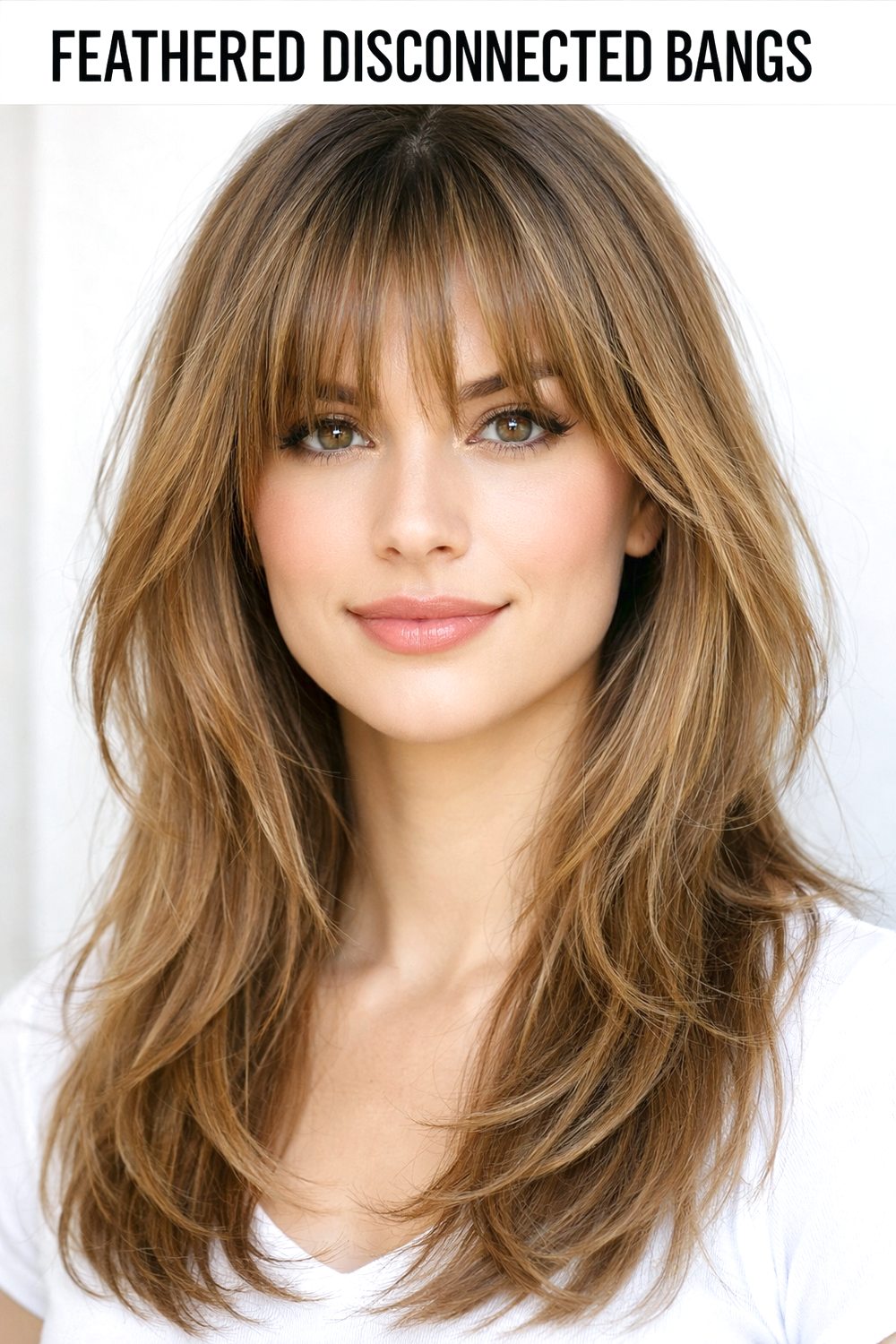
Feathered disconnected bangs have soft, tapered ends that float across the forehead while remaining separate from the long layers. The light texture gives the fringe movement without losing its distinct shape. This style suits fine to medium hair, including straight and softly wavy textures, and flatters round, square, and oval faces. It works beautifully for everyday wear, work, summer outings, or romantic events because it looks relaxed, feminine, and easy to refresh with a round brush.
Pro tip: Ask for delicate internal texture and tapered ends without removing too much density. Direct the fringe from side to side while blow-drying to prevent a strong part.
Conclusion
Disconnected bangs bring shape and personality to long hair without requiring a complete haircut change. They can look soft and airy, sharp and dramatic, or textured and playful depending on the fringe design. This hairstyle family is flexible because the length, density, layers, bangs, and finish can all be adjusted. A stylist can make the fringe wider, narrower, lighter, or fuller to complement your face shape. Straight, wavy, fine, and thick hair can all work with the right version. Choose a style that also fits your daily routine and the amount of maintenance you are comfortable handling.
CTA
Choose one or two favorite disconnected bang ideas and save clear photo references from different angles. Bring them to your stylist and discuss your face shape, natural hair texture, growth patterns, and usual styling routine. This will help your stylist adjust the fringe length, width, density, and separation so the finished look feels flattering and manageable.
FAQs
Are disconnected bangs suitable for thin hair?
Yes. Wispy, side-swept, and feathered versions can add interest without removing too much hair from the front.
How often do disconnected bangs need trimming?
Most need trimming every four to six weeks. Blunt and micro bangs may need attention every three to four weeks.
Can disconnected bangs work with wavy hair?
Yes. Choppy, curtain, bottleneck, and feathered bangs work especially well with natural waves and soft texture.
Are disconnected bangs high-maintenance?
They require some daily attention, but maintenance depends on the style. Wispy bangs are easier, while blunt and micro bangs need more precise styling.