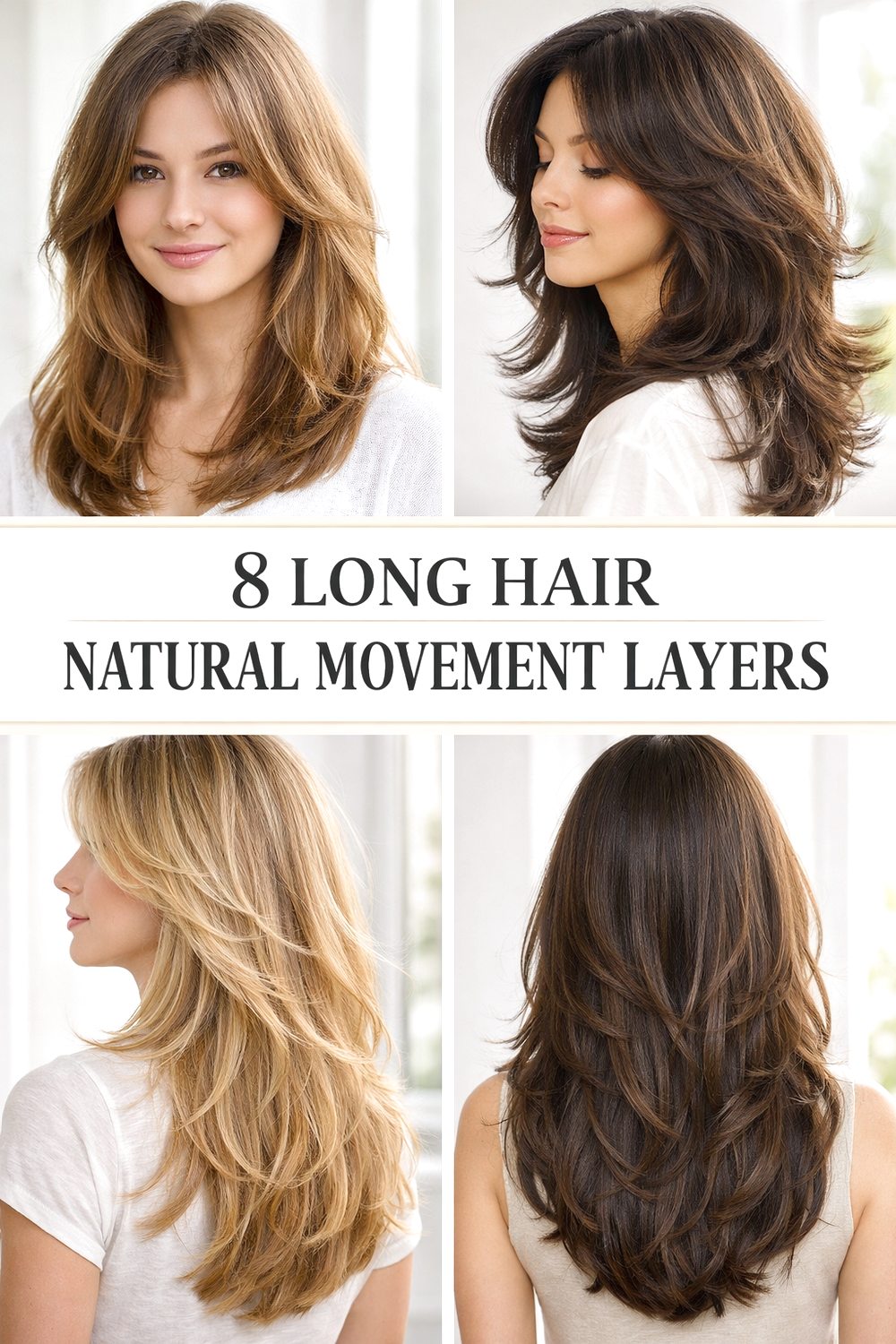
Long hair natural movement layers are soft, blended layers designed to give long hair more flow, shape, and bounce. Instead of creating a sharp or choppy finish, these layers move smoothly through the hair and help the length look lighter without removing too much fullness.
This style works well for straight, wavy, and softly curly hair. It can flatter oval, round, square, heart, and long face shapes when the front layers are placed carefully. Most versions are fairly low-maintenance, although a quick blow-dry, round-brush finish, or light styling cream can make the movement more visible.
Quick List
- Soft Face-Framing Layers
- Airy Butterfly Layers
- Long Feathered Layers
- U-Shaped Movement Layers
- Invisible Long Layers
- Swoopy Front Layers
- Soft V-Shaped Layers
- Curtain Bangs With Long Layers
Soft Face-Framing Layers
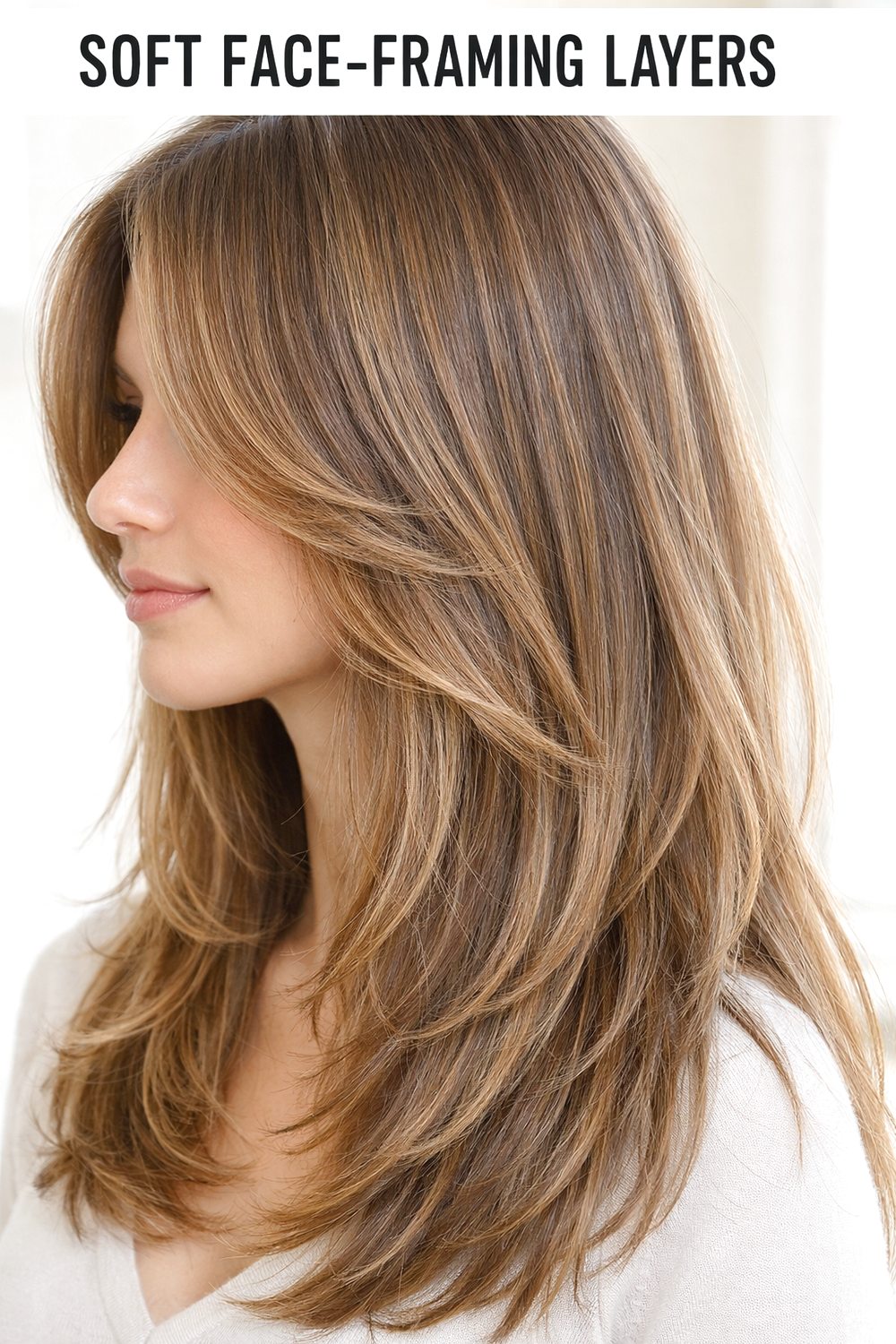
Soft face-framing layers add movement around the cheeks, jawline, and collarbone while keeping the rest of the hair long and full. The front pieces create a flattering outline that can soften strong features or make the face look more balanced. This style feels polished without looking overly styled, making it ideal for work, daily wear, school, and casual events. It looks especially pretty with a smooth blowout or loose natural waves.
Pro tip: Ask your stylist to begin the shortest layers near your cheekbones or jawline and blend them gradually into the full length.
Airy Butterfly Layers
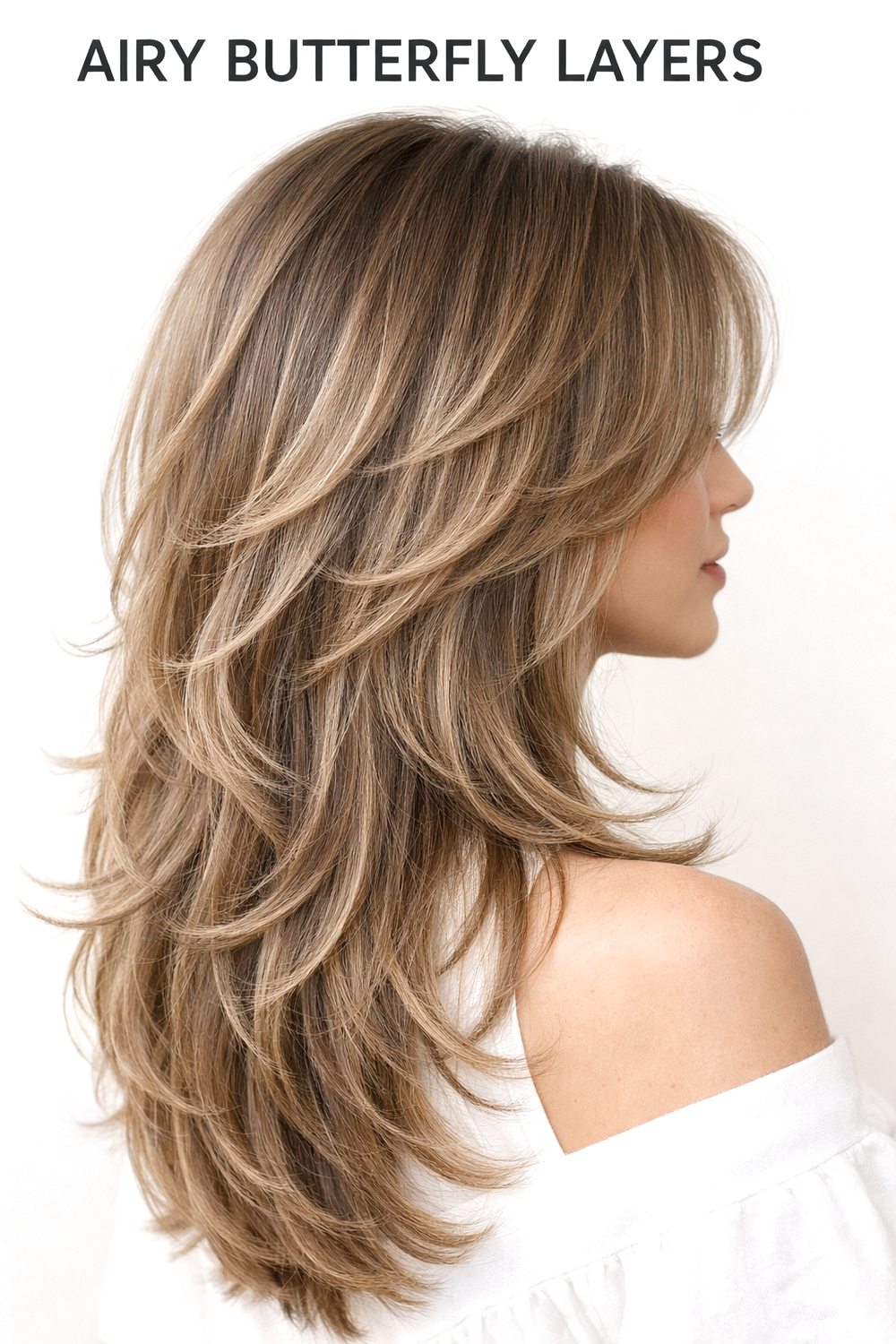
Airy butterfly layers combine shorter, lifted sections around the face with longer layers through the back. The shape creates natural volume near the crown and soft movement around the shoulders without sacrificing much length. It has a light, glamorous look that works well for special occasions, date nights, work events, and everyday styling. This cut is especially flattering on thick or medium-density hair that needs more shape and bounce.
Pro tip: Ask for soft butterfly layers with blended ends, and avoid cutting the top sections too short if you prefer easy styling.
Long Feathered Layers
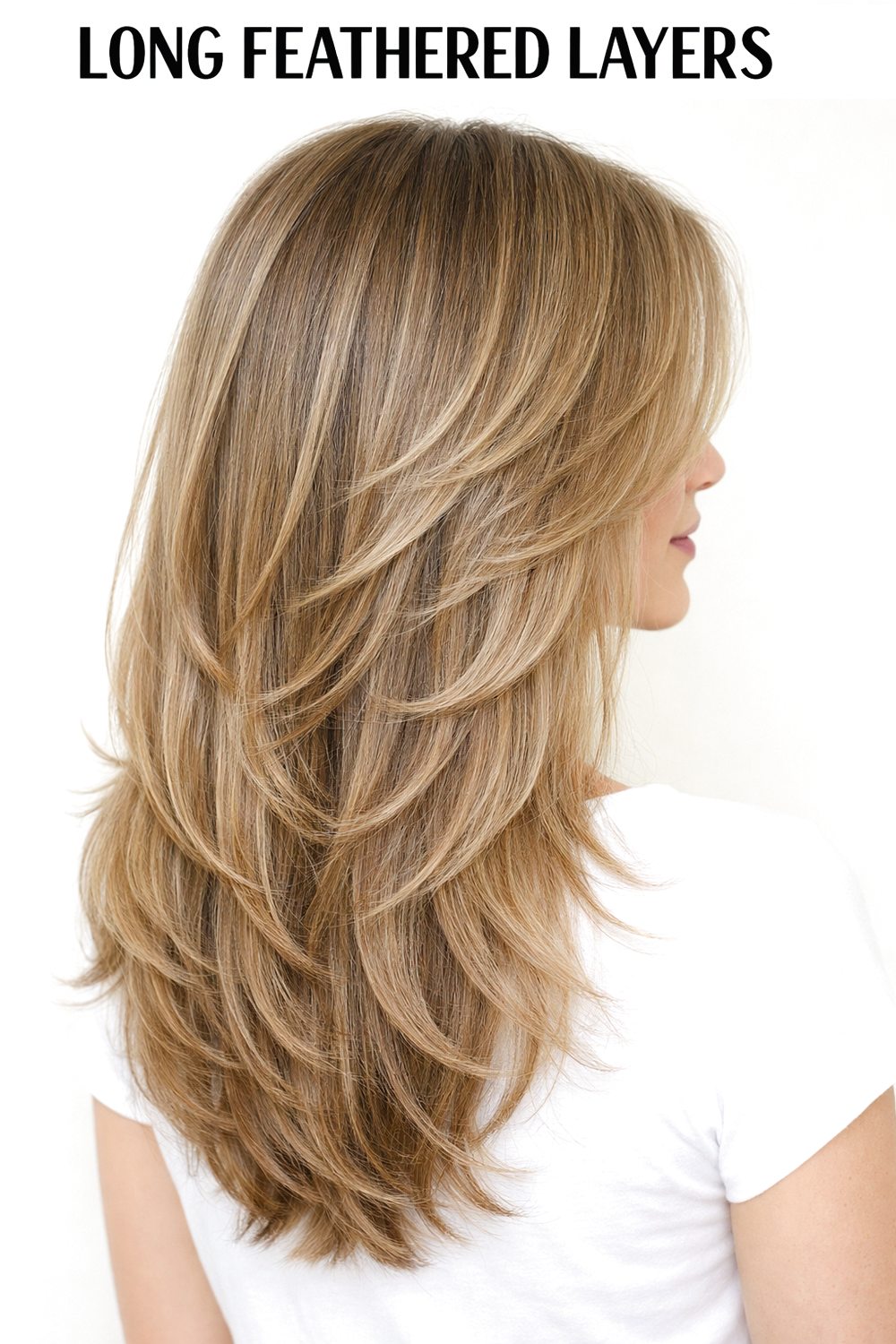
Long feathered layers have softly tapered ends that sweep away from the face and create a smooth, flowing finish. The shape feels light and elegant, especially when the layers are styled with a round brush or large rollers. This hairstyle works beautifully for daily wear, office settings, weddings, and formal events. It can also help thick hair feel less heavy while keeping the overall length full, soft, and easy to move.
Pro tip: Ask your stylist to feather the ends lightly instead of using heavy texturizing, which can make long hair look thin.
U-Shaped Movement Layers
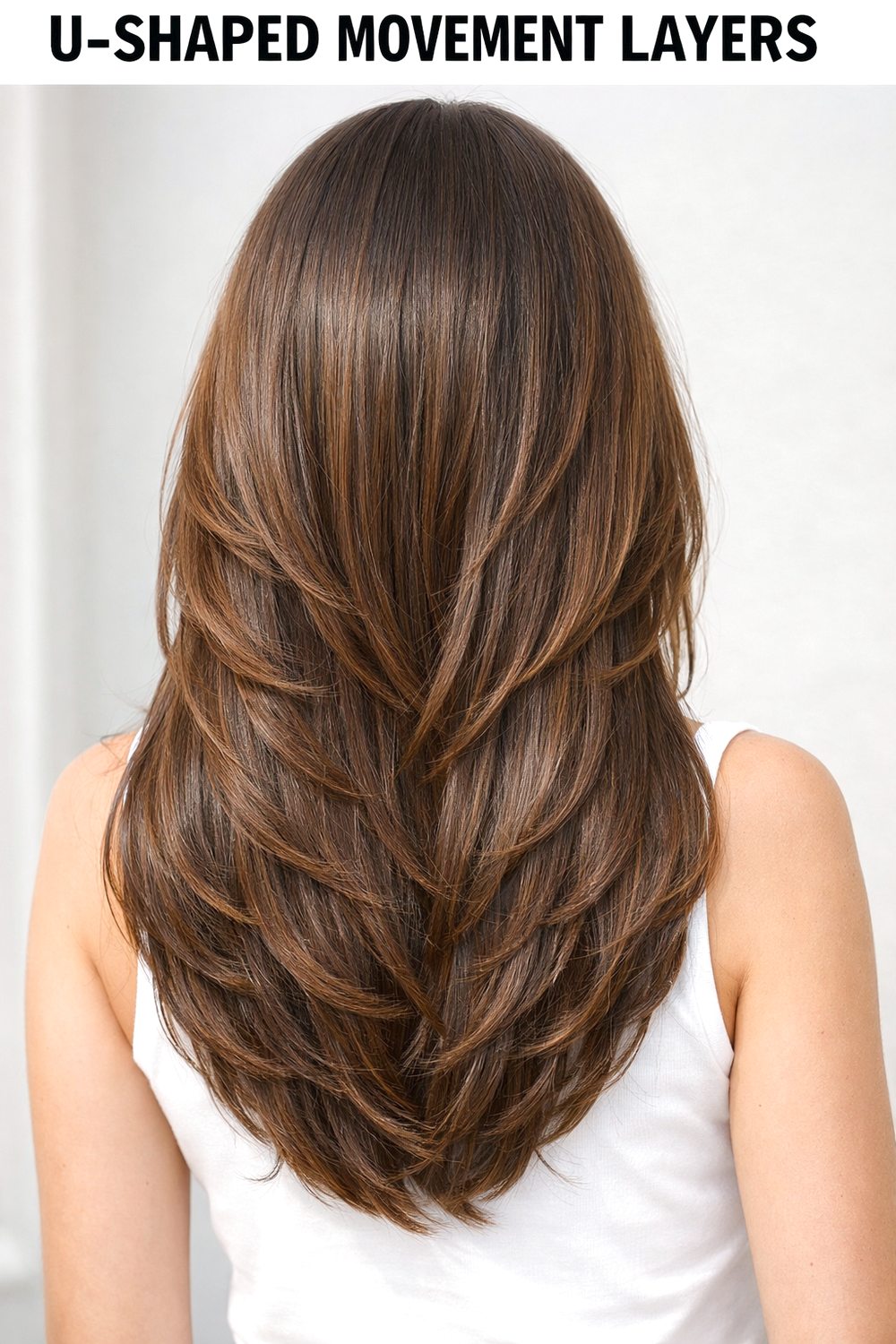
U-shaped movement layers keep the centre back slightly longer while the sides curve gently upward. This rounded shape gives long hair a full, balanced outline and allows the ends to move naturally. It is a good choice for anyone who wants visible shape without dramatic front layers or a pointed finish. The style works well for straight, wavy, and thick hair and looks polished for work, daily routines, holidays, and special occasions.
Pro tip: Ask for a soft U-shaped perimeter with long internal layers that remove weight without creating gaps in the ends.
Invisible Long Layers
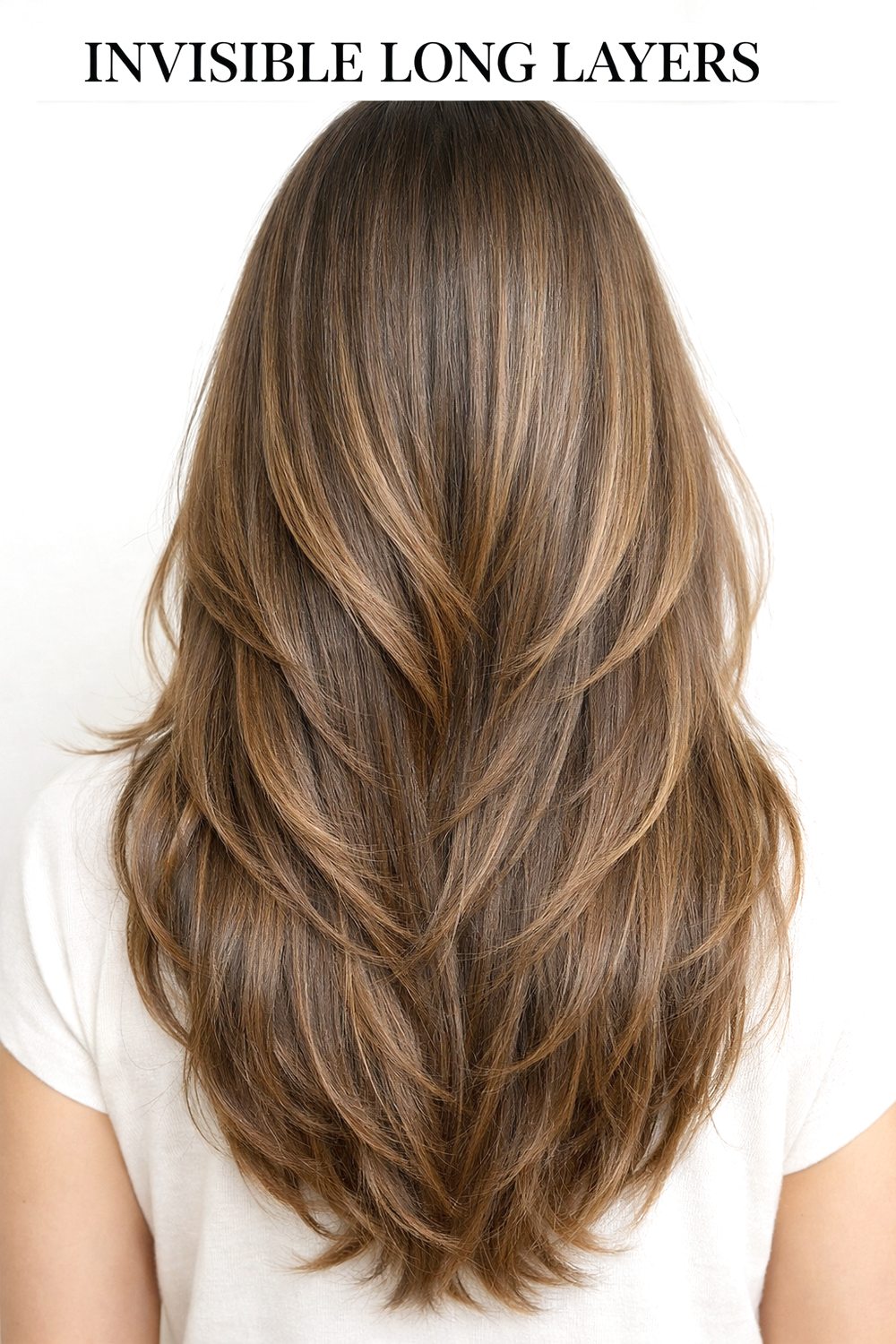
Invisible long layers are blended so smoothly that the haircut looks almost one length while still having movement and softness. The stylist removes small amounts of weight inside the hair instead of creating obvious steps. This makes the style perfect for people who want a subtle change or need thick hair to feel lighter. It works well for daily wear, professional settings, school, and low-maintenance routines because the layers grow out naturally.
Pro tip: Ask for invisible internal layers and a strong perimeter so the ends stay full instead of becoming wispy.
Swoopy Front Layers
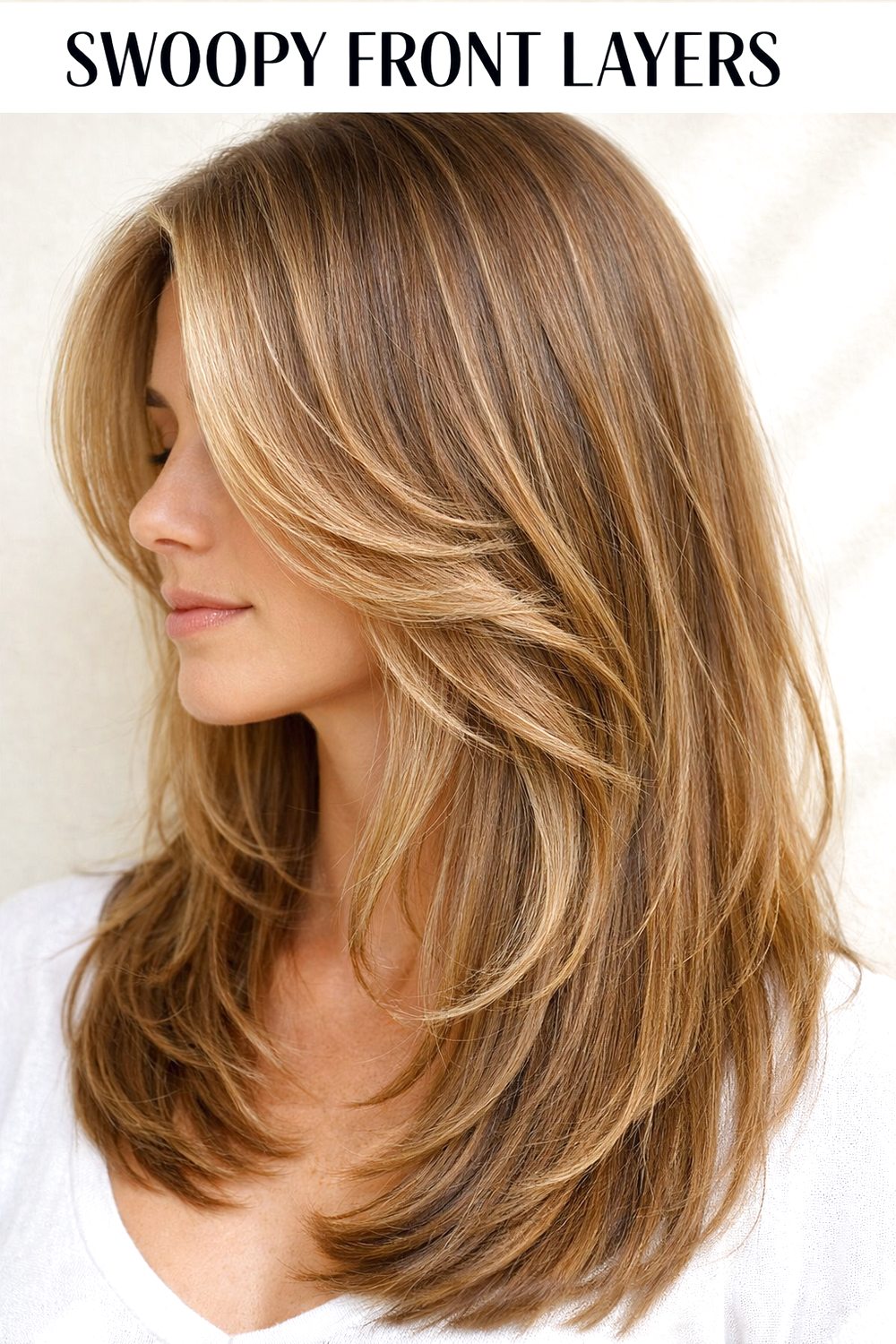
Swoopy front layers curve away from the face and create soft movement around the cheekbones, jawline, and shoulders. The back can remain long and full, making this a flattering option for anyone who wants a noticeable change without losing length. The style has a smooth, feminine vibe and works especially well with blowouts, loose waves, and ponytails. It is ideal for work, weekends, parties, and polished everyday looks.
Pro tip: Ask your stylist to cut the front layers at a length that can still be tucked behind your ears or tied back.
Soft V-Shaped Layers
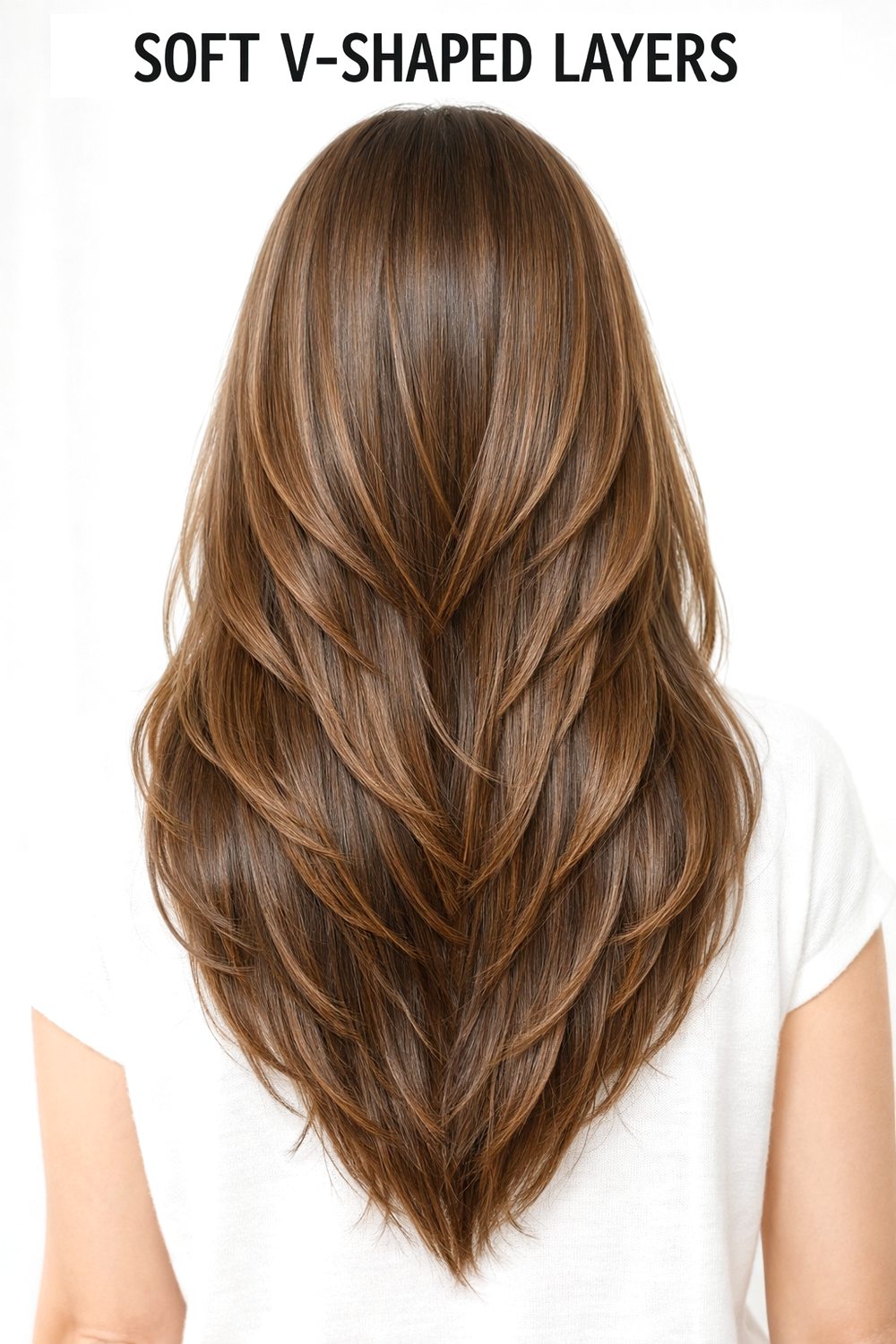
Soft V-shaped layers create a gentle point at the centre of the back while allowing the sides to fall in smooth, blended sections. The shape makes long hair look flowing and elegant without creating an overly sharp finish. It is especially attractive on thick, straight, or wavy hair because the layers help show movement through the lower lengths. This cut works well for daily styling, photos, events, and anyone who enjoys wearing their hair down.
Pro tip: Ask for a soft V-shape rather than a deep point, and keep enough density at the ends for a healthy finish.
Curtain Bangs With Long Layers
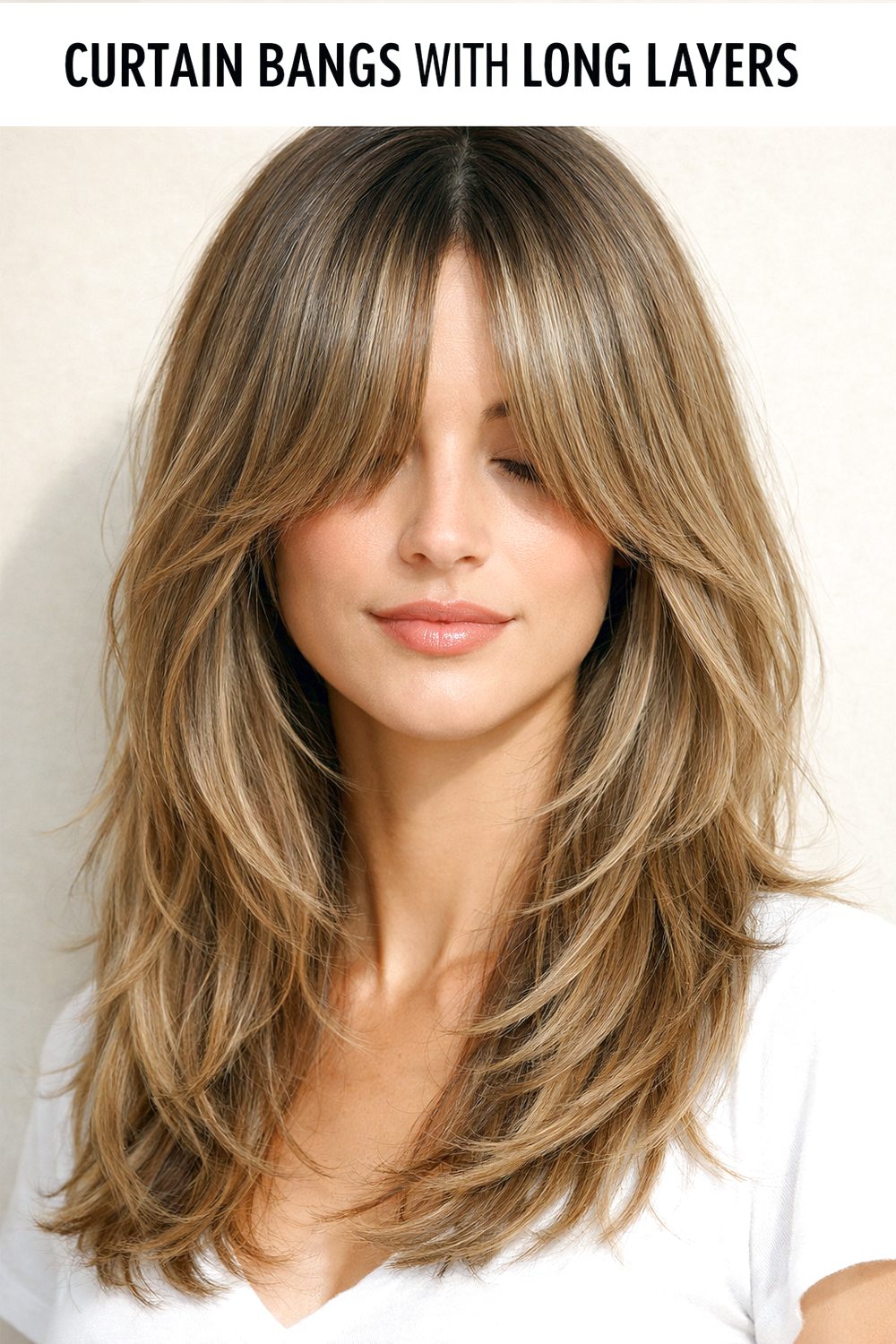
Curtain bangs with long layers create soft movement from the forehead through the cheeks and down into the full length. The parted fringe frames the face while the longer sections add balance and flow. This style can flatter oval, round, square, and heart-shaped faces when the bang length is adjusted correctly. It works beautifully for daily wear, work, school, dinners, and special events, although the bangs may need light styling each morning.
Pro tip: Ask for curtain bangs that are long enough to blend into your cheekbone layers and easy to pin back when needed.
Conclusion
Long hair natural movement layers are flexible because they can add shape without taking away the beauty of long hair. Soft layers can make thick hair feel lighter, help fine hair look more active, and give straight or wavy textures a smoother flow. The cut can be adjusted by changing the overall length, layer density, front pieces, bangs, and styling method. Face shape and daily routine should also guide the final design. Whether you prefer subtle invisible layers or bold butterfly movement, the right placement can keep your hair flattering, healthy-looking, and easy to manage.
CTA
Choose one or two favorite ideas from this list and save clear photo references that show the front, sides, and back. Bring them to your stylist and discuss your face shape, natural hair texture, density, usual parting, and daily styling routine. This will help your stylist adjust the layers so they look beautiful both freshly styled and naturally air-dried.
FAQs
Are movement layers good for long hair?
Yes. They add shape, softness, and flow while allowing you to keep most of your length.
Which layers are best for thick long hair?
Invisible layers, butterfly layers, and long feathered layers can remove heaviness while maintaining a full appearance.
Do long layers need daily styling?
Not always. Blended layers can air-dry naturally, but a quick blow-dry or light styling product can make the movement more noticeable.
How often should long layered hair be trimmed?
A trim every eight to twelve weeks usually helps maintain the shape and keeps the ends looking healthy.