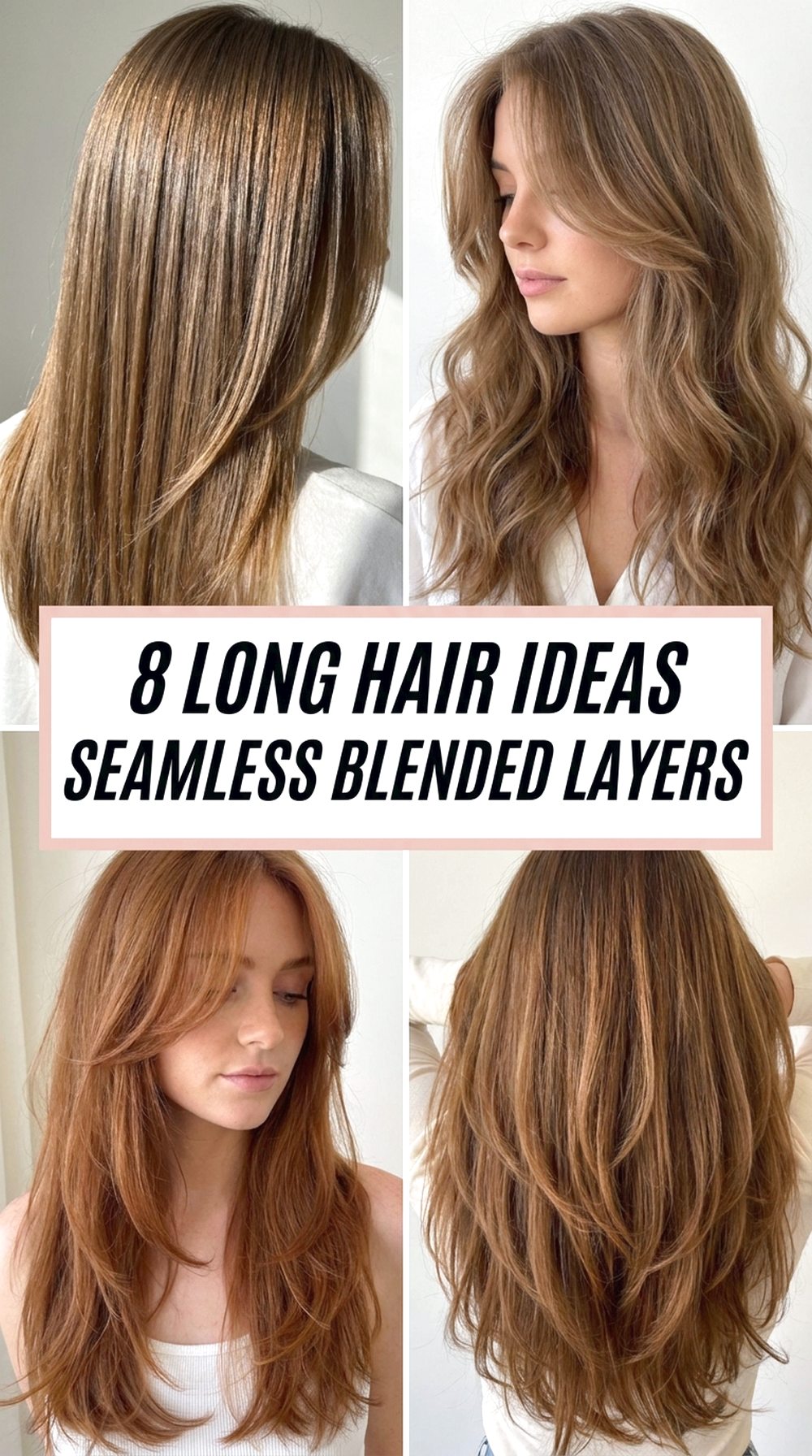
Seamless blended layers are long, softly connected sections that add movement without creating obvious steps or choppy lines. They keep the overall length while giving the hair a lighter, more polished shape.
This style works well for straight, wavy, thick, and medium-density hair. It can flatter oval, round, square, and heart-shaped faces when the front layers are placed carefully. Most versions are low-maintenance, although a round-brush blowout or loose waves can make the blending more visible.
Quick List
- Long Face-Framing Layers
- Long Butterfly Layers
- Long V-Shaped Layers
- Long U-Shaped Layers
- Long Curtain Bang Layers
- Long Invisible Layers
- Long Wavy Blended Layers
- Long Straight Blended Layers
Long Face-Framing Layers
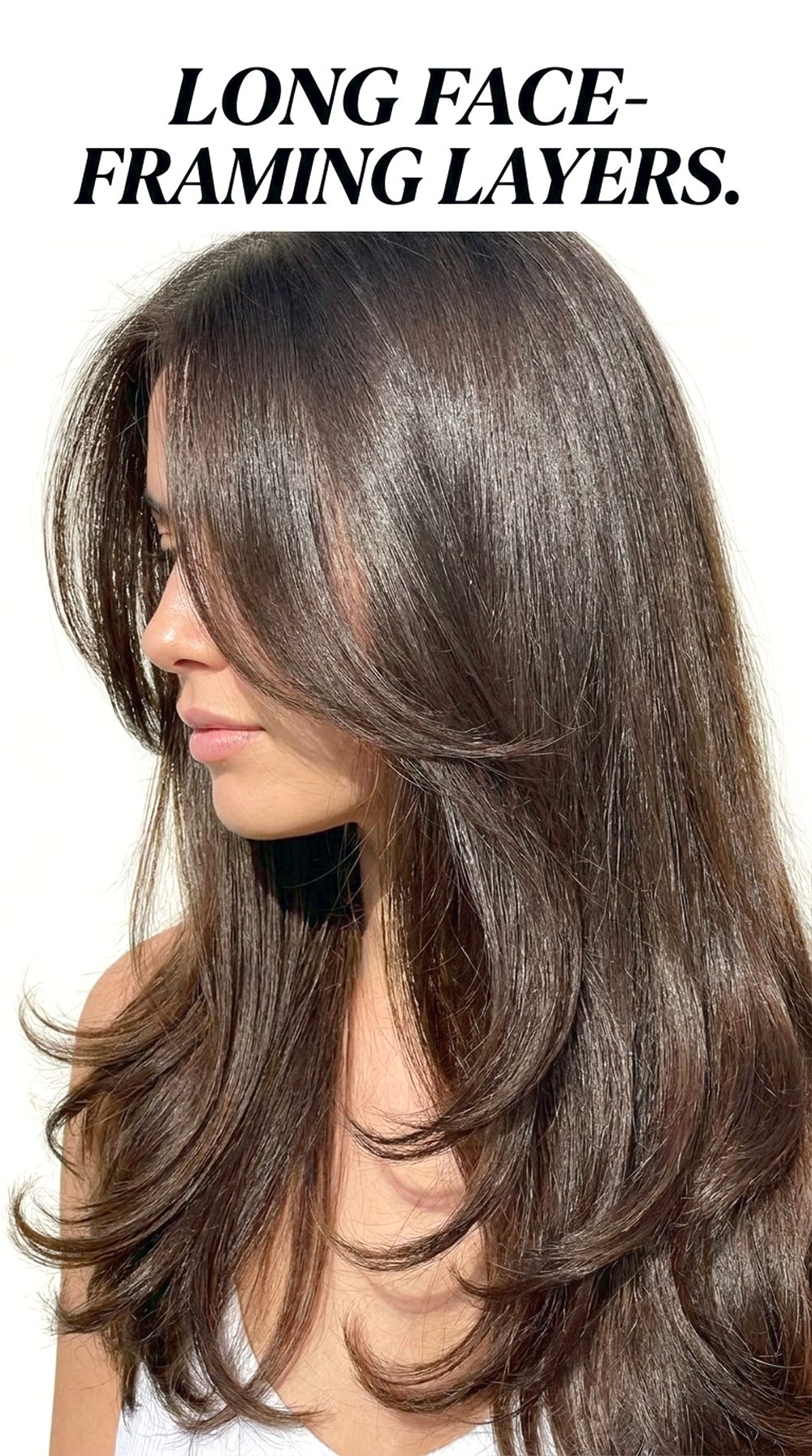
Long face-framing layers add softness around the cheeks, jawline, and collarbone while keeping most of the hair full and long. The shorter pieces blend gradually into the remaining length, creating movement without a choppy finish. This look feels polished, feminine, and easy to style. It works especially well for daily wear, office looks, date nights, and special occasions. A smooth blowout makes the front sections curve away from the face and highlights the seamless shape.
Pro tip: Ask your stylist to begin the shortest layer near your cheekbone or chin and connect it gradually through the front perimeter.
Long Butterfly Layers
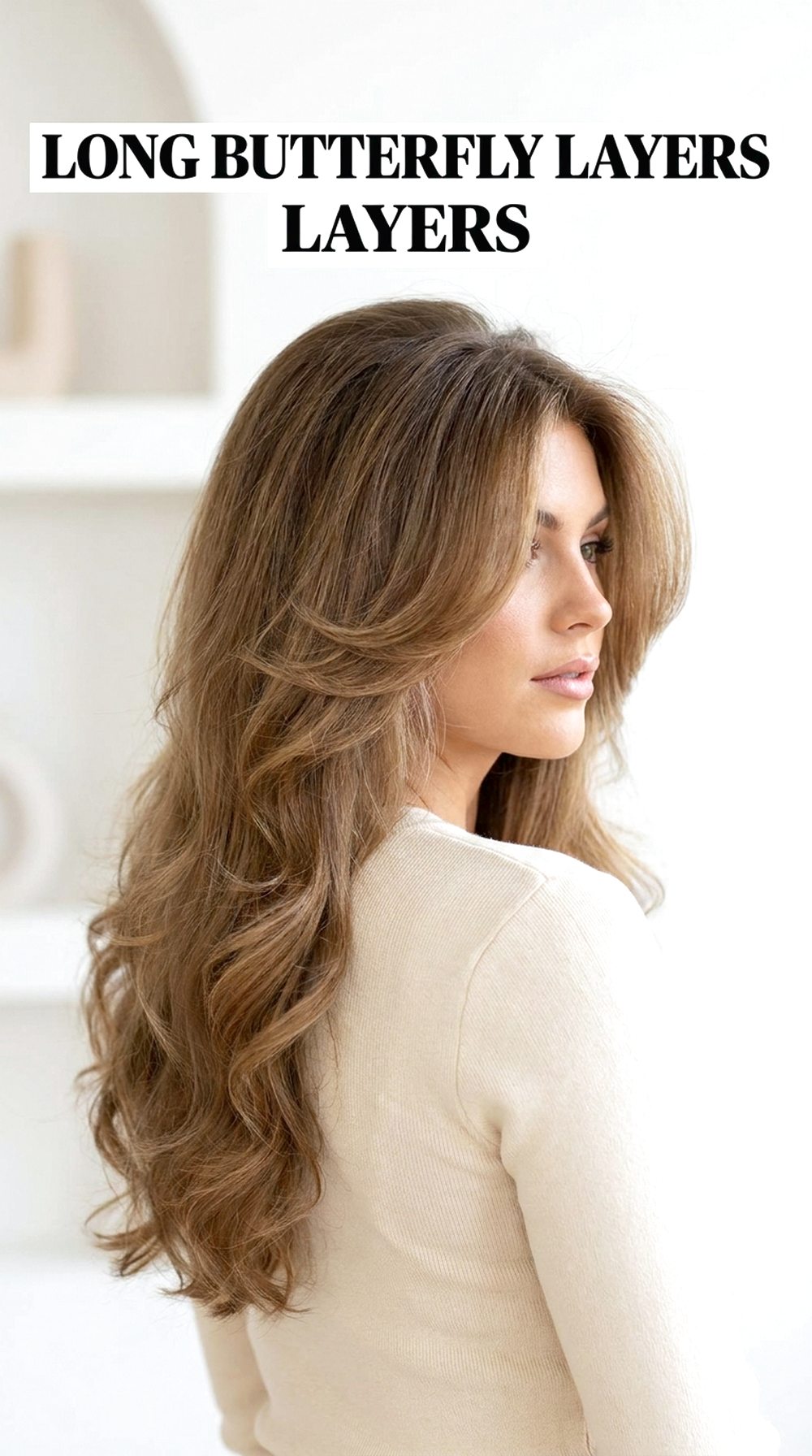
Long butterfly layers combine shorter, airy sections around the face with longer layers through the back. The result is a full, bouncy shape that gives long hair movement without removing too much length. The lifted crown and feathered ends create a glamorous salon-blowout effect. This style is ideal for thick or medium-density hair and works beautifully for parties, weddings, dinners, and polished everyday looks. It also helps heavy hair feel lighter while maintaining a soft, flowing outline.
Pro tip: Request rounded, connected layers with extra movement around the crown rather than short, disconnected pieces.
Long V-Shaped Layers
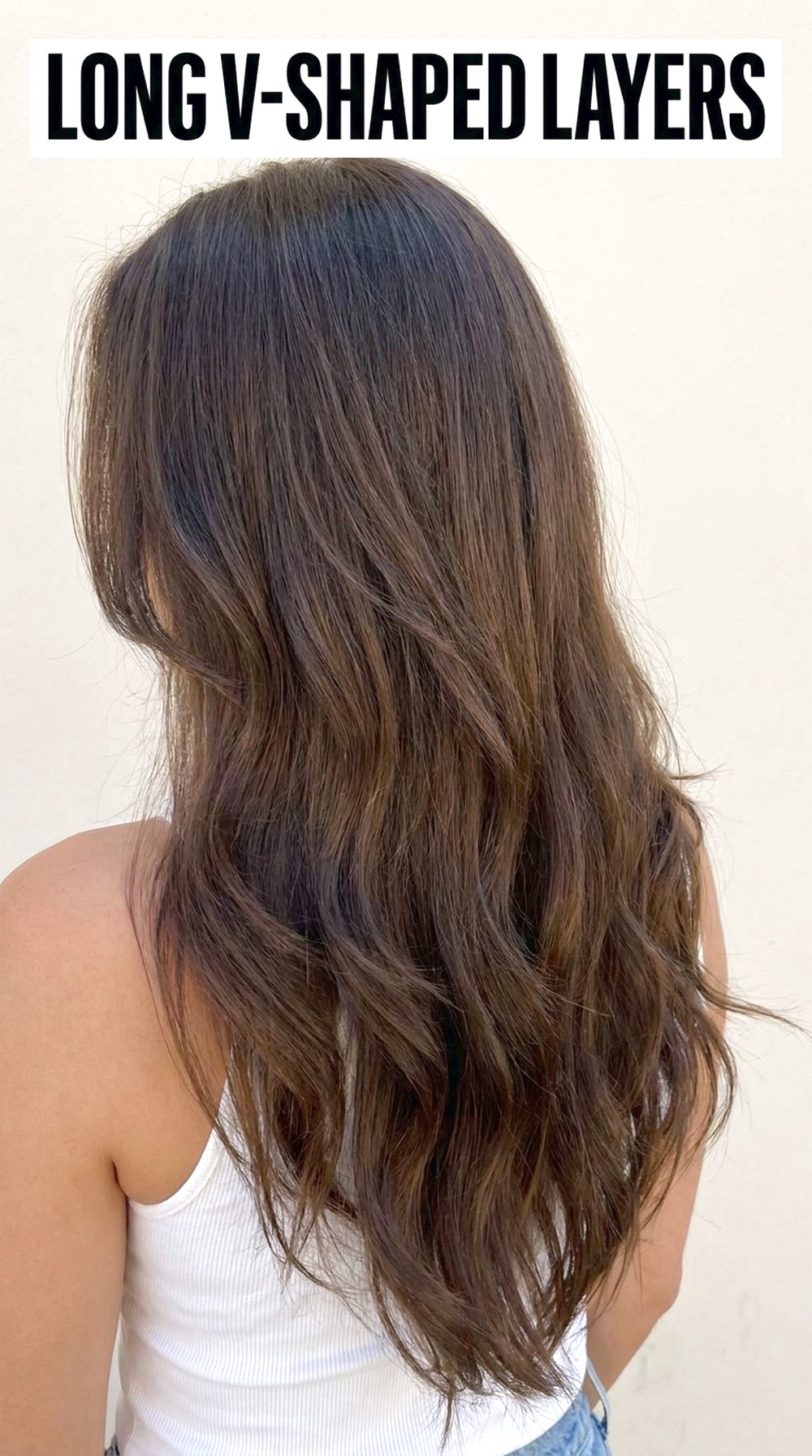
Long V-shaped layers create a defined point at the centre of the back while the sides gradually become shorter. Seamless layering prevents the outline from looking sharp or uneven and allows the hair to fall in a smooth, flowing pattern. This shape suits very long, thick hair because it reduces heaviness around the sides while preserving centre length. It looks especially attractive with waves, curls, or a sleek finish and works well for everyday styling, formal events, and photo-ready occasions.
Pro tip: Ask your stylist to keep the V soft and blended so the centre does not become too thin or pointed.
Long U-Shaped Layers
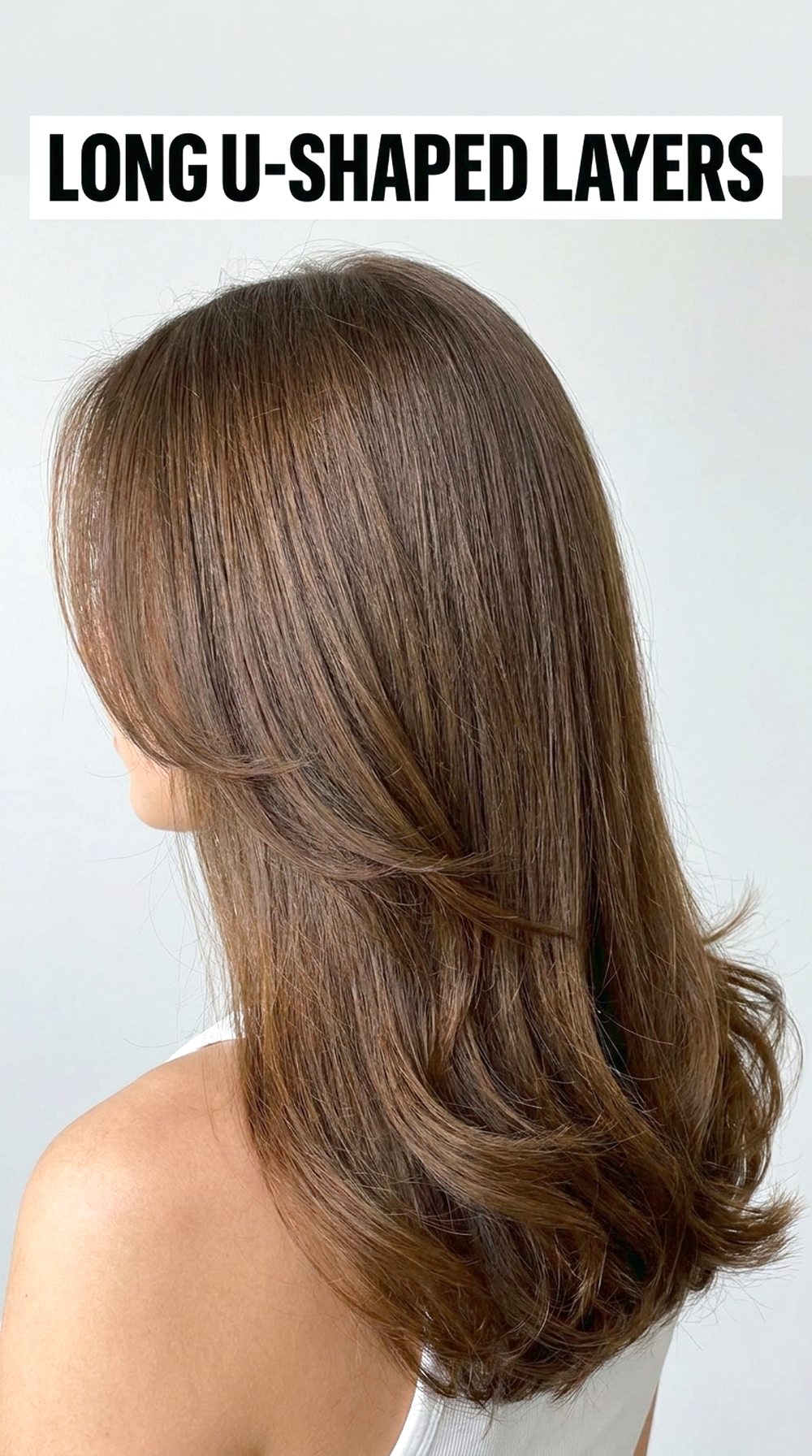
Long U-shaped layers have a softly rounded back that creates fullness and balanced movement. Unlike a dramatic V shape, the U-shaped outline keeps the centre and side lengths closer together, making the ends appear thicker. Seamless internal layers add lift without changing the smooth perimeter. This style works well for straight, wavy, medium, and thick hair. It is a practical choice for work, school, daily wear, and special occasions because it grows out neatly and remains easy to manage.
Pro tip: Ask for a rounded perimeter with long internal layers and minimal thinning around the bottom edge.
Long Curtain Bang Layers
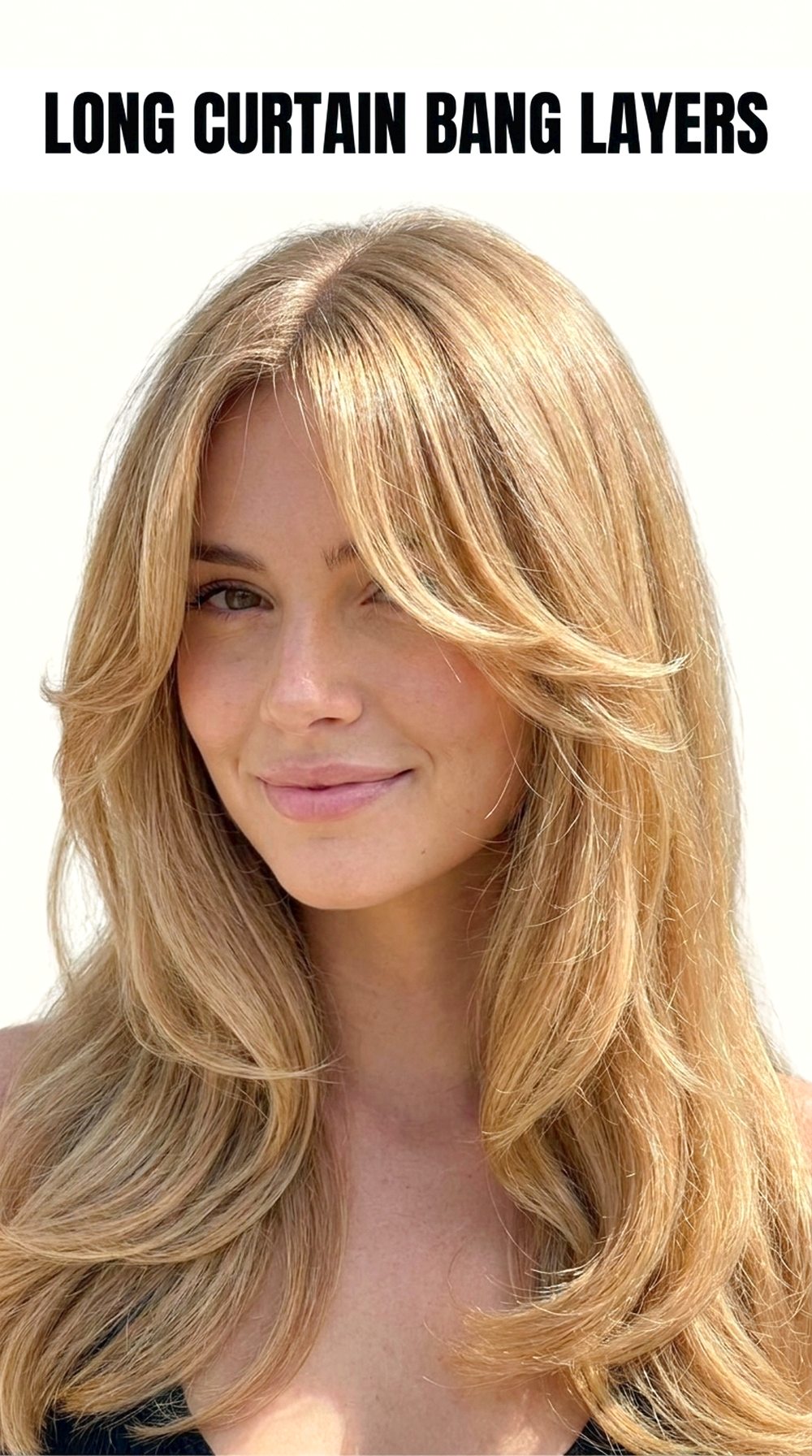
Long curtain bangs blend into face-framing layers to create a soft, flattering shape around the eyes, cheekbones, and jawline. The centre-parted fringe opens the face while the longer side pieces connect smoothly with the remaining hair. This style adds interest to long hair without requiring a short or heavy bang. It works well for oval, round, square, and heart-shaped faces and suits daily wear, work, school, parties, and casual weekends when styled with a gentle blowout.
Pro tip: Ask for curtain bangs long enough to tuck behind the ears and blend into layers below the cheekbones.
Long Invisible Layers
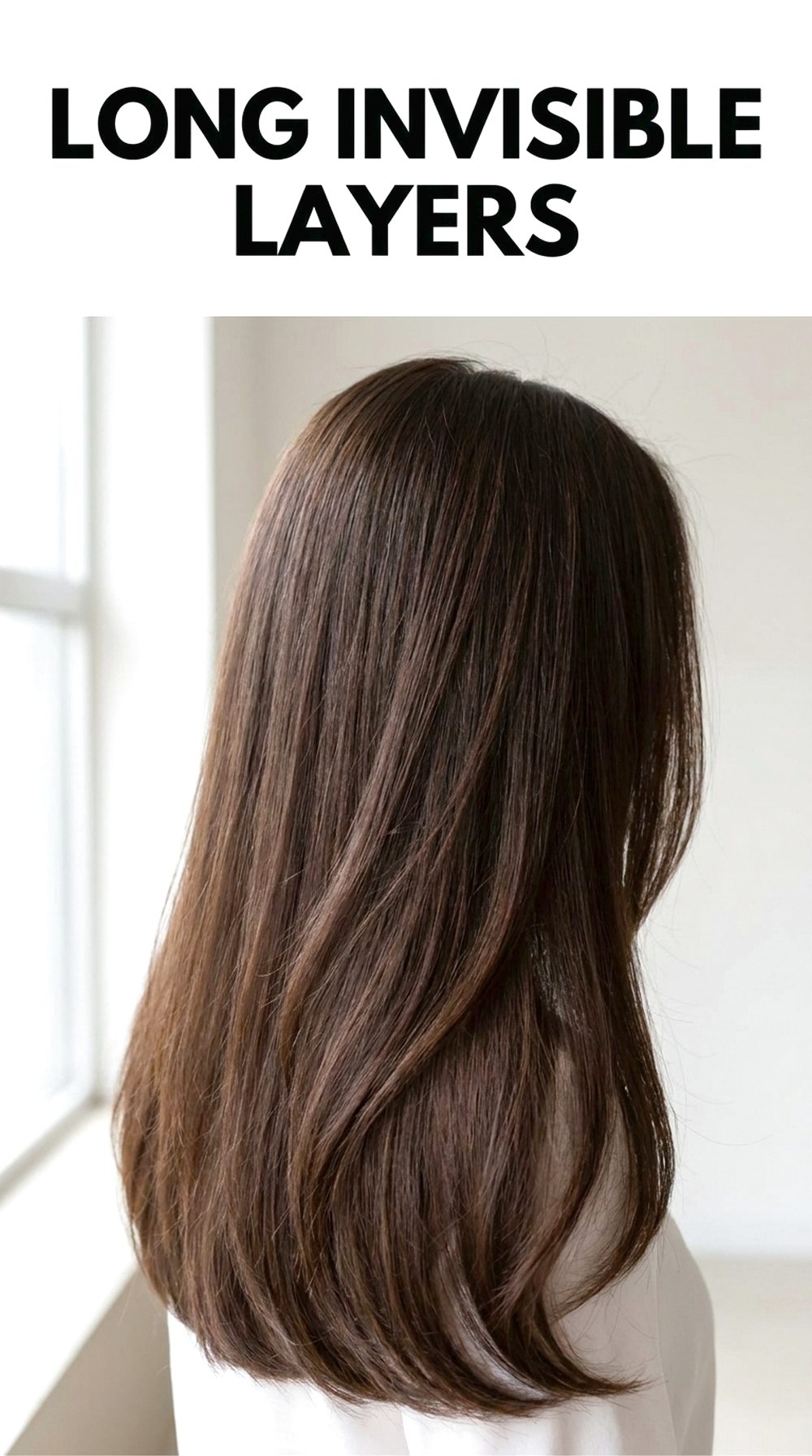
Long invisible layers remove weight from inside the hair while keeping the outside looking full and nearly one length. The subtle sections create natural movement, prevent the hair from feeling heavy, and help straight or wavy textures fall more smoothly. This style is different because there are no obvious short pieces or visible steps. It is an excellent low-maintenance option for professional settings, everyday routines, and anyone who wants a lighter shape without losing density around the ends.
Pro tip: Ask your stylist for soft internal layering and avoid aggressive texturizing if your hair is fine or easily becomes thin.
Long Wavy Blended Layers
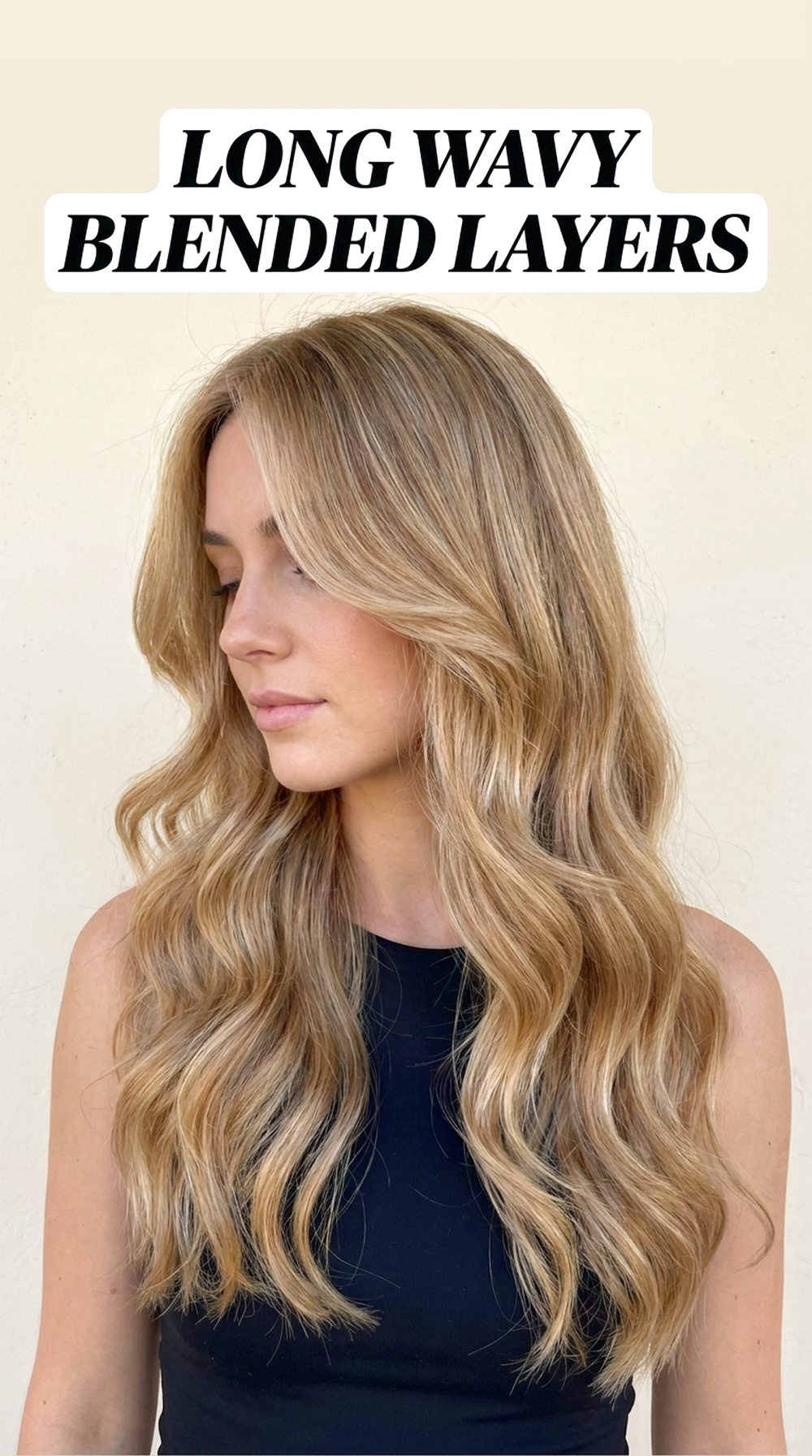
Long wavy blended layers give loose waves more definition, bounce, and separation. The layers are connected carefully so each wave flows into the next without creating bulky sections or thin ends. Soft face-framing pieces add shape near the cheekbones, while longer layers prevent the style from becoming overly rounded. This look is relaxed yet polished, making it suitable for summer, holidays, date nights, weddings, and everyday wear. It works especially well for naturally wavy or medium-to-thick hair.
Pro tip: Ask for long layers based on your natural wave pattern, then style with lightweight mousse and a diffuser.
Long Straight Blended Layers
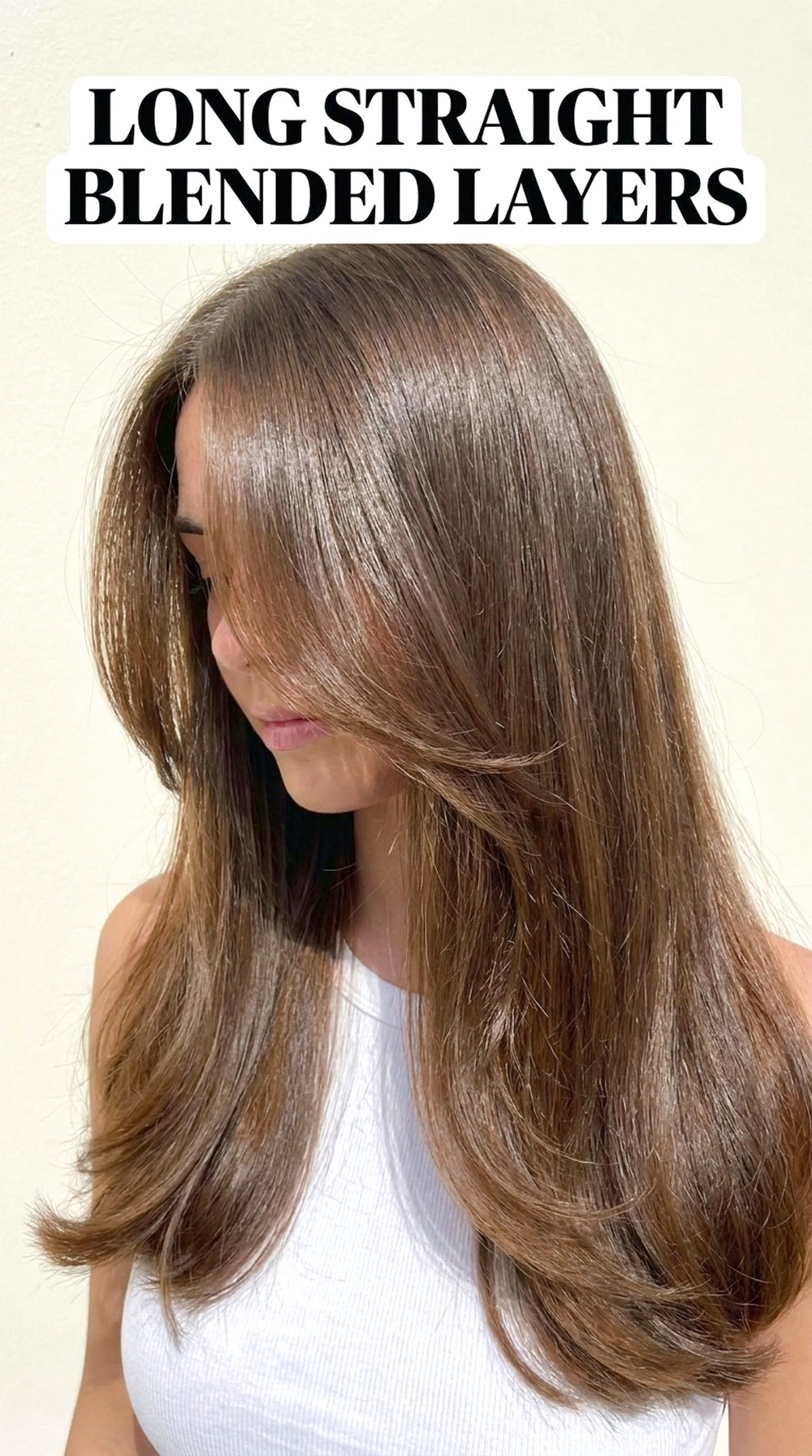
Long straight blended layers create subtle shape while preserving a sleek, smooth appearance. The layers sit close together and move gradually from shorter front sections into the full length. This prevents the haircut from looking flat without producing obvious feathering or choppy ends. It is a refined option for work, school, formal occasions, and simple everyday styling. The clean shape suits fine, medium, or thick straight hair when the amount of layering is adjusted to protect density.
Pro tip: Request minimal elevation and soft point-cutting so the layers blend cleanly while the bottom remains thick.
Conclusion
Seamless blended layers make long hair feel lighter, softer, and more polished without taking away its natural fullness. They can add face-framing movement, crown volume, wave definition, or a smoother overall shape. This hairstyle family is flexible because every detail can be adjusted to suit the wearer. The length can remain dramatic or become easier to manage, while the density, layers, bangs, and styling can be personalized. Choosing the right placement for each layer also helps balance different face shapes, complement straight or wavy textures, and fit the amount of daily styling time available.
CTA
Choose one or two favorite ideas and save clear photo references showing the front, sides, and back. Take them to your stylist and discuss your face shape, natural hair texture, current density, and usual styling routine. This will help your stylist create seamless layers that look flattering in the salon and remain manageable at home.
FAQs
Are seamless blended layers good for fine hair?
Yes. Long, subtle layers can add movement, but the ends should remain full and excessive thinning should be avoided.
How often should long blended layers be trimmed?
A trim every eight to twelve weeks usually helps maintain the shape and remove damaged ends.
Do seamless layers work on naturally wavy hair?
Yes. Properly placed layers can define waves, reduce bulk, and create a more balanced silhouette.
Are long blended layers difficult to style?
Most versions are easy to maintain. Air-drying, a simple blowout, or loose waves can all show the layered shape.