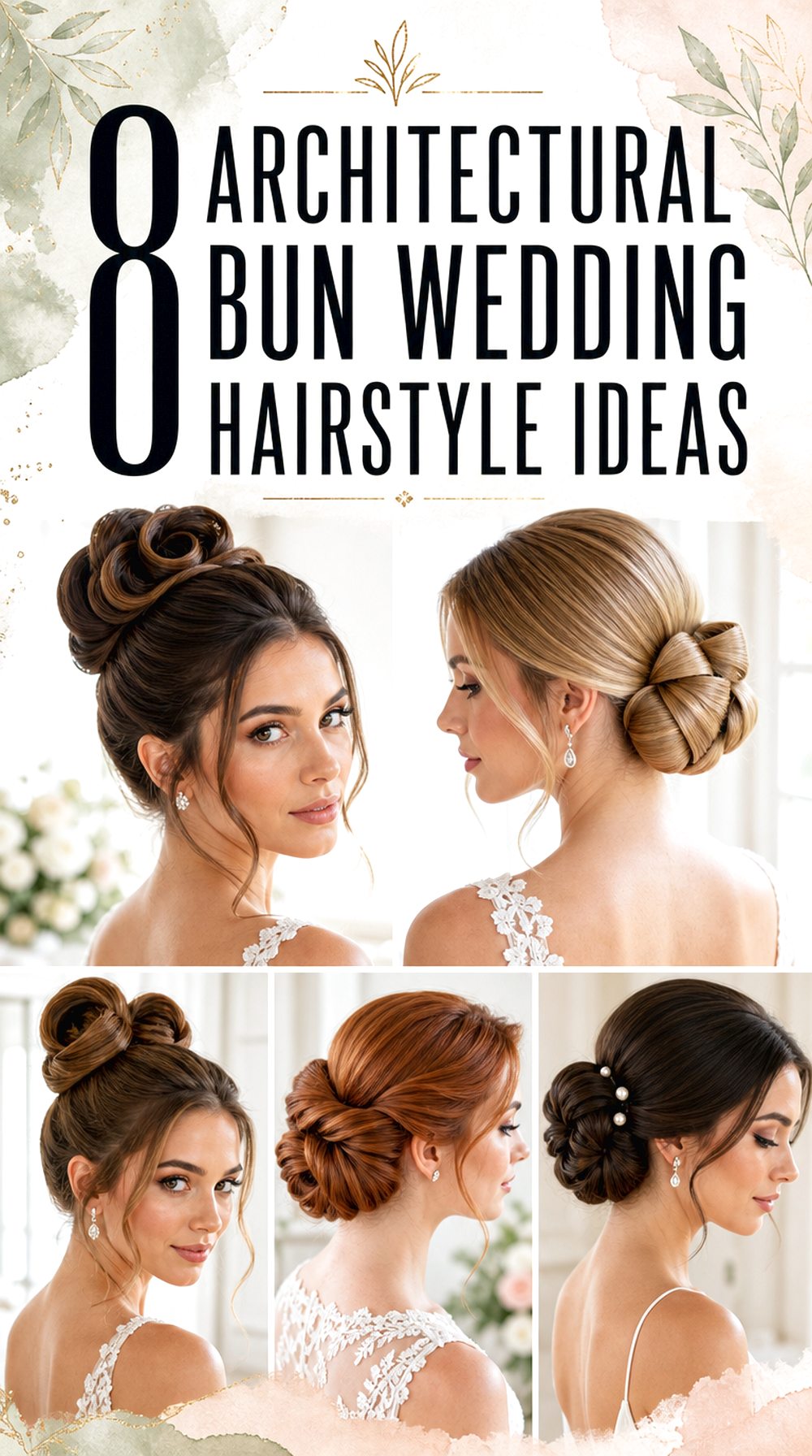
Architectural bun wedding hairstyles use carefully folded, twisted, braided, or looped sections to create a clear sculptural shape. Unlike a loose everyday bun, these styles have visible lines, balanced curves, and a polished finish that looks beautiful from the front, side, and back.
These buns suit brides who want an elegant hairstyle with a modern or artistic touch. They work best on medium to long hair, but extensions and padding can add shape to fine hair. Different placements can flatter oval, round, square, heart, and long faces. Most architectural buns require professional styling, but they usually stay secure with only minor touch-ups.
Quick List
- Sculpted Spiral Architectural Bun
- Geometric Folded Low Bun
- Double Loop Statement Bun
- Twisted Fan Architectural Bun
- Braided Cage Bun
- Asymmetrical Side-Swept Bun
- Sleek Knotted Column Bun
- Pearl-Pinned Petal Bun
Sculpted Spiral Architectural Bun

The sculpted spiral bun turns smooth sections of hair into a rose-like shape at the crown. Its rounded movement feels artistic, polished, and dramatic without becoming too heavy. This style suits formal ceremonies, grand venues, and brides who want their hairstyle to stand out from every angle. It works especially well on medium to thick hair because the spiral needs enough density to hold its shape and remain visible in photographs.
Pro tip: Ask your stylist to build the spiral in separate curved sections instead of twisting all the hair at once. This creates clearer lines and a more secure shape.
Geometric Folded Low Bun

The geometric folded low bun uses sleek panels of hair that overlap like ribbons at the nape. Its clean lines create a modern, minimalist look that pairs beautifully with structured gowns, high necklines, and contemporary venues. Because the bun sits low, it also works well with veils placed above or below the style. This option is ideal for straight or smoothed hair and for brides who prefer controlled volume instead of a soft, romantic finish.
Pro tip: Request a low bun with wide, polished folds and hidden pins. Bring your veil to the trial so the stylist can leave a secure attachment point.
Double Loop Statement Bun

The double loop statement bun features two sculpted loops that cross or sit side by side at the back of the head. The repeated shape gives the hairstyle balance, dimension, and a bold editorial feel. It is a strong choice for modern weddings, evening receptions, and simple dresses that benefit from an eye-catching hair detail. Medium to long hair works best, although a stylist can use matching extensions when extra length or fullness is needed.
Pro tip: Ask for loops that match your head size rather than oversized sections. Smaller, balanced loops usually feel lighter and stay secure for longer.
Twisted Fan Architectural Bun

The twisted fan bun spreads several smooth twists outward from a compact base, creating a graceful fan-shaped silhouette. It feels detailed and artistic while still looking light and feminine. This style is lovely for garden weddings, elegant hotel ceremonies, and brides wearing lace or soft sleeves. The design works best on medium or long hair with some natural grip. Fine hair can also wear it when prepared with texture spray and discreet padding.
Pro tip: Ask the stylist to vary the width of the twists slightly. This gives the fan more movement while keeping the overall shape balanced.
Braided Cage Bun

The braided cage bun places slim braids over a smooth rounded base, giving the hairstyle a delicate woven structure. It offers more detail than a classic bun but still looks neat and refined from a distance. This design is perfect for formal ceremonies, cultural celebrations, and brides who enjoy intricate styling. It works on many hair textures, provided the hair is long enough to braid and wrap securely. Small pins or subtle jewels can highlight the pattern.
Pro tip: Request narrow, evenly sized braids over a smooth bun base. Use only a few decorative pins so the braided pattern remains easy to see.
Asymmetrical Side-Swept Bun

The asymmetrical side-swept bun shifts the main shape behind one ear, creating a stylish silhouette that feels modern and slightly unexpected. Curved panels and soft twists keep the design elegant rather than severe. It is especially flattering with one-shoulder gowns, statement earrings, and side-profile wedding photographs. This hairstyle suits medium to thick hair and can help balance facial features. It also gives brides a clear side for attaching a veil, comb, or floral accent.
Pro tip: Choose the bun side after considering your dress neckline, preferred photo angle, veil placement, and the side of your face you naturally favor.
Sleek Knotted Column Bun

The sleek knotted column bun stacks elongated knots vertically from the nape, creating height and a clean architectural line. Its narrow shape feels sophisticated, fashion-forward, and ideal for brides who prefer a sharp finish. The style pairs well with strapless gowns, straight necklines, city weddings, and black-tie receptions. Straight or carefully smoothed hair gives the clearest structure. Brides with fine hair may need small padding or extensions to build the column without making it look bulky.
Pro tip: Ask for a narrow vertical shape that follows the curve of your head. Strong internal pinning will prevent the stacked knots from leaning during the day.
Pearl-Pinned Petal Bun

The pearl-pinned petal bun uses folded sections to create a soft flower shape at the nape. Tiny pearls placed between selected folds add bridal detail without hiding the structure. The result feels romantic, graceful, and suitable for garden ceremonies, church weddings, or classic ballroom receptions. This bun works well on medium to long hair and can be adjusted wider or smaller depending on density. It is a beautiful choice for brides who want softness with clear sculptural form.
Pro tip: Ask your stylist to place pearls between the folds instead of across the entire bun. This highlights the petal shape without making the design feel crowded.
Conclusion
Architectural bun wedding hairstyles are flexible because their shape, height, texture, and level of detail can be changed easily. A high spiral can feel dramatic, while a folded low bun creates a quieter and more modern finish. Brides can adjust the bun’s length, density, layers, bangs, tendrils, and accessories to suit their features. Sleek sides can sharpen a round face, while softer crown volume can balance a long or square face. Your stylist can also adapt each design for fine, thick, straight, curly, or textured hair and match it to your daily styling comfort.
CTA
Choose one or two favorite architectural bun ideas and save clear photos showing the front, side, and back. Take those references to your hair trial and discuss your face shape, natural hair texture, dress neckline, veil, and normal styling routine with your stylist. Together, you can adjust the size, placement, softness, and accessories to create a wedding hairstyle that looks beautiful and feels comfortable all day.
FAQs
Are Architectural Buns Suitable for Fine Hair?
Yes. A stylist can use texture products, discreet padding, or matching extensions to create more volume and support.
Can I Wear a Veil With an Architectural Bun?
Yes. A veil can be attached above, below, or beside the bun, depending on its shape and placement.
How Long Does an Architectural Wedding Bun Take?
Most detailed designs take around one to two hours, although very intricate braided or folded styles may require longer.
Should I Wash My Hair on the Wedding Morning?
Usually, hair washed the day before provides better grip. Follow your stylist’s instructions because preparation may vary by hair type.